
Finding a place to keep your DNA or RNA samples doesn't have to break the bank.
Most labs end up buying pricey boxes that sit half‑empty while the budget drifts.
A smart first step is to list how many vials you run each week and match that to a box size that fills up at least 70 %.
Look for racks that snap together, have clear labeling slots, and work inside -86 °C freezers, they keep samples stable and let you grab the right tube in seconds.
Many academic and clinical teams find that buying in bulk from a site that groups products by price tier saves both time and cash; the Shop Genomics Buying Guide breaks down exactly what to check.
Here’s a quick checklist you can run today: 1) Count your samples per project. 2) Pick a box that holds at least 10 % more than your peak count. 3) Verify the lid seals tight and the material is resistant to frost. 4) Compare unit cost versus per‑tube cost, the cheaper box often wins when you factor in less breakage.
If you’re still unsure, picture a small CRO that needs to ship 200 µL aliquots every month. Using a modular box that fits into a standard shipper cuts packing time by half and avoids extra fees.
And if you ever need a break from the lab, you might read about a fun water adventure, check out this Jet Ski Rental vs Tour Phuket guide for a quick mental getaway.
Step 1: Choose the Right Box Material
When your samples sit in a freezer, the box material is the first thing that keeps them safe. If the plastic cracks or the lid warps, you lose precious DNA or RNA and you waste time fixing the mess.
Look for a material that stays tough at -86 °C. Polypropylene (PP) is a common choice because it won’t become brittle when it’s that cold. It also resists the little cracks that can let frost seep in.
Another option is high‑density polyethylene (HDPE). It’s a bit heavier, but it gives an extra seal against moisture and it’s easy to snap lids on and off. For labs that move boxes around a lot, that durability can save a lot of hassle.
Think about the lid too. A snap‑fit lid made from the same material as the box keeps the seal even when the box gets jostled. If you need extra security, a silicone gasket adds a tight fit without adding a lot of cost.
Now, picture a CRO that ships 200 µL aliquots every month. Using a sturdy PP box with a snap‑fit lid means they can pack faster and avoid broken tubes. The box itself costs just a few cents per unit, so the savings add up.
One quick test is to drop a sample box from waist height onto a lab bench. If the box dents but doesn’t crack, you’ve got a good material. If it shatters, look for a tougher plastic.
Here’s a short checklist you can run today:
- Confirm the plastic stays flexible at -86 °C.
- Check that the lid snaps tight and stays sealed.
- Make sure the material resists frost buildup.
- Compare price per box; the cheaper option often wins when breakage drops.
And if you ever need a break from the lab, you might check out a fun water adventure guide later on.
Watch this short video for a visual of how the box material behaves in extreme cold:
Choosing the right material isn’t rocket science. It’s about matching toughness to temperature and keeping the lid tight.
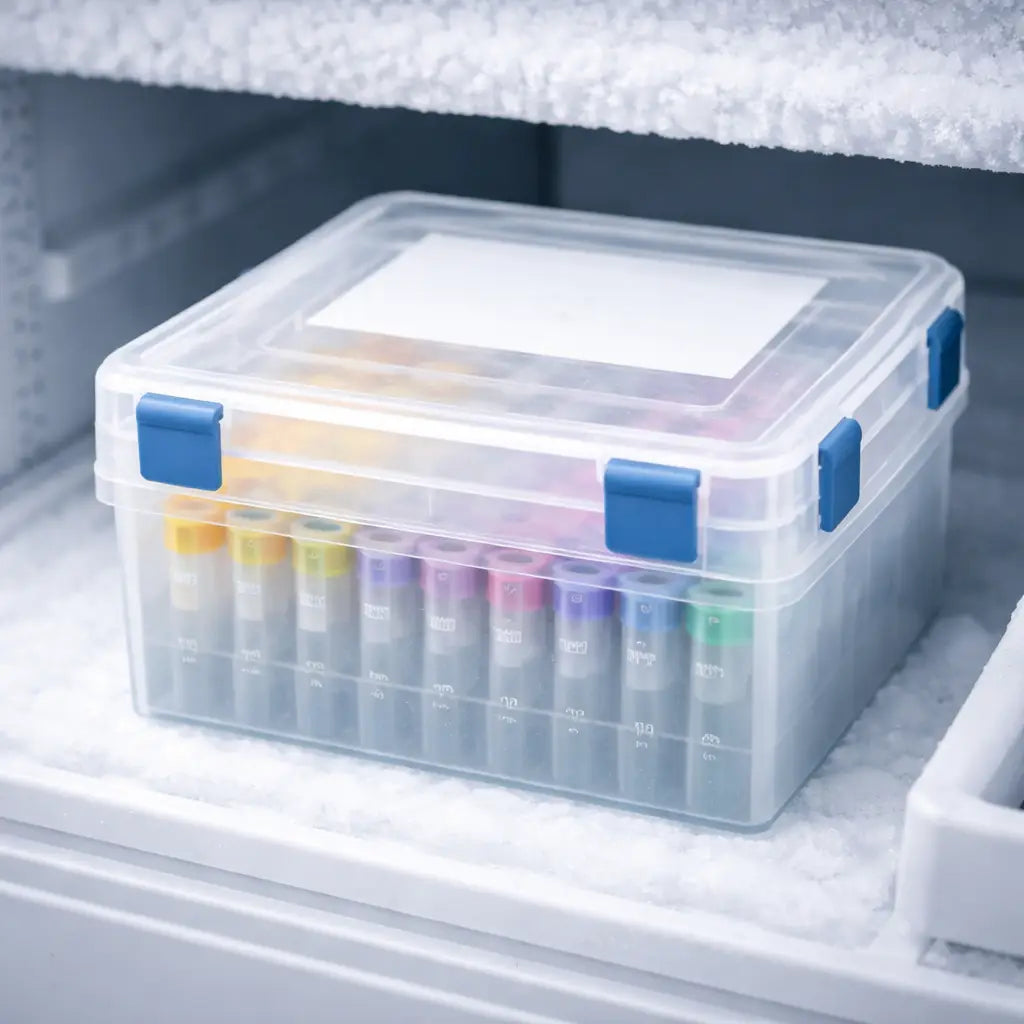
Step 2: Size and Capacity Planning
Now that you know which material works, it’s time to figure out how many tubes each box should hold. If you over‑fill a box, the lid can strain and the plastic may warp. If you under‑fill, you waste space and money.
Count your peak load
Start by looking at the busiest week of the month. Write down the total number of DNA or RNA vials you expect to store. Add a safety cushion of about 10 % so you’re not scrambling when a new project arrives.
Match box size to your count
Choose a box whose slot count is just a bit higher than your peak number. For example, if you regularly have 120 vials, a 150‑slot box gives room to grow without leaving huge gaps.
Many labs find that a 96‑slot box works for routine work, while a 384‑slot drawer is worth it for larger CROs or core facilities. The key is to avoid a half‑empty box that sits on the shelf for months.
Plan for future expansion
Think about the next year. Will your team add new assays? Will you start a new collaboration? Add another 20‑30 slots to your calculation so the same box can handle the extra load.
A quick tip: label each box with the maximum capacity and the date you filled it. That way you can glance at a freezer row and see which boxes still have room.
Fit boxes to the freezer layout
Measure the interior dimensions of your -86 °C unit. Most affordable nucleic acid sample storage boxes are designed to stack in a standard 10 × 10 cm footprint. If the drawer depth is limited, pick a shallow‑height model that still offers the slot count you need.
Finally, write down the total number of boxes you’ll need for a full rack. Multiply the box capacity by the number of racks you plan to fill. This gives you a clear purchase list and helps you stay within budget.
With the right size and a little room for growth, your samples stay organized and you avoid costly re‑ordering.
Step 3: Temperature Control and Labeling
Keeping your samples at the right chill is the first line of defense. A drop of a few degrees can wreck DNA or RNA in weeks.
Set a stable freezer zone
Make sure your -80 °C (or -86 °C) unit stays within the spec. Check the read‑out every morning and log it. If the temp jumps, the alarm should ping you right away.
Many labs use a simple spreadsheet or a cheap data logger that records every hour. The goal is to see a flat line, not a roller‑coaster.
Label for the long haul
Write the box’s max slot count on the front. Add the date you first filled it. Use cryogenic‑grade labels that won’t peel off when frost hits.
Put a tiny barcode or QR code on the lid if you can scan it with a phone. That cuts the time you spend hunting for a piece of paper.
Quick check list
• Verify the freezer shows –80 °C or lower.
• Record the temperature twice a day.
• Use labels that survive -80 °C.
• Mark each box with capacity and fill date.
• Keep a spare set of labels nearby.
When you walk past the rack, a quick glance should tell you which boxes still have room and which need a refill. It also helps you spot a box that’s been sitting idle for months.
Shop Genomics offers a range of affordable nucleic acid sample storage boxes that work well with these practices. Their designs include a clear slot map and a sturdy lid that stays sealed even after many opens.
If the freezer loses power, a UPS or a generator can keep it cold for a few hours. Test the alarm weekly so you hear it before a sample is lost.
Write the temperature log in a bound notebook or a shared drive so anyone on the team can see the history.
For deeper guidance on temperature monitoring, see the best‑practice guide from Veritas Innovation. Temperature control tips
Step 4: Cost Comparison and Buying Tips
When the price tag shows up, it’s easy to feel stuck. But a quick cost check can save you a lot of cash without hurting quality.
Break down the price parts
First, look at the base price per box. Then add any extra fees – shipping, taxes, or a small surcharge for a custom lid. A box that seems cheap at first might end up pricier once you add those bits.
Next, think about the per‑tube cost. A $30 box that holds 96 slots costs about $0.31 per tube. A $45 box that holds 384 slots drops to $0.12 per tube. The larger box wins on a per‑tube basis, but only if you can actually fill it.
Match cost to usage
Ask yourself: Do you regularly need that many slots? If you’re a small academic lab, a 96‑slot box might be all you need. If you run a CRO that ships hundreds of samples a month, the bigger drawer makes sense.
Don’t forget durability. A box that breaks after a few uses will cost you more in replacement fees. Look for boxes that survive the freeze‑thaw cycle – that’s where the “affordable nucleic acid sample storage boxes” claim really matters.
So, what should you watch for?
- Unit price vs. per‑tube price.
- Shipping costs – bulk orders often get free shipping.
- Return policy – easy returns protect you from bad batches.
And, keep an eye on seasonal sales. Many labs snag good deals during back‑to‑school or year‑end clearances.
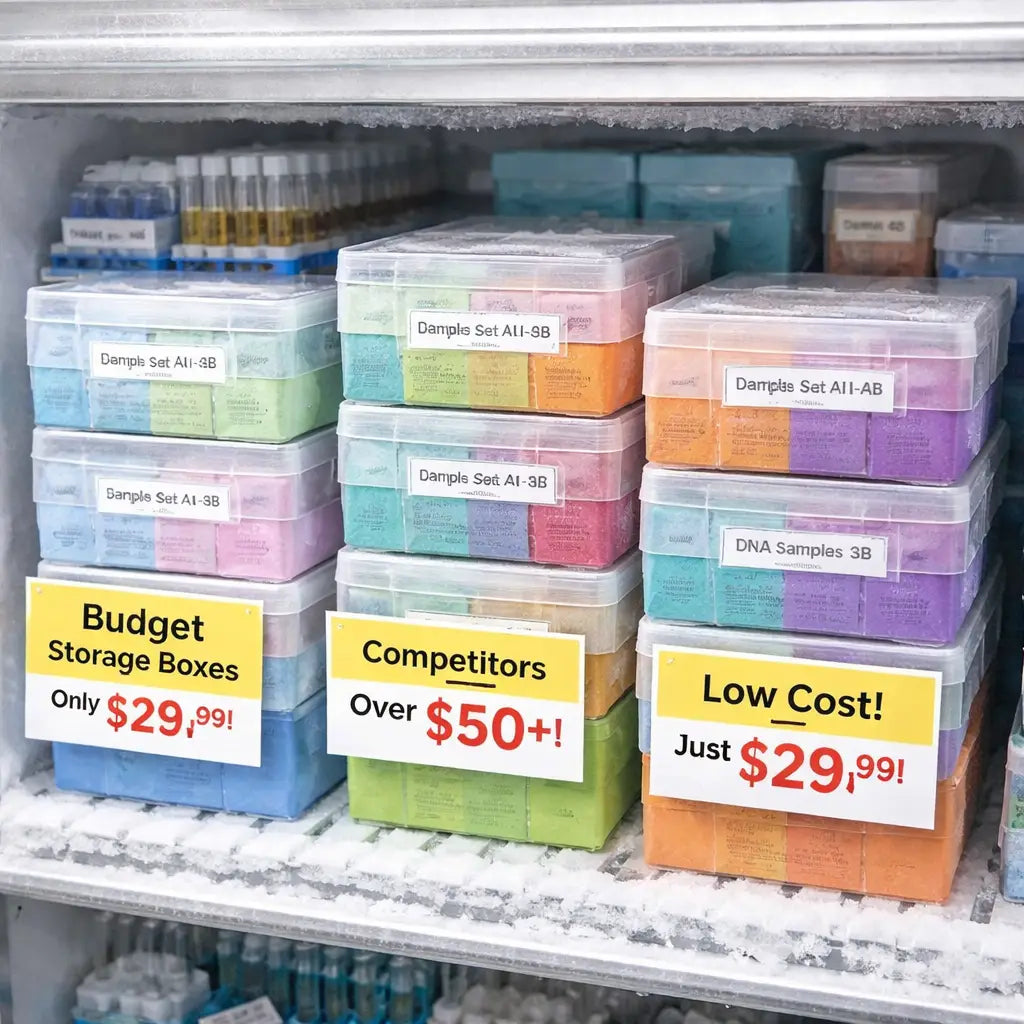
| Option | Cost per Box | Notes |
|---|---|---|
| 96‑slot polypropylene box | $28 | Good for small labs, low per‑tube cost if fully used. |
| 384‑slot drawer | $45 | Best for high‑throughput labs, lowest per‑tube cost. |
| Bulk 1,000‑slot rack | $120 | Ideal for large CROs, requires careful inventory planning. |
Pick the option that fits your sample volume and budget. A little math now keeps you from over‑spending later.
FAQ
What should I look for when choosing affordable nucleic acid sample storage boxes?
First, check the material. Polypropylene holds up in -80 °C freezers and won’t crack when you open it a lot. Next, count the slots and match them to your peak sample load – you don’t want a half‑empty box or one that’s always full. Finally, look at the lid seal; a snug snap keeps frost out and stops tubes from spilling.
How many slots do I really need for a small academic lab?
Think about your busiest week. If you usually store around 80 tubes, a 96‑slot box gives a bit of breathing room without wasting space. Add about 10 % extra so a surprise project won’t force you to buy another box right away. Most small labs find that staying under 100 slots keeps the freezer tidy and the budget happy.
Can these boxes survive repeated freeze‑thaw cycles?
Yes, as long as they’re made of the right plastic. Polypropylene boxes are tested for many freeze‑thaw events and keep their shape. Just avoid bending the corners too hard and check the lid after each cycle – a loose lid can let in moisture and cause cracks later. A quick visual check every few weeks helps catch any wear early.
Are there any hidden costs I should watch for?
Shipping can add up if you order a few boxes at a time, so bulk orders often save money. Some sellers charge extra for custom lids or special labeling, so decide if you really need those features. Also, look at the return policy; easy returns protect you if a batch arrives broken. Planning for these bits up front keeps the total price low.
How can I label boxes so they stay readable at -80 °C?
Use cryogenic‑grade labels that are rated for ultra‑low temps. Write with a permanent marker that won’t fade, or print QR codes on vinyl stickers. Place the label on the lid where it’s most visible, and add a quick note of the max slot count and fill date. A small label holder on the side of the freezer can keep spare labels handy.
Where can I find good deals on affordable nucleic acid sample storage boxes?
Shop Genomics runs regular sales on bulk packs and often offers free shipping for larger orders. Their website lets you filter by price range, so you can spot the cheapest options that still meet the material and size specs you need. Signing up for their newsletter gives you early notice of clearance events, which can shave a lot off the normal price.
Conclusion
Choosing the right box isn’t hard. You’ve seen material, slot count, temperature and price matter. When each fits, your samples stay safe and your budget stays happy.
Affordable nucleic acid sample storage boxes give you a sweet spot, sturdy for endless freeze‑thaw cycles, readable at minus 80 °C, and cheap enough for bulk orders. A simple check‑list of material, capacity and lid seal keeps re‑orders down.
So what’s next? Inventory your peak load, match it to a box with a little extra room, and order from a vendor that offers free shipping on larger packs. A note on the lid with the fill date saves time later. With those steps, your samples stay organized and spend stays low.
Remember, a well‑chosen storage box is a tiny investment that protects big science. Keep an eye on seasonal sales and you’ll snag the best deals without compromise.