Ever tried to pull DNA out of a stubborn leaf and felt like you were wrestling a cactus? You’re not alone—plant tissue can be tough, and the last thing you need is a price tag that makes your grant sigh.
So, how do you get reliable results without emptying the lab’s budget? The answer often lies in finding an affordable DNA extraction kit for plant tissue that balances cost, ease of use, and consistent yields.
In our experience at Shop Genomics, the kits that make the biggest splash are the ones that come with clear buffers, a simple protocol, and accessories that fit on a bench‑top microcentrifuge. You don’t have to be a seasoned molecular biologist to follow the steps; even a graduate student on their first project can finish the whole process in under an hour.
What should you look for when you compare options? First, check that the kit is designed specifically for plant material—some kits are geared toward animal cells and will leave you with low purity. Second, see if the protocol includes a brief grinding or bead‑beating step; that extra effort usually pays off in cleaner DNA. Third, make sure the kit’s price per 50 extractions stays under the range that your department can comfortably absorb.
Here’s a quick checklist to keep in your pocket:
- Plant‑specific lysis buffer
- Bead‑beating or mortar‑pestle option
- Clear guidance on g‑force settings for microcentrifuge
- Cost per sample under $15 (or whatever your budget allows)
- Positive reviews from agricultural or environmental labs
When you tick those boxes, you’ll avoid the dreaded “no‑PCR‑product” surprise and keep your experiments moving forward. In the next sections we’ll walk through how to set up the kit, troubleshoot common hiccups, and compare a few top picks that keep both quality and wallet happy.
Ready to start? Grab a kit, follow the steps, and watch your plant DNA shine.
TL;DR
If you need reliable plant DNA without breaking the budget, an affordable DNA extraction kit for plant tissue gives pure samples in under an hour with bench‑top steps.
We’ve seen labs from universities to small biotech startups boost PCR success and cut costs by following the quick checklist we outline.
Step 1: Choose the Right Kit and Budget Considerations
First thing’s first: you’ve got a plant, a grant, and a ticking clock. You know you need DNA, but you also know the kit can’t drain the whole budget. Let’s break down what really matters before you click “add to cart”.
Look for a kit that is marketed specifically for plant tissue – animal‑only kits leave you with a murky mess and a lot of wasted time. The lysis buffer should be strong enough to break down cellulose and phenolics, yet gentle enough to keep the DNA strands intact. If the protocol mentions a quick bead‑beating or mortar‑pestle step, that’s a good sign; a little extra grinding usually translates to cleaner extracts.
Next, think about the hardware you already have. A microcentrifuge is the workhorse for most DNA prep workflows, and pairing the right kit with a reliable spin‑down saves minutes per sample. Our Microcentrifuge vs Centrifuge: Clear Guide to Choosing the Right Lab walks you through matching speed (g‑force) to the kit’s recommended spin times.
Budget‑wise, calculate the per‑sample cost, not just the sticker price. A kit that looks cheap upfront can balloon if you need extra beads, tubes, or special buffers. Aim for under $15 per extraction – that’s a sweet spot for academic labs, CROs, and even small biotech startups. When you add up the consumables, you’ll see whether you’re staying in the green.
Don’t forget the little details that keep your workflow smooth. Custom labels for tubes and plates prevent mix‑ups later on – and that’s where a partner like JiffyPrintOnline comes in handy. Their affordable, pre‑printed stickers let you barcode each sample in seconds, saving you from costly re‑runs.
If you’re pulling fresh leaves from a field site, reliable transport matters too. A flexible car rental from SelfDrive can get you to remote plots without draining the lab’s mileage budget, keeping your sampling schedule on track.
Here’s a quick checklist to run through before you place an order:
- Plant‑specific lysis buffer
- Bead‑beating or mortar‑pestle option
- Clear microcentrifuge speed recommendations
- Cost per sample under $15
- Labeling solution for tubes and plates
When you tick these boxes, you’ll avoid the dreaded “no‑PCR‑product” surprise and keep your experiments moving forward.
Take a moment to picture your bench: a compact homogenizer humming, a microcentrifuge spinning, and neatly labeled tubes waiting for the next step.
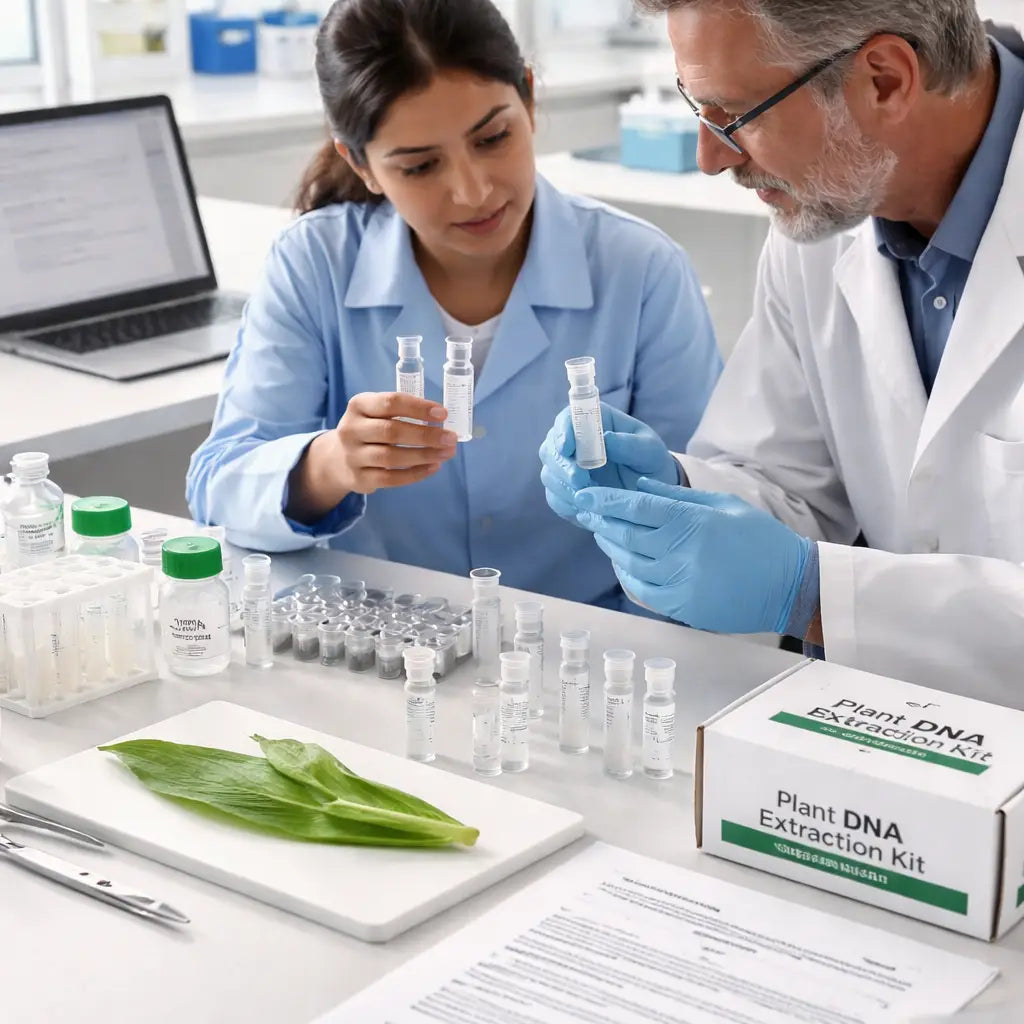
Action step: grab the kit’s datasheet, compare the per‑sample price, and order a small trial pack. Run a test on a single leaf, label the tube, spin it, and see if the yield hits the 20‑30 µg range you need. If it does, you’ve just secured a cost‑effective workflow for the whole project.
Step 2: Gather Plant Tissue and Prepare Samples
Ever opened a leaf and thought, "Where's the DNA?" You're not alone. The first real hurdle is getting a clean piece of tissue without turning your bench into a mess.
Start by deciding whether you're working with fresh material or dried samples. Fresh leaves give you juicy cells and usually need a quick grind, while dried seeds or herbarium specimens may require a longer soak in lysis buffer to re‑hydrate the tissue.
Sample collection tips
Grab a pair of clean scissors, a fresh 1.5 ml tube, and label it right away. A simple colour‑code (green for leaves, brown for seeds) saves you from a frantic search later. And yes, a little piece of paper towel to dab excess moisture is a lifesaver.
Grinding and homogenization
If you only have a mortar and pestle, add a few drops of the kit’s lysis buffer, then grind until the leaf turns into a fine paste. For tougher material—think kale or cactus—consider a bead‑beating step. A handful of 0.5 mm glass beads in a microtube, shaken for 30 seconds, can pulverize even the most fibrous tissue.
What we’ve seen work best is pairing an affordable DNA extraction kit for plant tissue with a quick‑spin homogenizer. The Zymo Quick‑DNA Plant/Seed kit, for example, uses ultra‑high density BashingBeads that break cells in minutes, giving you inhibitor‑free DNA ready for PCR.Zymo Quick‑DNA Plant/Seed kit
Once the tissue is lysed, transfer the slurry to a 0.5 ml microcentrifuge tube. Spin at 12,000 × g for 1 minute—just enough to pellet debris without pelleting the DNA. If you’re using a benchtop microcentrifuge, check the rotor capacity first; overloading can ruin the balance.
After the spin, you’ll see a clear supernatant on top of a brownish pellet. Carefully pipette the supernatant into a fresh tube, leaving the pellet behind. Avoid touching the pellet; it contains polysaccharides and phenolics that can inhibit downstream PCR.
Before you move on, give the lysate a quick visual check. It should be mostly clear with a faint green tint. Any cloudiness? Run an extra quick spin or add a brief vortex step.
Here’s a quick checklist to keep you on track:
- Label every tube before you start.
- Use fresh, sterile beads or a clean mortar each time.
- Spin at the recommended speed (10,000–14,000 × g) for 1 minute.
- Transfer only the clear supernatant, leaving the pellet behind.
Finally, store your extracted DNA on ice if you’re moving straight to PCR, or freeze at –20 °C for longer‑term storage. A quick snap‑freeze in a dry‑ice ethanol bath preserves integrity without extra steps.
That’s it for gathering and prepping. In the next step we’ll walk through the actual binding and wash stages, so you’ll end up with pure, PCR‑ready DNA without breaking the budget.
Step 3: Extraction Protocol – Step‑by‑Step
Let’s get practical. You’ve chosen an affordable DNA extraction kit for plant tissue, and you want a clean result without wasting time or money. Here’s a straightforward, real‑world protocol you can actually follow.
First, prep your tissue and reagents. Use 50–100 mg of fresh leaf material (or the tissue your kit specifies). If you’re dealing with tougher leaves, grind with a little lysis buffer or grind in liquid nitrogen to a fine powder. Keep everything cold as you go to protect DNA integrity. A neat trick: label all tubes before you start so you don’t mix samples later.
Step 1: Prepare the tissue and reagents
Tip: dried tissues may need a longer rehydration step in buffer, but don’t overdo it—you don’t want diluted DNA. Have a clean magnetic stand ready for later steps, plus clean pipette tips and tubes. For plant tissues rich in polysaccharides and phenolics, some kits include additives or optional steps to mitigate inhibitors. If you’ve ever wrestled with muddy extracts, you’ll appreciate these small adjustments.
In our experience, the most reliable results come from pairing tissue prep with a bead‑beating or mortar‑pestle disruption, followed by immediate processing in the kit’s buffers. This keeps handling simple and your workflow predictable, even in busy teaching labs or CROs.
Step 2: Lysis and DNA binding
Move quickly into lysis. Add the tissue to the kit’s lysis buffer and mix until you have a uniform slurry. If your kit uses magnetic beads, the next move is to bind the DNA to the beads by following buffer conditions and gentle agitation for several minutes. Some plant chemistries need extra measures—like a brief vortex or a longer lysis step—to maximize yield. For reference, magnetic bead approaches, like Mag Plant Pro, illustrate how strong separation and clean binding can be with diverse plant tissues. Mag Plant Pro kit demonstrates the principle well and is a useful comparison when you’re evaluating affordable options.
Does this really work across species? Yes, with careful attention to tissue type and a few kit‑specific tweaks. If you’re working with particularly stubborn material, you may extend lysis by a few minutes or add a carrier RNA as recommended by the kit’s guide.
Step 3: Magnetic separation and wash
Now the magic happens. Use the magnet to pull the DNA‑bound beads to the wall of the tube, then remove the clear supernatant. Wash the bead pellet as directed—usually twice with the provided wash buffers—to strip away polysaccharides, phenolics, and proteins. Gentle mixing is key; you don’t want to disrupt the DNA while you wash.
After the washes, re‑place the tube on the magnet and remove any last residual liquid. This step matters: residual contaminants can gallop into PCR, so follow the kit’s timings exactly.
Step 4: Elution and quality check
Elute the DNA with the kit’s elution buffer, or with water if allowed. Retrieve a clean DNA solution ready for PCR or sequencing. Do a quick quality check: measure concentration and purity with a spectrophotometer or Nanodrop, aiming for a 260/280 around 1.8–2.0 and a 260/230 in a reasonable range. If readings look off, re‑check buffers, volumes, and incubation times.
Real‑world note: even the best budget kits deliver solid results when you follow the protocol closely and keep everything organized. For educational settings or small labs, that consistency is what makes an affordable DNA extraction kit for plant tissue truly worthwhile. In our catalog, we prioritize tools that keep this balance—cost, simplicity, and reliable yields—within easy reach for researchers in Academic & Research Institutions, Agricultural & Environmental Laboratories, and CROs alike.
Step 4: Purify and Assess DNA Quality
Purification is the moment when a clean signal finally separates from the noise. After elution, small amounts of polysaccharides, phenolics, and salts can still hitch a ride on your DNA and wreck PCR. Does this sound familiar? If so, you're not alone—plant DNA cleanup is half chemistry, half habit.
First, pick a purification approach that fits your tissue and budget. Magnetic bead cleanup or spin-column kits are common for plant material because they target inhibitors without wasting DNA. The key is to follow the buffer conditions exactly and avoid over-washing; too harsh a wash can drag DNA with contaminants. For plant tissues with high polysaccharide content, you may need an extra wash or a slightly extended drying step before elution.
Next, perform the elution and initial quality check. Use the kit's elution buffer or nuclease-free water as allowed. Immediately measure concentration and purity with a spectrophotometer or Nanodrop. A260/280 should land around 1.8–2.0 for clean DNA, and A260/230 should be in a reasonable range (often >1.5). If readings are off, re-check buffer concentrations, volumes, and incubation times. A quick redo on a fresh prep helps reveal whether variability is from tissue type or protocol execution.
Real-world examples help. For spinach leaves with moderate phenolics, a standard two-wash protocol yields PCR-ready DNA in most runs. Tougher leaves, like kale, may respond to one extra wash and a slightly longer final elution. In our experience, plant-specific buffers and clear bead-beating steps consistently outperform generic kits, especially in Academic & Research Institutions, Agricultural & Environmental Labs, and CRO settings.
Quality control goes beyond the spectrophotometer. Run a test PCR with a small aliquot and include a no-template control to catch inhibition. If you get weak bands or no amplification, you likely have inhibitors and should re-purify or adjust wash timings. For teaching cores and teaching labs, this step is a clear demonstration of how contaminants derail experiments and how careful prep fixes it.
Shop Genomics can help you streamline this stage. We curate plant-ready purification kits with straightforward buffers and reliable yields, plus bench-friendly accessories that keep your workflow tidy. For teams balancing cost and speed, a smart purification choice saves time and money over the long run.
For deeper context on optimized purification, see the QIAGEN DNA purification overview. It emphasizes high yields and contaminant-free DNA built for various sample types and throughputs. And if you're exploring rapid leaf DNA workflows, QuickExtract Plant DNA Extraction Solution offers fast, PCR-ready DNA with a simple, one-tube protocol.
Step 5: Compare Top Affordable Kits – Data Table
Let’s get practical: you want an affordable DNA extraction kit for plant tissue that doesn’t blow your grant budget, while still delivering clean, PCR-ready DNA. It’s doable when you match the kit to your lab’s throughput and tissue type.
In our experience, the BioSprint DNA Plant Kit from Qiagen stands out for labs needing scalable purification without drama. It uses magnetic-particle purification and automates steps on the BioSprint 15 or BioSprint 96, making high-throughput prep feasible in teaching cores or CROs. You can learn more about the kit here: BioSprint DNA Plant Kits.
DNA purified with BioSprint is suitable for downstream PCR, genotyping, and sequencing workflows, across a wide range of plant species. That breadth matters when you’re juggling kale, spinach, or Arabidopsis in the same week.
What to compare when you’re shopping
- Automation level and instrument compatibility — do you have access to a BioSprint, or will you be buying non-automated kits?
- Plant compatibility and inhibitor tolerance — does the kit handle polysaccharides and phenolics well?
- Purity and yield expectations — what’s the typical purity range after cleanup?
- Cost per sample and consumables — can you fit a full run within your budget?
Our recommendation: if you can run on a BioSprint platform, BioSprint DNA Plant Kit is a solid, scalable choice for teaching labs and established labs in Agricultural & Environmental settings. For a quick read on how automation can speed things up, see the BioSprint overview linked above.
Shop Genomics makes this easier by curating plant-ready kits and offering practical buying options, including straightforward returns and shipping on larger orders. It’s a real time-saver when you’re comparing several budget-friendly choices across departments.
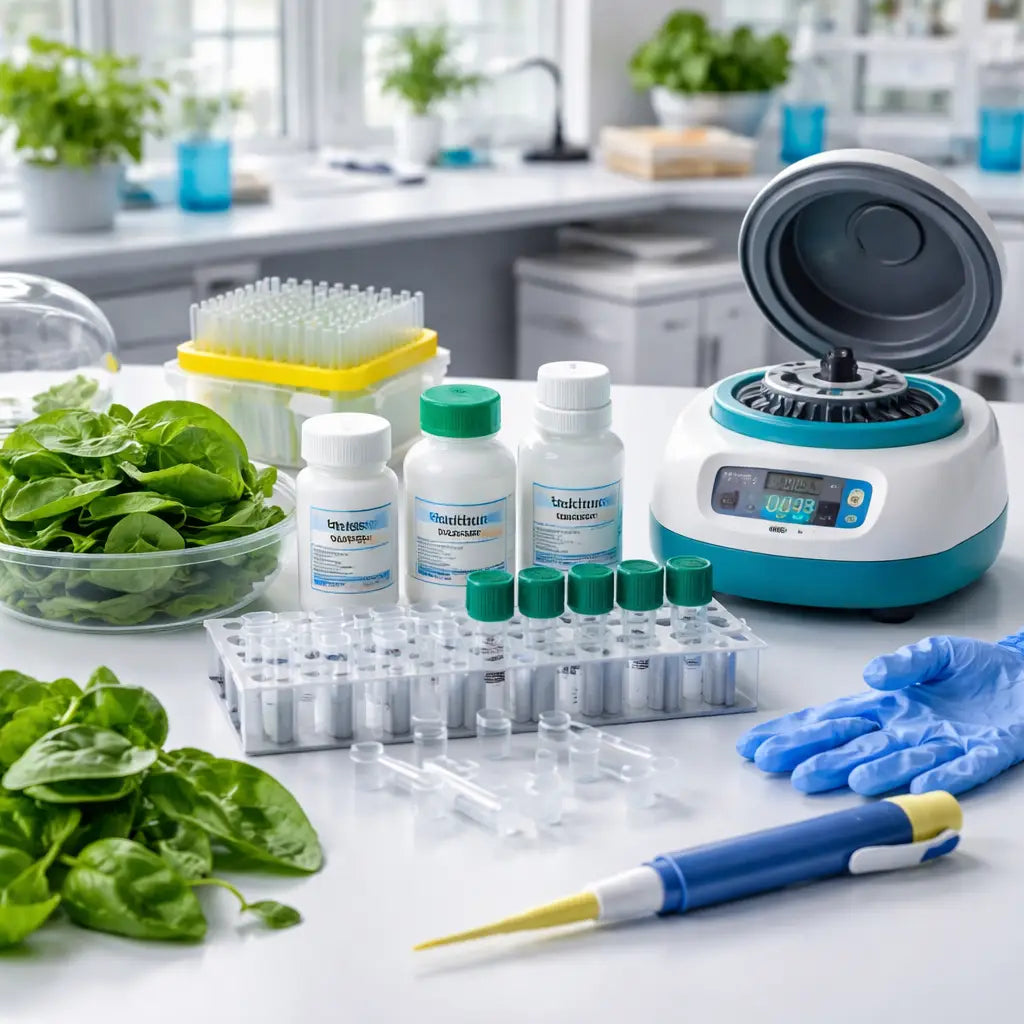
Side note: the Qiagen BioSprint page is a solid starting point for official specs and compatibility notes. For a concise overview of automation benefits, the BioSprint DNA Plant Kits page provides the essential details.
| Feature | BioSprint DNA Plant Kit (Qiagen) | Notes |
|---|---|---|
| Platform | Magnetic-particle purification | Automated on BioSprint 15/96 |
| Plant compatibility | Wide range of species | Effective with challenging plant tissue |
| DNA purity/yield | High-purity DNA for PCR | Suitable for downstream applications |
| Throughput | High-throughput capable | Ideal for teaching cores or CROs |
| Instrument requirement | BioSprint instrument needed | Plan budget around instrument access |
Pro tip: start with a small trial run to benchmark yield and purity on your plant samples, then scale up. If you can’t access automation right away, use the same evaluation criteria to compare non-automated kits side by side—you’ll still save time and money in the long run.
Step 6: Troubleshooting Common Issues
Let’s be real: even with an affordable DNA extraction kit for plant tissue, you’ll hit snags. Plant tissues bring inhibitors, and small mistakes in grinding or handling can flip a clean extraction into a muddy mess.
So, what should you do when results look off? Start with the basics, then dial in one variable at a time. A systematic approach is your friend here.
Low yield from plant tissue
First, confirm you used the right amount of tissue and that grinding actually disrupted the cell walls. If samples stay clumped, run an extra bead‑beating cycle or grind in the kit buffer to a finer paste. Too little tissue, or incomplete lysis, means less DNA. Consider extending the lysis step by a few minutes and keeping everything cold to protect DNA.
Also double‑check the lysis buffer volume and ensure you’re transferring the correct fraction to the binding step. Small tweaks can shave minutes off the workflow and push yield up without adding cost.
Purity issues and contaminants
Cloudy lysates or DNA with odd color often signal polysaccharide or pigment carryover. Rerun with an extra wash or swap in the kit’s recommended buffers. For plant‑rich tissues, avoid over‑washing, but don’t skip washes entirely—the balance matters for downstream PCR.
If you repeatedly see impurity, try a slightly longer centrifugation step to help pellet debris before transfer, and verify that wash buffers are properly prepared and at the correct concentrations.
Inhibitors causing PCR inhibition
Inhibitors like polyphenols can survive extraction. A quick cleanup or an additional wash step helps. If you see no amplification or smeared bands, run a small pilot cleanup using an extra spin‑column or bead cleanup if your kit supports it. Be mindful that some plant matrices are tougher; be prepared to adjust not just the wash, but the initial lysis as well. For reference, ZYMO Quick‑DNA Plant/Seed Kit is designed to target inhibitors in plant tissues.
DNA degradation and shearing
Handle DNA gently. Avoid vigorous vortexing, keep samples on ice, and move quickly between steps. If you notice fragmentation, cut back on mechanical disruption or shorten drying times, then re‑run with fresh reagents and buffers.
Degradation often traces back to heat exposure or extended storage. Ship samples on cold packs and use fresh elution buffers when possible.
Inconsistent results across samples
Standardize your prep: same tissue type, same amount, same grinding time, and the same lysis conditions. Run a small pilot set to establish a baseline, then scale. Keep a simple lab notebook to track which conditions produced the cleanest, PCR‑ready DNA, and repeat those exactly.
If variability persists, consider running parallel extractions with two different kit buffers or bead types to identify which combination handles your tissue best.
Fast, practical checklist
- Label tubes and standardize sample input
- Keep buffers cold; pre‑chill elution if required
- Use the recommended g‑force and timing for binding and washes
- Avoid introducing DNase contamination
From our experience curating options for Academic & Research Institutions and Agricultural Labs, a balanced mix of bead‑based and column‑based approaches often gives the most reliable results without blowing the budget. For reference, the gMAX Mini Genomic DNA Kit exemplifies a versatile workflow across sample types, including robust lysis and clean elution. IBI gMAX Mini Genomic DNA Kit can be a helpful benchmark as you optimize your own protocol, alongside plant‑focused cleanup options like the ZYMO Quick‑DNA Plant/Seed Kit.
And yes, you’re not alone in this. In 2026, many labs are tightening up methods to squeeze more reliability from affordable options—without sacrificing speed or output.
FAQ
What makes an affordable DNA extraction kit for plant tissue worth considering?
Great question. An affordable DNA extraction kit for plant tissue is worth it when it delivers clean, PCR-ready DNA without a big price tag. Look for plant-specific buffers, bead-beating or grinding steps, and clear elution instructions for predictable yields across leaves. In our experience, the simplest kits with straightforward protocols reduce user error and speed up training. That balance—cost and reliability—keeps projects moving, from classrooms to CROs, drama-free.
How do I balance cost and quality when choosing a kit for different plant tissues (spinach vs kale)?
Spinach leaves are forgiving, kale is tough. The trick is picking a kit designed for plant tissue with a robust lysis buffer that handles polysaccharides. Look for bead-beating or mortar-pestle steps, and check the cost per 50 extractions. In our experience, a versatile kit that works across tissue types saves money in the long run, even if the upfront price is a touch higher. You’ll reduce waste, retraining, and delays today. All in 2026 terms.
What are common inhibitors in plant DNA prep, and how do affordable kits address them?
Plant tissues bring pigments, polyphenols, and polysaccharides that can choke PCR. Affordable kits address inhibitors with stronger buffers, optional washes, and sometimes bead cleanup. To optimize, run a quick pilot prep and compare purity metrics—aim for A260/280 around 1.8–2.0 and A260/230 above 1.5. If you see inhibition, add an extra wash, extend drying, or switch to a kit buffer designed for high-phenolic samples. Always include a no-template control in PCR.
Can I scale up using affordable kits for higher throughput, like teaching cores or CROs?
Yes, you can scale up with affordable kits, but plan ahead. Batch samples in parallel using 0.5 ml tubes, and pick a kit that supports simple bead-based or magnetic separation to speed processing. Look for clear, consistent timings and materials so you can train students or new staff quickly. You’ll get more data per day without blowing your budget. If you need more, consider bulk shopping or trial bundles to compare what actually works.
What’s the best way to benchmark a kit's performance in our own lab?
Start with a small, controlled pilot. Run identical tissue samples across at least two kits or two buffers, using the same grinding method and amounts. Track yield, purity (A260/280 and A260/230), time per extraction, and any irritants you notice like pigment carryover. Do a PCR test to check amplifiability. Keep a simple lab notebook, repeat the test, and compare results across days. Don’t skip controls—they show you real variability. Add a final comparison after a week to confirm consistency.
Are there tips to save on consumables without hurting DNA quality?
Absolutely. Small changes add up fast. Batch several samples for the same tissue type, reuse compatible tubes and racks, and keep buffers cold to preserve DNA. Choose kits that bundle beads, tubes, and washes in one box, so you’re not chasing components. Finally, buy a small trial batch (say 10 samples) to verify yield and purity before committing to a larger order. That upfront check saves headaches and money; Shop Genomics can help with trial bundles.
Conclusion
We've walked through everything you need to pick and use an affordable DNA extraction kit for plant tissue, from budgeting to troubleshooting.
Remember, the biggest win comes from matching the kit chemistry to your sample type – a CTAB‑based buffer for leafy greens, a silica column for seeds, and a bead‑beating step for tough stems.
Do you still wonder if the kit will fit your lab's workflow? Run a quick pilot with ten samples, check yield and A260/280, then scale up. That tiny test can save weeks of wasted time.
For academic labs, teaching labs, CROs, or agricultural research teams, the same principles apply: keep your protocol simple, label everything, and track results in a notebook.
One final tip: batch your extractions whenever possible and reuse compatible tubes – it cuts cost without hurting DNA quality.
When you’re ready to stock up, Shop Genomics makes ordering trial bundles easy, with free shipping on larger orders and hassle‑free returns.
Keep an eye on your purity ratios and adjust wash steps if needed – a small tweak now prevents big headaches later. Your lab’s success is just a few minutes of fine‑tuning away.
So, what’s next? Grab that kit, follow the checklist, and let your plant DNA shine in the next PCR. Happy extracting!