

Ever stared at the price tag of an orbital shaker incubator and felt that sinking feeling? You’re not alone – labs of every size wrestle with balancing budget constraints while still needing reliable, high‑performance equipment.
Think about a mid‑size university research lab that just secured a grant for a new genomics project. They need to culture cells under precise shaking conditions, but their old shaker is on its last legs. The new orbital shaker incubator they’re eyeing lists a price north of $7,000. That number can feel like a wall, especially when you’re also budgeting for reagents, consumables, and staff time.
In our experience at Shop Genomics, we’ve seen a few strategies that actually make that price more manageable. First, compare models side‑by‑side – the Incu‑Shaker ™ 10L series, for example, starts at $6,434.72, while the Orbi‑Shaker CO2 for microplates is priced around $3,505.72. Seeing the spread helps you pinpoint which features you truly need versus nice‑to‑have extras.
Second, consider the total cost of ownership. A unit with a higher upfront price might have lower maintenance fees, longer warranty, or better energy efficiency, which can save you money in the long run. Ask the supplier about service contracts and spare‑part availability before you sign.
Third, leverage bulk‑order discounts or seasonal promotions. Many labs that order multiple pieces of equipment – say a shaker plus a CO₂ incubator – qualify for bundled pricing that can shave a few hundred dollars off the total.
Here’s a quick checklist you can run through right now:
- Identify the minimum shaking speed and temperature range you need.
- Check if a microplate‑compatible model meets your throughput.
- Calculate estimated annual energy use versus the listed power rating.
- Ask for a quote that includes warranty extensions and service plans.
And don’t forget the little things that add up: proper labeling and documentation for your samples. A reliable partner for custom lab labels can keep your workflow smooth, so consider checking out custom lab labeling solutions while you’re planning your purchase.
When you’re ready to explore specific models and pricing, our Orbital Shakers collection breaks down specs, accessories, and current sale prices in one place, making it easier to compare and decide.
TL;DR
If you’re wrestling with orbital shaker incubator price tags, know you can compare models, spot hidden savings, and choose a unit that fits your lab’s budget without sacrificing performance.
Our quick checklist helps you weigh speed, temperature range, energy use, and warranty so you make a confident purchase decision and keep your research moving forward.
Understanding Orbital Shaker Incubator Pricing Factors
When you stare at an orbital shaker incubator price tag, the first thing that jumps out is the number itself. But what’s really behind that figure? Let’s peel back the layers so you can see why two units that look alike can cost wildly different amounts.
Core hardware specs drive the base cost
Speed range and torque are the heartbeats of any shaker. A model that can cruise from 30 to 300 rpm with fine‑grained control will usually sit higher on the price scale than a basic 60‑200 rpm unit. Temperature precision matters, too – a ±0.1 °C stability chamber costs more than a ±0.5 °C version because the sensor suite and calibration process are more sophisticated.
Capacity also plays a big role. A 10 L incubator with a removable carousel is priced differently than a compact 2 L microplate‑only version. In our catalog you’ll notice the Incu‑Shaker ™ 10L series starts around $6,400, while the Orbi‑Shaker CO2 for microplates lists near $3,500. That spread reflects the larger chamber, heavier duty motor, and broader temperature envelope.
Energy efficiency adds hidden savings
Look beyond the sticker price and ask how much electricity the unit will gulp each year. Units with energy‑saving modes, variable frequency drives, or better insulation may carry a premium up‑front but can shave $200‑$300 off your annual utility bill. Over a five‑year lifespan that extra cost often pays for itself.
One way to gauge efficiency is to check the power rating (W) and compare it to the manufacturer’s energy‑use estimate. If the spec sheet says “Low‑Power Mode: 30 W idle,” you know the idle cost is minimal – a nice detail for labs that run shakers 24/7.
Warranty and service contracts
A longer warranty isn’t just a feel‑good add‑on; it protects you from unexpected repair fees that can quickly add up. Some vendors bundle a three‑year warranty for the price of a two‑year one, and that extra year can be worth a few hundred dollars if a motor fails.
Service contracts that include annual calibration, spare‑part kits, and priority support can also shift the total cost of ownership. In practice, a $500 service plan per year might seem steep, but it often prevents a $1,500 emergency repair.
Optional accessories and upgrades
Things like an integrated CO₂ controller, barcode‑ready lid, or a built‑in humidifier are usually sold separately. Those add‑ons can push the final price into the high‑seven‑figure range for high‑throughput labs. Before you say “yes” to every extra, ask yourself if your workflow truly needs that level of automation.
If you’re planning to label dozens of sample plates, a quick visit to custom lab labeling solutions can save you time and keep costs down. A well‑organized labeling system reduces waste and the risk of costly mix‑ups.
Managing the paperwork side of purchases is another hidden cost. A solid client relationship platform can streamline approvals, budget tracking, and compliance checks. That’s where tools like ClientBase shine for research groups juggling multiple grant budgets.
And for labs in clinical settings, making sure your equipment IT integrates with existing health‑tech stacks is crucial. A practical guide on healthcare IT support for small medical practices walks you through the basics of network security, device monitoring, and data compliance – all things that indirectly affect the total cost of ownership.
Below is a quick visual recap of the main pricing levers you should keep in mind.
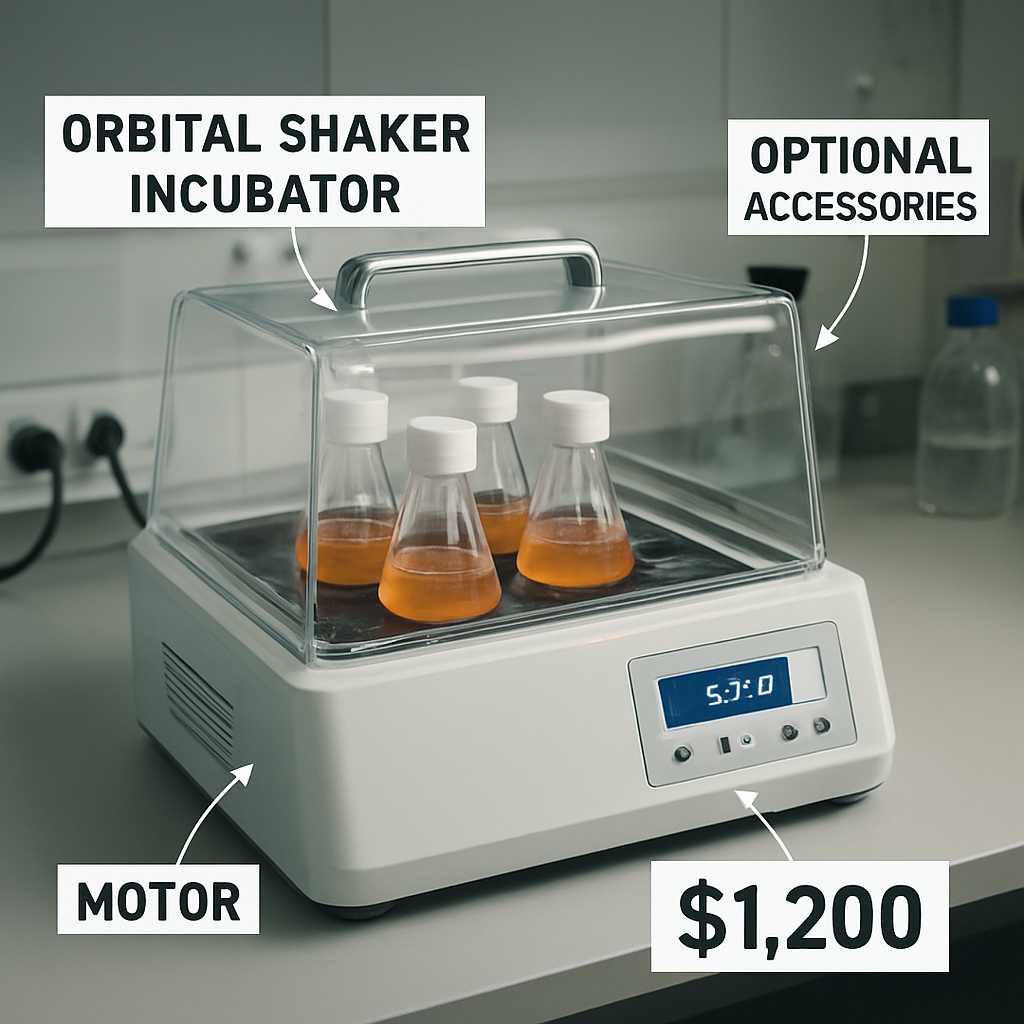
Finally, remember that the orbital shaker incubator price you see is just the starting point. By factoring in energy use, warranty, accessories, and the support ecosystem, you can turn a seemingly steep figure into a strategic investment that pays dividends in reliability and reproducibility.
Take a moment now to jot down your must‑have specs, then match them against the pricing levers we’ve discussed. You’ll be better equipped to negotiate a deal that fits your budget without compromising on the performance your experiments demand.
Comparing Prices Across Major Brands
When you stare at the orbital shaker incubator price tag, the first thing that hits you is usually the sheer spread. One brand will shout $1,500, another whispers $12,000, and you’re left wondering which number actually reflects value for your lab.
Think about the last time you bought a piece of equipment. You probably jotted down a wish‑list of specs, then tried to map those against what you could afford. It’s the same dance here, except the stakes involve years of experiments, energy bills, and warranty headaches.
What the big players are charging in 2026
We pulled together the latest price snapshots from a recent lab shaker buying guide. The ranges are surprisingly wide, and they line up with the features you care about most – speed, load capacity, temperature control, and connectivity.
| Brand | Typical Model | Price Range (USD) | Key Feature |
|---|---|---|---|
| Heidolph | Unimax 1010 | $2,500 – $4,400 | Modular, integrates with incubator add‑on |
| Ohaus | Heavy‑Duty (SHHD) Series | $3,800 – $13,000+ | Massive load capacity (up to 68 kg) |
| Eppendorf | Innova S44i | $30,000 – $45,000+ | Stackable, high‑speed, optional refrigeration |
Notice how the price jumps aren’t just about “more dollars”. The Heidolph sits in the sweet spot for most academic labs – enough power, a decent orbit, and a price that won’t eat your grant. Ohaus pushes the envelope when you need to shake heavy media bottles or large carboys. And Eppendorf is the premium choice for biotech firms that need stacked units and tight temperature control.
But price alone doesn’t tell the whole story. Energy consumption, warranty length, and service contracts can swing the total cost of ownership by thousands over five years.
Energy and warranty: hidden cost drivers
Take a 450 W Heidolph unit running 24/7. At an average lab electricity rate of $0.12 /kWh, you’re looking at roughly $50‑$70 per year. Compare that to a 600 W Ohaus model which might push $80‑$100 annually. Over a five‑year span, that difference adds up to $250‑$300 – a non‑trivial chunk of the “budget” label.
Warranty is another silent factor. Some manufacturers bundle a three‑year warranty for the price of a two‑year one, while others sell extensions at $150‑$300 per year. If you’re a CRO or a pharmaceutical R&D team, downtime isn’t just an inconvenience; it can delay clinical timelines.
One quick way to gauge the “effective price” is to add the projected energy cost and any warranty extensions to the sticker price, then compare that total against your lab’s budget ceiling.
That’s the kind of math we love to see in a spreadsheet – simple, transparent, and grounded in real numbers.
And if you need a concrete example of a brand that offers a complete incubated benchtop solution, check out the incubated benchtop orbital shakers collection. The catalog shows units that bundle temperature control with shaking, so you can avoid buying a separate incubator.
Now, let’s talk about how you can use this info right now. Grab a pen, list the specs you can’t live without – RPM range, max load, temperature tolerance – then plot each brand’s price against those must‑haves. If a cheaper model meets every criterion, it’s probably the smartest buy. If a pricier model offers a feature you’ll actually use (like stacked capacity for a biotech line), the higher upfront cost may pay off later.
Bottom line: the orbital shaker incubator price isn’t a single number, it’s a spectrum of features, energy use, and support. By breaking it down, you turn a vague “expensive” feeling into a clear decision matrix.
Top 5 Budget‑Friendly Orbital Shaker Incubators
When you stare at the orbital shaker incubator price tag, the first question is always: "Can I actually afford this without blowing my grant budget?" The good news is that a solid shaker doesn’t have to cost a small fortune. Below are five models that give you reliable shaking and temperature control while keeping the price tag honest.
1. Incu‑Shaker ™ 10L (Shop Genomics pick)
We’ve seen labs of all sizes gravitate toward the Incu‑Shaker ™ 10L because it hits the sweet spot between capacity and cost. It shreds plates at up to 500 rpm, holds a tight ±0.5 °C temperature band, and comes with a three‑year warranty that’s baked into the sticker price. In 2026 the list price hovers around $7,600 – a figure that feels realistic once you factor in the energy‑efficient 450 W motor. For a mid‑size university lab, that means you get a bench‑top unit that won’t double‑check your electricity bill every month.
2. Orbi‑Shaker CO2 for Microplates
If your work revolves around high‑throughput microplate assays, the Orbi‑Shaker CO2 is a budget hero. It delivers CO₂‑controlled incubation alongside shaking, which cuts out the need for a separate incubator. The price tag sits just above $3,600, making it one of the most affordable integrated solutions on the market. Its compact footprint is perfect for labs squeezed for bench space, and the 350 W power draw keeps annual energy costs low – a win‑win when you’re watching every dollar.
3. Incu‑Shaker Mini (10 L‑class, no‑frills)
For labs that need a reliable shaker but don’t need the full‑size chamber, the Incu‑Shaker Mini trims the price down to roughly $5,200. It still offers a respectable 300 rpm top speed and a ±1 °C temperature tolerance, which is plenty for most cell‑culture workflows. The mini version is lighter, so you can move it between benches during busy weeks – a small convenience that adds up when you’re juggling multiple projects.
4. Heidolph Unimax 1010 (modular option)
The Heidolph Unimax 1010 is a modular shaker that lets you add an incubator add‑on later if your budget tightens now but expands later. The base unit starts around $4,200, and the optional temperature module is an extra $800. This pay‑as‑you‑grow model is great for startup biotech firms that want to keep upfront spend low while preserving upgrade paths. Its brushless motor runs at 450 W, so you’ll see modest energy use compared with bulkier models.
5. Lab‑Supply‑Network’s Incubated Benchtop Shakers
Finally, if you’re open to shopping a broader catalog, the incubated benchtop orbital shakers collection on Lab Supply Network bundles several budget‑friendly options under one roof. Prices range from $3,500 to $6,500, and each unit includes basic temperature control and a reliable orbital motion. Because the lineup is curated for labs that need cost‑effective reliability, you can compare specs side‑by‑side without chasing down dozens of individual vendor pages.
So, what’s the next step? Grab a sheet of paper, write down the RPM range, chamber size, and temperature precision you can’t live without, then plot each model’s price against those must‑haves. If a cheaper unit meets every criterion, it’s probably the smartest buy. If a pricier model offers a feature you’ll actually use (like CO₂ control or modular upgrades), the higher upfront cost may pay off later. Remember, the goal isn’t just a low orbital shaker incubator price – it’s a balanced total cost of ownership that keeps your experiments humming without breaking the bank.
Financing and Lease Options for Shaker Incubators
When the orbital shaker incubator price feels like a wall, financing can turn that wall into a door. You’ve probably stared at a quote, sighed, and thought, “Maybe I’ll just wait for a grant.” But waiting can stall experiments, and in research that time equals missed discoveries.
Why financing makes sense
Imagine you’re a CRO that needs to scale up a cell‑culture pipeline in 2026. Buying a $7,500 unit outright ties up cash you could spend on reagents or staffing. A financing plan spreads the cost over 12‑36 months, keeping your cash flow smooth while you keep the bench busy.
Most vendors, including big‑name suppliers, now offer zero‑interest or low‑interest options for qualified labs. The key is to treat the monthly payment like any other consumable budget line – it’s predictable, it’s tax‑deductible, and it protects you from a big one‑time hit.
Common financing models
- Vendor credit. The manufacturer extends a line of credit, often with a 6‑month grace period and a fixed interest rate. You pay as you go, and the equipment stays yours from day one.
- Equipment lease. You lease the shaker for 24‑48 months, then return it, upgrade, or buy it out at a pre‑agreed residual value. Leases are great if you expect technology to evolve quickly.
- Third‑party leasing companies. Specialized labs‑equipment financiers handle the paperwork, sometimes bundling maintenance into the monthly fee.
- Government or institutional loan programs. Some research universities have internal loan pools that charge below‑market rates for capital purchases.
Each model has a hidden cost component – interest, admin fees, or residual buy‑out prices – so you need a quick calculator in hand.
Leasing vs. buying checklist
Here’s a short checklist you can print and fill out while you sip coffee:
- Do you need the shaker for more than five years? If yes, buying usually wins.
- Will you need upgrades (e.g., CO₂ control) within two years? If yes, a lease gives flexibility.
- What’s your lab’s current cash‑flow health? Low cash flow favors leasing.
- Is the vendor offering a warranty extension with the purchase? That can tip the scale toward buying.
Answering these questions in a table helps you see the “effective price” – sticker price plus financing charges – side by side.
Tips for negotiating favorable terms
1. Ask for a bundled service contract. A lease that includes annual calibration and a spare‑part kit can shave a few hundred dollars off a separate maintenance agreement.
2. Push for a buy‑out option. Even if you start with a lease, knowing you can purchase the unit for, say, $1,200 after 36 months gives you an exit strategy.
3. Leverage volume. If you’re buying a shaker plus a CO₂ incubator, ask the vendor to roll the financing into one package – you’ll often get a better interest rate.
4. Check for early‑pay discounts. Some suppliers will knock 2‑3 % off the total if you commit to a shorter term and pay quarterly.
Real‑world examples
Take a mid‑size academic lab in Boston that needed a 10 L incubated shaker for a genomics project. The list price was $7,600. By opting for a 24‑month lease with a $0% APR offer, their monthly payment dropped to $320, plus a maintenance bundle. Over two years they spent $7,680 – almost the same as buying, but they kept $1,200 in cash for reagents.
Contrast that with a biotech startup in San Diego that chose a high‑end Thermo Scientific Solaris Incubated and Refrigerated Benchtop Shaker. The unit’s orbital shaker incubator price topped $12,000, but the vendor’s 36‑month lease included a 10‑year drive warranty and a $500 annual service credit. Their effective cost was $13,200, which made sense because the lab needed that reliability for a GLP‑compliant drug‑screening pipeline.
Another example: a government lab in Queensland used a three‑year equipment loan from a state‑funded program at 1.5 % interest. The loan’s low rate meant their total interest over the term was under $200, a tiny price to pay for keeping the lab’s budget on track.
Bottom line: financing and leasing turn a daunting orbital shaker incubator price into a manageable line item. By matching the right model to your lab’s timeline, cash flow, and upgrade plans, you can keep experiments moving without waiting for the perfect grant.
Final Buying Checklist & Cost‑Saving Tips
When the orbital shaker incubator price looks like a brick wall, a solid checklist can turn that wall into a set of stepping stones.
First, pause and ask yourself: what’s the absolute minimum you need to keep your experiments humming? Is it a 300 rpm speed, a ±1 °C temperature band, or simply a bench‑top footprint that fits on a crowded lab bench? Write those non‑negotiables down before you even open a quote.
Step‑by‑step buying checklist
1. Define core specs. List the required RPM range, temperature precision, chamber volume, and load capacity. For a CRO running high‑throughput cell cultures, a 500 rpm motor with a ±0.5 °C range often saves time downstream.
2. Calculate true energy cost. Ask the vendor for annual kWh usage, then multiply by your lab’s electricity rate. A 450 W unit running 12 hours a day costs roughly $65 a year – that adds up over five years.
3. Scope warranty and service. A three‑year warranty is usually baked into the price, but extensions can cost $150‑$300 per year. Compare the “sticker price + warranty extensions” against your budget ceiling.
4. Factor financing charges. If you’re leaning on a lease, plug the monthly payment into a simple spreadsheet: payment × months + any buy‑out residual. That figure is your effective price.
5. Look for bundled accessories. Some suppliers throw in a spare motor or a calibration kit for free. Those extras can shave $200‑$400 off a separate service contract.
6. Check for promotions or volume discounts. Ordering two units – a shaker and a CO₂ incubator – often unlocks a 5‑% discount. It’s worth asking the sales rep outright.
Does this feel like a lot? It is, but breaking it into bite‑size steps keeps you from getting overwhelmed.
Real‑world cost‑saving examples
Take a midsize university lab in Boston that needed a 10 L incubated shaker for a genomics project. The list price was $7,600. By choosing a 24‑month zero‑interest lease, the monthly payment dropped to $320, plus a maintenance bundle. Over two years the lab spent $7,680 – essentially the same as buying, but they kept $1,200 in cash for reagents. That cash‑flow buffer proved crucial when a grant amendment arrived.
Another case: a biotech startup in San Diego opted for a high‑end incubated shaker priced at $12,000. The vendor bundled a 10‑year drive warranty and a $500 annual service credit into a 36‑month lease, bringing the effective cost to $13,200. Because the startup needed GLP‑compliant reliability, the extra expense paid off in reduced downtime and smoother audits.
A government lab in Queensland used a three‑year equipment loan at 1.5 % interest. The total interest was under $200, yet the lab preserved its capital budget for consumables. Low‑interest loans are often available through state‑funded programs – it’s worth checking with your institution’s finance office.
These stories show that the “orbital shaker incubator price” isn’t a fixed number; it morphs with financing terms, warranties, and hidden accessories.
Expert tips to squeeze every dollar
• Ask for an energy‑efficiency certification. Units meeting ENERGY STAR criteria can cut annual power use by up to 15 %.
• Negotiate a “service‑credit” that’s applied to your next purchase. Some vendors will credit $200‑$300 toward future accessories if you sign a three‑year lease.
• Consider a third‑party lease that bundles calibration. A single monthly line item for equipment plus service eliminates surprise repair invoices.
• If your lab can handle a non‑incubated shaker for a short‑term project, buy the shaker now and add a separate incubator later – the modular approach often halves the upfront spend.
• Leverage the expertise of platforms like lab equipment suppliers that specialise in incubated shakers. They often have seasonal promotions not advertised on the manufacturer’s site.
• Read industry guides such as the lab manager’s shaker overview for benchmarks on power consumption and maintenance cycles.
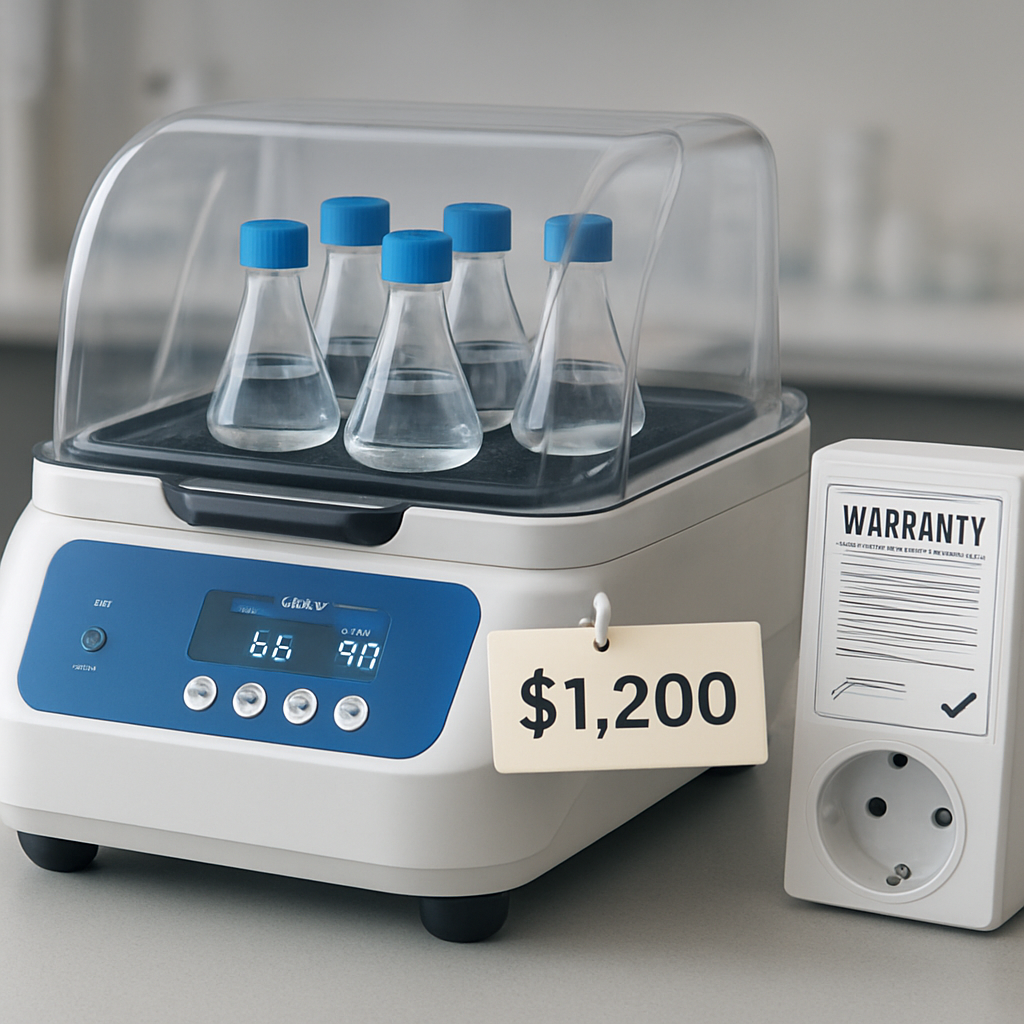
Now that you have the checklist, grab a pen and fill it out while you browse the latest models. Compare the “sticker price + energy + warranty + financing” column for each candidate. The one with the lowest total cost of ownership – not just the lowest sticker price – is the smart buy.
Remember, the goal isn’t to skimp on quality; it’s to align the orbital shaker incubator price with the real budget constraints of your lab, whether you’re an academic department, a CRO, or a government research facility.
FAQ
What exactly determines the orbital shaker incubator price?
It’s not just the sticker tag. You’re looking at motor type, temperature‑control precision, chamber material, energy draw, warranty length and any extra modules like CO₂ control. A brushless DC motor and stainless‑steel chamber add a few hundred dollars, but they also cut down on maintenance. Think of the price as a bundle of features that affect both upfront spend and long‑term cost of ownership.
How can I calculate the real cost of owning an orbital shaker incubator?
Start with the purchase price, then add projected energy use (ask the vendor for kWh per year) and any warranty extensions or service contracts. Multiply the annual kWh by your lab’s electricity rate, then add that to the base price. Finally, factor in financing fees if you’re leasing. That total gives you a realistic “effective price” you can compare across models.
Is it worth paying more for a longer warranty?
In most labs, a three‑year warranty baked into the price saves you from surprise repair bills. If the extra cost is $150‑$300, compare it to the average repair cost for a motor or sensor – which can easily hit $500. For grant‑funded projects where downtime means lost data, the peace of mind often justifies the higher price.
Can I save money by buying a non‑incubated shaker and adding an incubator later?
Absolutely. Many researchers start with a basic shaker and later attach a temperature module. The modular approach can halve the upfront spend because you only pay for the incubator when you truly need it. Just make sure the shaker you pick has a compatible add‑on port – that way the upgrade won’t require a whole new bench‑top unit.
What financing options should I consider for a pricey shaker?
Zero‑interest vendor credit, equipment leases with buy‑out options, and third‑party leasing firms are common. Look for a lease that bundles annual calibration and a spare‑part kit – that can shave a few hundred dollars off a separate service contract. If you plan to keep the unit for more than five years, buying usually wins; otherwise, a short‑term lease gives you flexibility without tying up cash.
Do energy‑efficient models really make a difference?
Yes. A 450 W shaker running 12 hours a day uses about 65 kWh annually. Compared to a 600 W model, that’s roughly $7‑$10 less per year at a typical $0.12/kWh rate. Over a five‑year lifespan, you’re looking at $35‑$50 saved – enough to offset a modest price premium on an ENERGY‑STAR‑rated unit.
How do I know which brand’s orbital shaker incubator price is the best value for my lab?
Match your core specs – RPM range, temperature tolerance, chamber size – against each model’s price. Then run the cost‑of‑ownership math: add energy, warranty, and any financing charges. The model with the lowest total cost that still meets your must‑have features is the smart buy. In our experience, starting with Shop Genomics’ curated selection makes that comparison a lot easier.
Conclusion
When you stare at the orbital shaker incubator price, the first feeling is usually “how do I justify this?”. The truth is, the sticker tag is just the starting line – motor type, energy draw, warranty length and any bundled accessories are the real race.
We’ve walked through specs, energy‑use math, financing options and a handful of budget‑friendly models. If you add up the purchase price, annual kWh cost and any warranty extensions, you get an “effective price” that tells you whether a unit will fit your grant or cash‑flow constraints.
So, what’s the next move? Pull out the quick checklist we laid out, plug your lab’s electricity rate into the kWh number the vendor gives you, and rank each candidate by total cost of ownership, not just the headline figure.
For labs that want a hassle‑free comparison, the curated selection on Shop Genomics lines up specs, pricing and energy data side by side – making the final decision feel less like a gamble and more like a calculated win.
Bottom line: a smart approach to orbital shaker incubator price turns a confusing purchase into a confident investment that keeps your experiments humming for years to come.
Start today and watch the savings add up.