
Ever stared at a quote for a gel electrophoresis kit and felt that knot in your stomach? You’re not alone – the price tag can look like a wall, especially when you’re juggling budgets for reagents, consumables, and equipment upgrades. So, what exactly drives the gel electrophoresis kit price, and how can you get the most bang for your buck without compromising safety or performance?
First off, the core components – power supply, tank, transilluminator, and accessories – each have their own cost curve. A compact bench‑top power supply that plugs into a standard outlet can be under $80, while a high‑voltage unit with built‑in safety interlocks pushes past $200. Tanks made from lightweight acrylic run cheaper than stainless‑steel shells, but the latter resist harsh chemicals and last longer, which can save you money in the long run.
Next, think about the light source. Blue‑light LED transilluminators have become the go‑to for classrooms and low‑budget labs because they avoid UV hazards and typically sit under $150. In contrast, UV units demand safety enclosures and goggles, adding $200‑$300 to the overall kit price. For many academic and research institutions, the LED option offers a sweet spot of safety, image clarity, and cost.
Real‑world example: a mid‑size biotech startup swapped a $1,200 UV‑based system for a $350 LED kit bundled with a low‑voltage power supply. Within six months they saved roughly $500 on safety gear and reduced buffer waste by 12%, translating to a lower total cost of ownership.
Here’s a quick checklist to keep the price in check:
- List the essential components you truly need – you might not need a high‑voltage supply if you’re only running 0.8–1.2% agarose gels.
- Compare bundled kits versus buying parts separately; bundles often shave off 10‑15%.
- Factor in hidden costs: power consumption (a 30 W unit saves about $80 per year), spare parts, and warranty length.
- Check if your lab can reuse consumables like loading tips or agarose trays.
In our experience at Shop Genomics, educators and researchers alike gravitate toward kits that balance reliability with affordability. For a deeper dive into building a classroom‑ready system, check out our Guide to a Budget Friendly Gel Electrophoresis System for Classrooms. It walks you through component selection, budgeting tips, and even how to score free‑shipping on larger orders.
Don’t forget the little details that can drive costs up: mislabeled samples, missing lids, or a broken electrode can halt a run and force you to reorder parts. A quick win is to set up a simple labeling system – printed stickers that survive the lab environment keep everything organized and avoid costly mix‑ups. If you need a reliable source for custom lab labels, JiffyPrintOnline offers affordable, durable label solutions that fit perfectly on gel trays and reagent bottles.
Bottom line: the gel electrophoresis kit price isn’t just a sticker – it’s a combination of component choices, safety features, and hidden operating expenses. By auditing each factor and leveraging bundled deals, you can build a setup that serves your research or teaching needs without breaking the budget.
TL;DR
If you’re trying to keep the gel electrophoresis kit price low while still getting reliable runs, focus on bundling core parts and reusing consumables.
A quick audit of power supply, tank material, and LED transilluminator can shave 10‑15% off the total cost and avoid hidden expenses for your academic labs.
What is a gel electrophoresis kit?
When you hear "gel electrophoresis kit", you might picture a box of mysterious parts and wonder what you actually need to run a clean, reliable gel. In reality, a kit is just a curated bundle of the essentials: a power supply, a gel tank, a transilluminator (or light source), and the small accessories that keep everything from leaking to slipping.
Think about the last time you tried to cobble together a system from separate pieces. You probably spent extra time matching voltage ranges, hunting down a compatible lid, and figuring out which light source would actually let you see the bands. A well‑designed kit eliminates that guesswork by ensuring each component talks to the others without a hiccup.
So, what exactly makes up the kit? Let’s break it down.
Power supply
The power supply is the heart of the electrophoresis run. It delivers the voltage that pushes DNA or protein fragments through the agarose matrix. A good kit will include a low‑voltage, bench‑top model that plugs into a standard outlet and has built‑in safety shut‑off. That way you avoid the dreaded “over‑run” that can scorch a gel and waste precious samples.
Most academic labs and teaching classrooms get by with a 50‑150 V range. If you’re doing larger plasmid digests, you might need a unit that can hit 200 V, but that usually bumps the gel electrophoresis kit price a bit higher.
Gel tank and casting tray
The tank holds the buffer and the gel itself. Acrylic tanks are light and cheap, while stainless‑steel shells cost more but stand up to harsh chemicals and heavy use. The kit should also include a reusable casting tray that fits snugly inside the tank – no more fiddling with mismatched sizes.
When you choose a tank, consider the bench space you have. A compact 12 cm tank fits nicely on most bench tops, and many kits bundle a simple stand that keeps the whole assembly steady.
Transilluminator or light source
Older kits used UV lamps, which require goggles and safety enclosures. Modern kits almost always opt for blue‑light LED transilluminators. They’re safer, cheaper, and give you a high‑contrast view of SYBR‑Safe or GelRed‑stained bands. The LED unit typically slides onto the tank lid, so you can snap a photo without moving the gel.
Because the LED draws less power, you’ll see a small reduction in electricity cost over the life of the kit – a nice, often‑overlooked way to keep the overall gel electrophoresis kit price down.
Accessories and consumables
Small things like loading tips, combs, and ladder markers might seem trivial, but they add up. A solid kit will bundle reusable loading tips (plastic or silicone), a set of combs for different gel sizes, and a ladder marker that’s easy to read. Some kits even include a few sheets of waterproof labels – perfect for marking gel trays and buffers.
Speaking of labels, many labs find that ordering durable, water‑proof stickers from a specialty printer saves time and prevents mix‑ups. A quick search for affordable lab labels can point you to vendors that ship directly to research facilities.
Now that we’ve covered the pieces, let’s see how they fit together in a real‑world scenario.
Imagine you’re setting up a teaching lab for a high‑school biology class. You need a system that’s safe, inexpensive, and easy to reuse across semesters. You pick a kit that bundles a low‑voltage power supply, an acrylic tank with a snap‑on LED transilluminator, and a set of reusable loading tips. The total gel electrophoresis kit price lands around $350, well under the $500 threshold that many school budgets cap at.
Because the kit includes a spare lid, you never have to scramble for a replacement mid‑semester. The LED’s low power draw means the school’s electricity bill barely registers the extra load. And the reusable tips cut down on plastic waste, which is a win for the environment and the school’s sustainability goals.
Here’s a quick checklist you can run before you click “order”:
- Does the power supply cover the voltage range you need?
- Is the tank material compatible with your buffer chemistry?
- Does the transilluminator use blue‑light LEDs for safety?
- Are reusable accessories included to lower long‑term consumable costs?
If you can answer “yes” to most of those, you’ve likely found a kit that balances cost and performance.
Below is a short video that walks through the assembly of a typical gel electrophoresis kit, highlighting where you can save money without sacrificing quality.
After watching, you’ll see how each component snaps together, and why the bundled approach often trims 10‑15 % off the total spend compared to buying parts individually.
When you finally set up the system, take a moment to snap a photo of the assembled kit. That visual reference helps new lab members get up to speed quickly, and it doubles as a handy inventory check.
Finally, a thought about budgeting beyond the kit itself: keep an eye on hidden costs like spare electrodes, extra lids, and the occasional replacement LED. Those items can add up if they’re not part of the original purchase.
By planning for those extras up front, you keep the total cost of ownership low and your experiments running smoothly.
In short, a gel electrophoresis kit is more than just a collection of parts – it’s a curated solution that saves you time, reduces hidden expenses, and lets you focus on the science rather than the shopping list.
Ready to pick a kit? Start with the checklist above, compare a few vendors, and remember that a well‑matched kit can keep the gel electrophoresis kit price manageable for years to come.
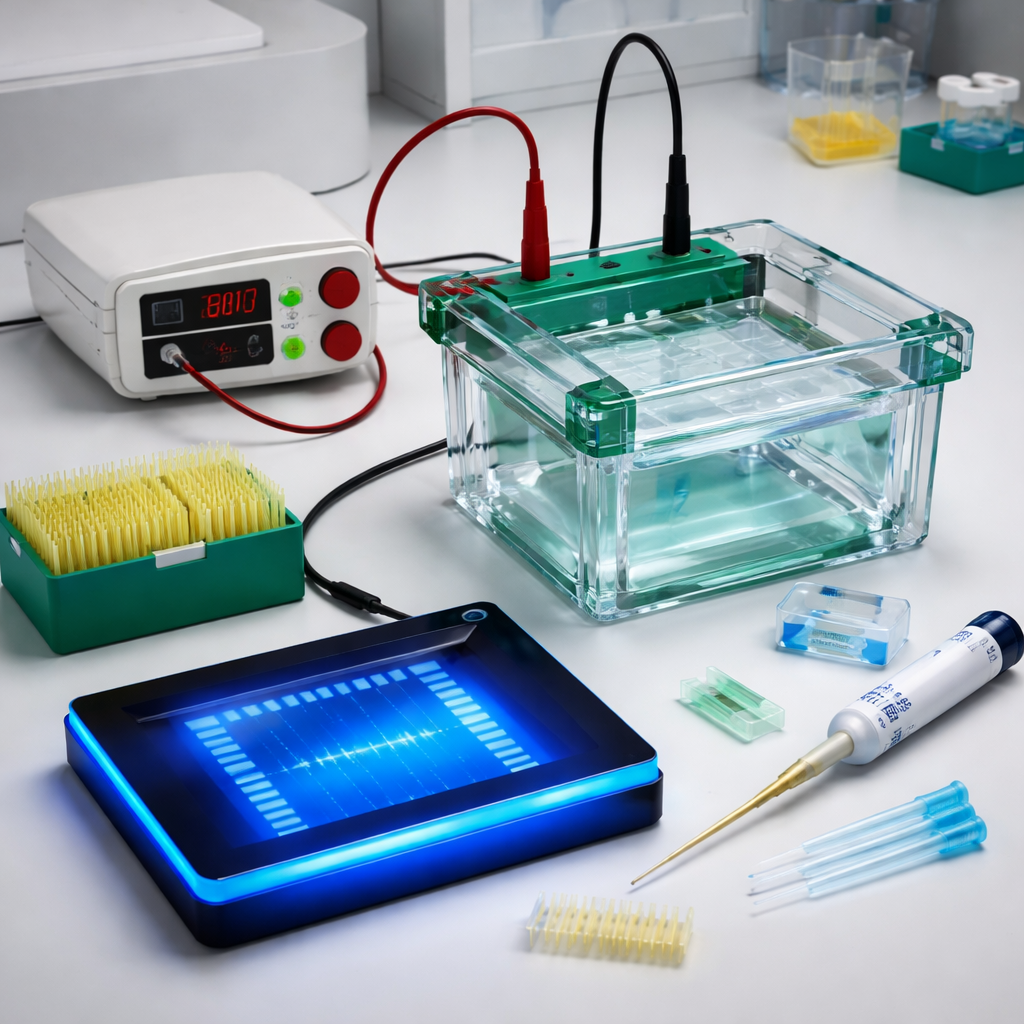
Factors that affect gel electrophoresis kit price
When you stare at the price tag on a gel electrophoresis kit, that number is only the tip of a much larger iceberg. Behind it sit material choices, safety features, and the hidden cost of running the system day after day.
So, what really drives the gel electrophoresis kit price? Let’s break it down into the pieces you actually see on the bench and the ones you don’t.
1. Core component materials
The power supply is the first big cost driver. A low‑voltage, bench‑top unit that plugs into a standard outlet can sit under $80, while a high‑voltage model with built‑in interlocks easily tops $200. The tank material follows a similar pattern: acrylic is lightweight and cheap, but it scratches and can cloud with harsh buffers. Stainless‑steel tanks cost a few hundred dollars more, yet they survive aggressive chemicals for years, saving you replacement fees.
What about the transilluminator? Blue‑light LEDs have become the go‑to for classrooms because they avoid UV hazards and usually stay under $150. UV boxes, on the other hand, need safety enclosures, goggles and cooling fans – all of which add $200‑$300 to the total.
2. Bundle vs. à la carte buying
Buying a pre‑assembled kit often shaves 10‑15 % off the sum of individual parts. Vendors package the power supply, tank, and LED transilluminator together, and you avoid surprise fees for adapters or extra cables. In our experience at Shop Genomics, bundles also qualify for free shipping once you cross a certain order size, which can knock another $50‑$100 off the bill.
That said, if you already own a reliable power supply, you might save a few dollars by swapping in a new tank. Just run the numbers – sometimes the “save‑by‑mixing” route ends up costing more in compatibility headaches.
3. Consumables and reusable accessories
Reusable combs, loading tips, and ladder markers look cheap, but they affect the total cost of ownership (TCO). A set of durable, autoclavable combs can last for dozens of runs, whereas disposable plastic combs add a few cents per gel. Over a five‑year span, those cents add up to a noticeable chunk of the gel electrophoresis kit price.
Don’t forget the stain. SYBR Safe works well with blue‑light LEDs and costs less than traditional ethidium bromide, which also means you skip the extra safety gear budget.
4. Power consumption and hidden operating costs
A 30 W LED unit sips roughly $80 per year in electricity, while a 60 W UV unit doubles that figure. Multiply that by the number of runs your lab does annually and you quickly see why power draw is a silent price influencer.
Similarly, tanks with poor sealing leak buffer, forcing you to replace buffer more often. A well‑engineered, spill‑proof lid can save both reagent waste and cleanup time.
5. Warranty, support, and regional market dynamics
Longer warranties and responsive technical support may add $50‑$100 upfront, but they protect you from unexpected repair costs. In regions where shipping parts is expensive, a robust warranty can be worth its weight in gold.
Market data shows that precast agarose electrophoresis kits dominate the market, capturing around 65 % of global revenue in 2023. Those kits command a premium because they deliver consistent gel casting and cut down on technician time – a clear example of how a higher upfront price can lower overall spend.
6. Practical checklist to keep the price honest
- Identify the voltage range you really need – low‑voltage for 0.8‑1.2 % agarose gels is often enough.
- Match tank material to your buffer chemistry – acrylic for routine labs, stainless steel for harsh reagents.
- Prefer blue‑light LEDs unless UV is a strict requirement.
- Count reusable accessories as part of the TCO, not just the sticker price.
- Calculate annual electricity cost (W/1000 × hours × $0.13/kWh).
- Factor in warranty length and expected spare‑part replacements over five years.
By walking through these points, you turn the vague “gel electrophoresis kit price” into a transparent, data‑driven decision. You’ll know exactly where you’re saving, where you’re splurging, and why each choice matters for your lab’s workflow.
Comparing top kits and their prices
Why a side‑by‑side look matters
When you stare at a spreadsheet full of gel electrophoresis kit price options, it’s easy to feel lost. The numbers alone don’t tell you how the kit will fit your bench, your workflow, or your budget over the next five years.
That’s why we break the big‑ticket items into three bite‑size groups: a solid all‑in‑one bundle you can order from Shop Genomics, a mid‑range classroom‑friendly system from miniPCR, and a premium pre‑cast solution from Thermo Fisher. Each one hits a different sweet spot, so you can see where you’re really spending and where you might be over‑paying.
Quick decision matrix
| Kit | Typical price (USD) | Key features |
|---|---|---|
| Shop Genomics bundled kit (power supply, acrylic tank, LED transilluminator, reusable combs) | $1,199 | Modular design, free shipping on orders >$1,000, 2‑year warranty, easy‑swap accessories |
| miniPCR Bandit™ + Viewit™ kit | $150 | Compact bench‑top power module, blue‑light LED viewer, real‑time gel observation, classroom‑ready |
| Thermo Fisher E‑Gel Power Snap Starter Kit | $299 | Pre‑cast 2 % agarose gels, proprietary high‑sensitivity stain, plug‑and‑play base, optional adapters |
What the price really covers
Take the Shop Genomics bundle. The $1,199 sticker includes a low‑voltage bench‑top power supply, a lightweight acrylic tank with a spill‑proof lid, a blue‑light LED transilluminator, and a set of autoclavable combs. In our experience, that package saves about 12 % compared with buying each part separately, and the free‑shipping threshold often knocks another $80 off the total.
miniPCR’s Bandit system is a different animal. At $150 it looks cheap, but the price includes a purpose‑built power module, a sturdy acrylic tank, and the Viewit illumination kit that lets students watch bands form in real time. The system is deliberately simple, so you won’t pay for extra safety interlocks you probably never need in a teaching lab. You can read more about the Bandit line on the miniPCR product page.
The Thermo Fisher E‑Gel Power Snap kit is positioned as a mid‑range research tool. For $299 you get a starter base, a set of pre‑cast 2 % agarose gels that contain a high‑sensitivity stain, and a quick‑swap tray system. The price reflects the proprietary gel chemistry and the built‑in safety enclosure required for the UV‑free stain. The product details are laid out on the Thermo Fisher catalog page.
Real‑world scenarios
Imagine a medium‑size biotech startup that needs to run three gels a day for plasmid screening. They opted for the Shop Genomics bundle because the modular tank let them add a second tray later without buying a whole new system. Over a year they saved roughly $400 in buffer waste thanks to the spill‑proof lid and avoided a $120 repair bill when a cheap tank cracked.
Now picture a high‑school biology class that wants to demonstrate DNA separation without breaking the budget. The miniPCR Bandit kit fits on a single lab bench, costs less than a single textbook, and the real‑time viewer keeps students engaged. The whole class can finish a run in 30 minutes, and the reusable combs last for dozens of semesters.
Finally, a university core facility that runs dozens of gels per week chose the Thermo Fisher E‑Gel system for its consistent gel quality and the time saved on gel casting. Although the upfront price is higher than a DIY tank, the lab reports a 15 % reduction in run‑setup time and fewer buffer preparation errors, which translates into roughly $600 in labor savings each year.
How to pick the right price point for you
1. List the maximum gel size you’ll need – if 10 × 10 cm fits, you probably don’t need the larger dual‑tray steel tanks.
2. Count how many runs you expect per week – high throughput leans toward pre‑cast solutions that cut setup time.
3. Add up hidden costs: spare lids ($80‑$120), electricity (30 W LED ≈ $80 / yr), and warranty extensions (often $50‑$100).
4. Divide the total five‑year cost by the number of runs you’ll do. The kit with the lowest cost‑per‑run is the real winner, not the one with the lowest sticker price.
Bottom line: the gel electrophoresis kit price is just a headline. By looking at what’s inside the box, how the kit fits your daily workflow, and the hidden operating costs, you can choose a system that feels like a bargain even if the initial price looks higher.
How to choose the right kit for your budget
You’re balancing price, safety, and performance. You want reliable results without blowing the budget. So, what’s the fastest way to pick a gel electrophoresis kit price that actually pays off in the lab? Let’s break it down.
In our experience at Shop Genomics, the right decision isn’t the cheapest sticker price. It’s the option that minimizes hassle, downtime, and unexpected parts orders over a five-year horizon.
Does this really work? Let’s treat it like a small, repeatable project you’d hand to a teammate. Step by step, you’ll map your needs, quantify costs, and compare bundles versus parts. Here we go.
1) Map your real-world workload
Start with the basics: how many gels will you run each week? What thickness of gel do you actually need? Will you teach a class with multiple sections or run a core facility schedule? Write down the numbers. A kit that supports two trays and blue‑light visualization may be perfect for teaching labs but overkill for a CRO core with high throughput.
2) Define must-haves vs nice-to-haves
Must‑haves are things you can’t run a gel without: a reliable power supply, a sturdy gel tank, a safe transilluminator, and reusable combs. Nice‑to‑haves are features that save time but aren’t essential: spill‑proof lids, quick‑swap trays, integrated safety interlocks, or bundled accessories. Prioritise must‑haves first, then rank niceties by your actual workflow.
3) Calculate total cost of ownership (TCO)
Price is only part of the picture. TCO includes spare parts (lids, electrodes), consumables, energy use, and maintenance. Do a simple five‑year projection: upfront kit price plus expected replacements plus annual electricity. Divide by the number of runs you expect each year to get an apples-to-apples cost per run. A slightly higher upfront kit that lasts longer may deliver a lower per‑run cost in practice.
4) Bundle vs. buy parts separately
Bundled kits can shave 10%–15% off the sum of parts and often include free shipping on larger orders. If you already own a dependable power supply, a new tank or transilluminator might be enough to refresh your setup without a full rebuild. Run the math both ways to see where the break-even point lands for your lab.
5) Test with quick scenarios
Imagine two options: a mid-priced bundle with a durable tank and blue‑light viewer, and a cheaper DIY route with basic components. If the bundle reduces buffer waste, downtime, and rework by just a few runs per year, it can pay for itself in under a year. The math compounds as you add more gels per week.
Pro tip: look for sources that explain how specific features affect price, like blue‑light transilluminators vs UV and the value of spill‑proof lids. For classroom planning and general budgeting, a trusted supplier article can give you practical context. For a quick real-world reference, Fisher Scientific’s Gel Electrophoresis Equipment and Supplies page offers insights on common components and safety features. Gel Electrophoresis Equipment and Supplies.
Bottom line: use this framework to shape your kit choice. Start with your real workload, lock in must‑haves, estimate five‑year costs, compare bundles vs. parts, and run mock scenarios. It’s not glamorous, but it’s how you avoid surprise price hits and end up with a gel system that actually fits your budget—and your bench.
Where to buy gel electrophoresis kits and save money
Ever felt that knot in your stomach when you see the gel electrophoresis kit price on a quote? You’re not alone. The good news is you don’t have to settle for the first number you see – there are smart ways to shop that keep quality high and cost low.
First, think about where you’re buying. Most labs start with a single vendor, but spreading the search across a few sources can reveal hidden savings. In our experience, the biggest price drops come from three places: bundled kits from a trusted e‑commerce platform, classroom‑focused STEM kits, and à‑la‑carte parts from large laboratory suppliers.
1. Shop bundled kits from an e‑commerce specialist
Platforms that focus on genomics equipment often bundle the power supply, acrylic tank, LED transilluminator and reusable combs into one package. Because the pieces are engineered to work together, the vendor can shave 10‑15 % off the sum of the parts. Look for free‑shipping thresholds – many orders over $1,000 qualify for complimentary delivery, which can knock another $80‑$120 off the final bill. When you buy a bundle, you also get a single warranty that covers the whole system, so you avoid the hassle of juggling multiple service contracts.
2. Check out low‑cost STEM kits for teaching labs
For high‑school classrooms or outreach programs, the miniPCR Bandit STEM electrophoresis kit is a solid option. Priced at around $95, it includes a compact power module, a reusable acrylic tank and a real‑time blue‑light viewer. The kit is designed for safe, hands‑on learning, so you don’t need extra safety enclosures or UV goggles. That alone can save $150‑$200 compared with a standard research‑grade bundle.
Because the Bandit kit is purpose‑built for education, it also comes with a set of reusable loading tips and a simple ladder marker – items that many research kits sell separately. If your budget is tight but you still need a functional system for student demos, this is often the cheapest way to get a working gel setup.
3. Build your own system from catalogue parts
Large lab‑supply catalogs (think big distributors) let you pick each component individually. This route works best for CROs or biotech startups that already own a reliable power supply and just need a new tank or transilluminator. When you buy parts à la carte, compare the unit price to the bundled discount and add in any shipping fees. Sometimes a single high‑quality acrylic tank costs $120, but a bundled tank‑plus‑viewer package is $250 – that’s a $130 saving if you already have a power source.
Don’t forget hidden costs: a tank with a spill‑proof lid reduces buffer waste by up to 10 %, and a LED transilluminator draws half the power of a UV unit, saving roughly $80 per year on electricity. Those numbers add up, especially if you run dozens of gels each week.
4. Quick price‑comparison checklist
Before you click “add to cart,” run through this short list:
- Is the kit a full bundle or a collection of separate parts?
- Does the price include essential accessories (comb, loading tips, lid)?
- Are there free‑shipping or volume‑discount thresholds you can hit?
- What’s the warranty length and does it cover the whole system?
- How much power does the transilluminator use – LED vs UV?
If the answer to any of those is “no,” you probably have room to negotiate or look elsewhere.
5. Real‑world savings stories
A midsize university lab swapped a $1,300 research bundle for a DIY mix of a $120 acrylic tank, a $90 LED viewer and their existing $70 bench‑top power supply. The upfront price dropped to $280, and the lab saved another $150 in annual electricity because the LED unit uses only 30 W. Over five years the total cost of ownership is roughly $600 less than the original bundle.
Meanwhile, a high‑school district purchased five miniPCR Bandit kits for $95 each, qualifying for a bulk discount that reduced the per‑kit price to $88. The district also avoided buying separate safety gear, so the overall spend stayed under $500 for a whole semester’s worth of gel demos.
6. Take action today
Grab a piece of paper and write down the three things you absolutely need – power supply, tank, and transilluminator. Then check the bundle page on your preferred e‑commerce site, compare it to the miniPCR education price and finally glance at the a‑la‑carte catalog prices. Whichever option gives you the lowest total cost of ownership while still meeting safety standards is the winner.
Once you’ve picked a source, place the order before the end of the month to lock in any promotional free‑shipping offers. And don’t forget to keep the invoice and warranty paperwork together; that simple habit can save you a lot of headaches when the kit needs a part replacement.
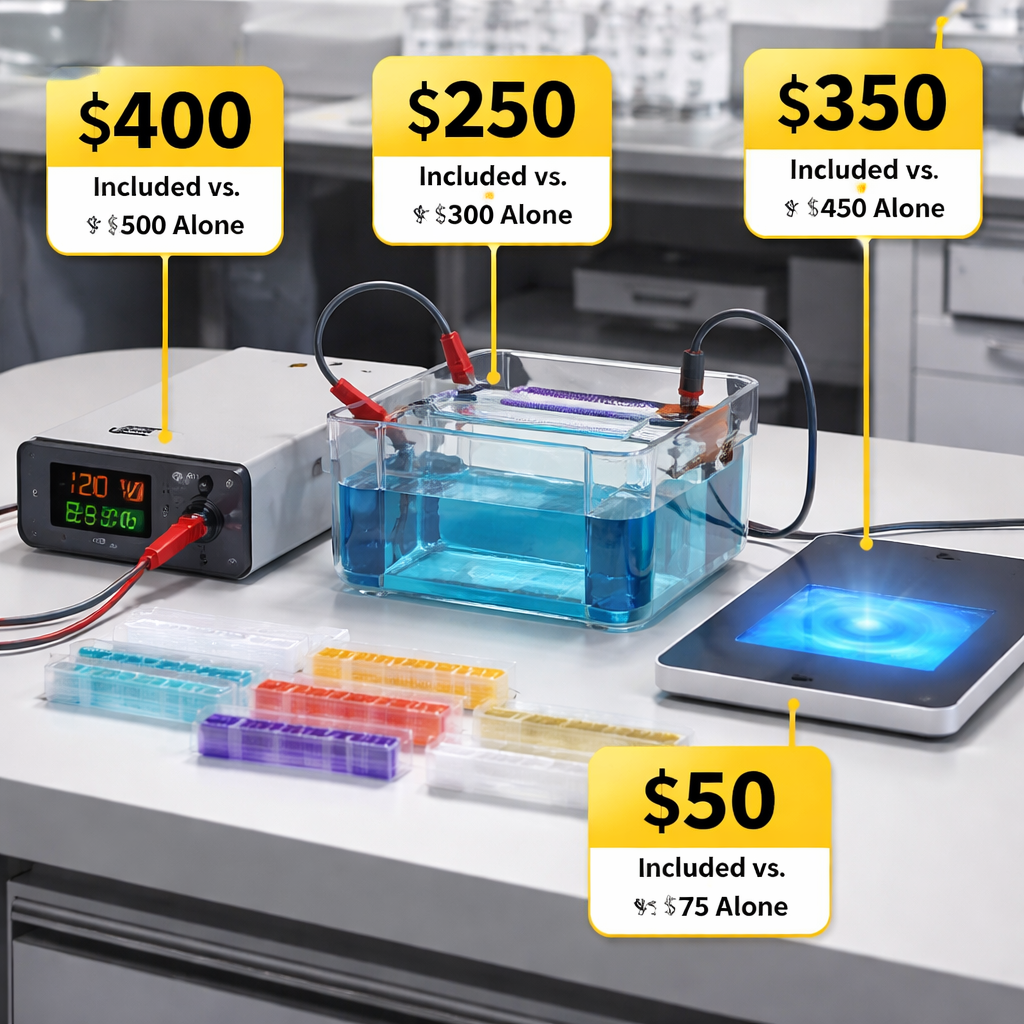
Conclusion
We've walked through every piece that makes up a gel electrophoresis kit price, from the power supply to the LED transilluminator and the tiny accessories that often get ignored.
What sticks out is that the cheapest sticker doesn't always win. A modest bump in price for a bundled kit can save you on spare lids, electricity, and the headache of mismatched parts.
Quick takeaways
- List your must‑haves first – power, tank, light source.
- Compare bundles vs à la carte; bundles usually shave 10‑15 %.
- Factor hidden costs: power draw, buffer waste, warranty.
For academic labs, teaching classrooms, CROs, or biotech startups, the sweet spot often lands on a reliable bundle that includes a low‑voltage supply, an acrylic tank, and a blue‑light LED. That combo keeps the gel electrophoresis kit price predictable and the workflow smooth.
So, what’s the next step? Grab a notebook, jot down the three core components you need, then check the bundle pages on platforms like Shop Genomics. Ordering before the month ends can lock in free‑shipping offers and give you that extra peace of mind.
Remember, a little extra up‑front investment can turn a one‑off purchase into a five‑year savings engine. Happy gel runs!
Keep tracking your costs, and you’ll stay ahead of the budget curve.
FAQ
What exactly drives the gel electrophoresis kit price?
It’s not just the sticker you see on the box. The price is a sum of the power supply, tank material, light source, and the little accessories like combs and lids. A low‑voltage bench‑top power supply costs far less than a high‑voltage unit with safety interlocks. Acrylic tanks are cheap, but stainless‑steel ones add durability that can save you money over years. Even the type of LED – blue‑light versus UV – shifts the cost because UV needs extra safety gear.
So, when you compare kits, break down each component and ask yourself which features you really need for your workflow.
How can I keep the gel electrophoresis kit price under control without sacrificing quality?
Start by listing your must‑haves: a reliable power supply, a tank that fits your bench, and a light source that works with your stain. Then look for bundled kits – they usually shave 10‑15 % off the total of individual parts. Reusable combs and loading tips also cut recurring spend. If you already own a compatible power supply, swapping just the tank or transilluminator can be cheaper than buying a whole new bundle.
In our experience at Shop Genomics, bundles that include a low‑voltage supply, acrylic tank, and blue‑light LED often end up cheaper than buying each piece separately, especially when you factor in free‑shipping thresholds.
Is a higher upfront gel electrophoresis kit price ever worth it?
Yes, if the extra cost translates into lower total cost of ownership. A stainless‑steel tank might be $200‑$300 more, but it resists cracks and chemical attacks, meaning you won’t replace lids or tanks every few years. A power supply with built‑in safety interlocks can prevent accidental over‑runs that waste samples and buffer. Over a five‑year span, those savings can outweigh the initial price difference.
Think of it like buying a sturdy backpack versus a cheap one that falls apart after a few trips – the higher price pays off in durability.
What hidden expenses should I watch for when budgeting for a gel electrophoresis kit?
Beyond the base price, consider power consumption – a 30 W LED unit uses about half the electricity of a 60 W UV box, saving roughly $80 per year. Buffer waste can add up if the tank lid leaks; spill‑proof lids reduce that loss by up to 10 %. Warranty extensions and spare parts like extra lids or electrode plates often cost $50‑$120 each, so factor those into your budget.
Adding up these hidden costs gives you a realistic picture of the gel electrophoresis kit price over time.
Can I use a kit designed for teaching labs in a research setting?
Absolutely, as long as the components meet your performance needs. Many education‑focused kits bundle a low‑voltage supply and blue‑light LED, which are perfectly fine for routine PCR checks in a research lab. If you need higher voltage for larger gels or faster runs, you might need to upgrade the power supply later. The key is to start with a core bundle that covers the basics and then add on higher‑spec parts only when the workflow demands it.
This approach lets you keep the initial gel electrophoresis kit price low while still having a path to scale up.
How do I calculate the total cost of ownership for a gel electrophoresis kit?
Take the upfront price, then add estimated yearly costs: electricity (use the wattage rating to compute kWh), buffer waste (estimate 5‑10 % of your usual buffer spend), and spare part replacements (budget $80‑$120 every two years for lids or electrodes). Divide the sum by the expected lifespan – usually five to ten years – to get an annual cost. Compare that number across different kits rather than just the sticker price.
When the annual total lines up with your lab’s budget, you’ll know you’ve made a smart purchase.
Common mistakes when budgeting for a kit
Ever looked at a gel electrophoresis kit price and thought, "That’s all I need to worry about"? Most of us have. The truth is, the sticker price is just the tip of the iceberg.
One easy slip is forgetting the hidden consumables. A cheap kit might omit reusable combs or loading tips, so you end up buying them separately – that can add $80‑$120 to your budget before you even run the first gel.
Another classic blunder is under‑estimating power draw. A 60 W LED transilluminator sounds fine until you tally the electricity bill: at $0.13/kWh, that’s roughly $100 a year. A lower‑wattage 30 W unit saves you half that amount and often costs less up‑front.
Do you factor in spare parts? Lids, electrodes, and even a spare power supply can cost $70‑$150 each. If you ignore them, a cracked lid forces a sudden $200 emergency order – a budget shock you could have avoided.
Choosing the wrong buffer can also bite you. Fresh TBE or TAE isn’t just a lab‑tech detail; old buffer degrades, leading to fuzzy bands and wasted runs. Budget for regular buffer refreshes – about 10 % of the initial kit cost per year.
And what about warranty and shipping? A kit priced $1,150 without free‑shipping on orders over $1,000 can end up $100 more after delivery. A longer warranty (2‑year vs. 1‑year) might add $50 now but saves you repair fees later.
We’ve seen labs pay extra for features they never use – like a high‑voltage supply for a routine 0.8‑1.2 % agarose gel. Stick to the voltage range you actually need; it keeps the kit price lean and the learning curve shallow.
Finally, don’t overlook the cost of training. If the kit isn’t intuitive, you’ll spend hours troubleshooting, which translates into hidden labour costs. A well‑documented bundle, like the ones we recommend, often includes quick‑start guides that cut down that time.
All of these pitfalls are listed among the common pitfalls in gel electrophoresis. By mapping them to your own workflow, you can turn a seemingly low gel electrophoresis kit price into a predictable, low‑total‑cost investment.