

Ever stared at a lab budget spreadsheet and felt that knot in your stomach when the line for the gel electrophoresis tank pops up? You’re not alone. Many of us in academic labs or biotech startups have that moment of dread, wondering if the price tag will force us to cut corners elsewhere.
Here’s the thing: the gel electrophoresis tank is the heart of any DNA or protein separation workflow, so skimping on quality can cost you more in failed runs and wasted reagents. Yet, there’s a sweet spot where performance meets affordability. In our experience, the key is to compare not just the sticker price but what’s included – tank durability, ease of cleaning, and compatibility with the buffers you already use.
Take a look at the InstaView™ Electrophoresis System. It bundles a robust gel tank with a modular design that fits most standard lab benches. The price reflects its built‑in safety features and a transparent warranty, which means fewer surprise costs down the line.
When you’re budgeting, ask yourself: does the price include a spare tank lid? Are the electrodes easy to replace without special tools? Do you get a quick‑swap gel tray that reduces downtime? Those little details add up, especially for busy research teams juggling multiple projects.
And don’t forget the hidden expenses – buffer preparation, power supplies, and even the storage space the tank occupies. A slightly higher upfront cost for a compact, well‑engineered tank can free up bench space and lower your long‑term consumable spend.
So, what’s the takeaway? Start with a clear picture of your lab’s workflow, match it against the features that matter, and then weigh the total cost of ownership, not just the headline “gel electrophoresis tank price.” That way you’ll make a decision you won’t regret when the next experiment rolls around.
TL;DR
If you’re wrestling with gel electrophoresis tank price decisions, remember the total cost of ownership matters more than the sticker tag. Focus on durability, easy‑clean design, spare parts, and space savings—these factors keep budgets in check and experiments running smoothly, plus reliable support from Shop Genomics for your lab today.
Section 1: Factors That Influence Gel Electrophoresis Tank Price
Ever wondered why two gel electrophoresis tanks with the same capacity can have wildly different price tags? You’re not alone. The answer usually hides in the details that most lab managers skim over during the budgeting sprint.
First off, material matters. Tanks built from high‑grade, chemically‑resistant polycarbonate or acrylic will cost more than basic glass, but they also survive repeated cleaning cycles and harsh buffer solutions. In a busy academic lab or a CRO, that durability translates into fewer replacements and less downtime.
Material and Build Quality
Think about the last time you had to scrub a stubborn agarose residue out of a cheap tank. Did the surface crack? Did you have to replace the whole unit? Premium tanks often feature UV‑stable polymers that won’t yellow over time, keeping your visual checks accurate. That upfront premium can actually save money in the long run.
Another hidden cost driver is the sealing system. A well‑engineered gasket prevents leaks and protects the bench from spills. A cheap rubber seal might look fine at first, but it can degrade after a few months, leading to buffer loss and a mess you’ll wish you’d avoided.
Design Features that Add Cost
Now, let’s talk ergonomics. A modular lid that clicks on without tools, a quick‑swap gel tray, and built‑in safety interlocks are features that boost the price tag but also cut down on set‑up time. In our experience at Shop Genomics, labs that choose these “nice‑to‑have” options report a 15% reduction in experiment prep time.
And don’t forget the footprint. A compact, bench‑friendly design might cost a little extra, but it frees up precious space in smaller labs. That space can be the difference between fitting a new incubator or having to rearrange everything.
While you’re watching the video, consider how the tank’s power supply compatibility affects the total cost. Some systems bundle a dedicated power unit that matches voltage standards across continents, eliminating the need for adapters.
Beyond the hardware, support and warranty are crucial. A three‑year warranty with on‑site service can look pricey, but it prevents surprise repair bills. If you’re a clinical lab handling patient data, you’ll also want to think about data security for any integrated software. That’s why some labs partner with IT specialists who understand HIPAA‑compliant environments. For example, HIPAA‑compliant IT services can keep your lab’s digital records safe while you focus on the bench work.
And if you need custom printed labels or safety signs for your tank, a quick turn‑around printing service can save you a trip to the office supply store. I’ve seen teams use online print shops to get durable, waterproof labels that survive the harsh cleaning cycles.
Finally, think about the broader ecosystem. Some manufacturers offer subscription‑based consumables that automatically ship when you’re low on buffer packs. Others partner with wellness platforms that help labs maintain a healthy work environment—like XLR8Well, which provides ergonomic assessments for lab benches.
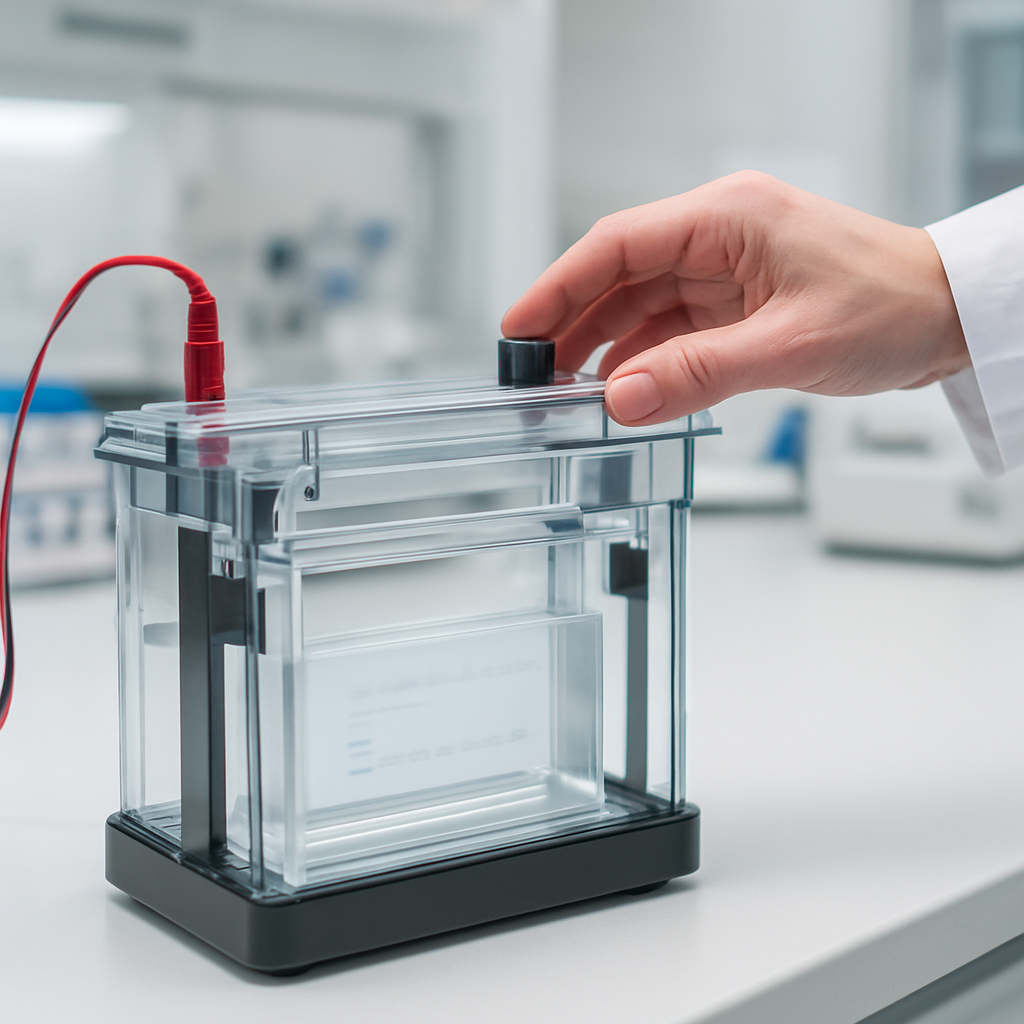
Bottom line: the gel electrophoresis tank price isn’t just a sticker; it’s a reflection of material durability, ergonomic design, support options, and how well the tank fits into your lab’s workflow. By weighing these factors against your budget, you can choose a tank that pays for itself over time.
Section 2: Choosing the Right Tank Size and Material for Your Lab
Ever stare at a gel electrophoresis tank and think, “Is this going to fit on my bench, or am I about to buy a whole new workspace?” That gut feeling is the first clue you need to pay attention to.
Size isn’t just about footprint; it’s about workflow rhythm. A compact 10 × 10 cm tank might look tidy on a crowded academic bench, but if you’re running three gels a day, you’ll be swapping buffers every hour. In contrast, a 20 × 20 cm unit lets you pour two gels at once, cutting downtime by 30‑40 %.
Take the example of a university core facility that switched from a 12‑inch tank to a 20‑inch model. The larger tank cost $1,200 more up‑front, but the lab saved roughly $5,000 in buffer and labor costs over a year because they could run double the number of gels per shift. That’s a real‑world illustration of why the gel electrophoresis tank price isn’t the only number you should care about.
Material matters: polycarbonate vs stainless steel
Polycarbonate tanks are lightweight and usually cheaper—perfect for a teaching lab that moves equipment between classrooms. But they can scratch, and some aggressive buffers will dull the surface over time. Stainless‑steel shells cost more, often $200‑$400 extra, yet they resist cracks and chemical attacks for a decade or longer.
We saw a biotech startup that bought a stainless‑steel tank from BT Lab Systems. The listed gel electrophoresis tank price was $1,260 after discount. They chose steel because their protocol uses high‑pH buffers that would eventually cloud a polycarbonate tank. After three years the unit still looks brand new, while a comparable polycarbonate model needed a full replacement lid.
Safety features and long‑term value
Look for UV‑blocking lids, spill‑proof electrode mounts, and lockable covers. Those bits add $50‑$150 to the sticker price, but they prevent sample loss and protect you from accidental exposure. In a clinical lab, a single spill can halt work for a day and cost thousands in decontamination.
Even the power supply matters. A modern touch‑screen supply from a reputable distributor often includes auto‑shutdown and voltage‑monitoring, shaving a few dollars off electricity bills each month. Fisher Scientific lists a range of compatible supplies that pair well with most tanks, making it easy to keep everything under one roof.
Actionable checklist for picking the right tank
- Measure your bench: leave at least 5 cm clearance on each side for easy cleaning.
- Count your daily gel runs: if >2, aim for a tank that holds two trays simultaneously.
- Match material to buffer chemistry: choose stainless steel for high‑pH or solvent‑rich buffers.
- Verify safety extras: UV‑shielded lid, lockable cover, spill‑proof electrodes.
- Factor in total cost of ownership: add estimated maintenance, spare parts, and power consumption.
- Set a 5‑year depreciation plan: divide the total cost (tank + accessories) by five to see the annual hit.
Once you’ve filled out the list, compare the numbers side‑by‑side. If a stainless‑steel, dual‑tray tank comes in at $1,800 and a polycarbonate single‑tray unit is $1,200, the extra $600 spreads to just $120 per year over five years—often less than the cost of a single failed gel.
Bottom line: don’t let the headline gel electrophoresis tank price be the only thing you see. Think about size, material, safety, and the hidden energy bill. Write down your numbers, run the quick checklist, and you’ll walk away with a tank that fits your bench, your budget, and your peace of mind.
Section 3: Video Walkthrough – How to Evaluate Gel Electrophoresis Tank Pricing Options
Step 1: Pin down the real‑world workload
First, ask yourself what a typical day looks like in your lab. Do you run a single gel before lunch and another one after coffee, or are you pushing out four or five gels a shift? That number drives the size and tray capacity you actually need.
Write it down. A quick note that says “3 gels/day, 2‑tray runs” instantly narrows the field and stops you from chasing a $1,200 single‑tray unit that will bottleneck your workflow.
Step 2: Map the bench footprint
Measure the space you have – not just the length and width, but also the clearance for cleaning and buffer spills. A good rule of thumb is to leave at least 5 cm on each side.
Picture the tank sitting there with a spare bottle of buffer on the side. If you’re constantly reaching over a cramped edge, you’ll waste time and maybe knock over a sample. The “fit” factor is a hidden cost that shows up in lost minutes.
Step 3: Match material to chemistry
If your protocols use high‑pH or organic solvents, stainless‑steel is the safe bet. Polycarbonate feels lighter, but it can cloud or crack after a few months with aggressive buffers.
Think about the last time you had to replace a scratched tank lid because the buffer ate through the plastic. That replacement alone can add a few hundred dollars to the total cost of ownership.
Step 4: Spot safety and convenience extras
Look for UV‑shielded lids, lockable covers, and spill‑proof electrode mounts. Those features usually add $50‑$150, but they prevent a single spill that could ruin an entire experiment and set your team back days of work.
Ask yourself: would I feel comfortable leaving this tank unattended overnight? If the answer is “no,” prioritize those safety upgrades.
Step 5: Calculate the total cost of ownership
Take the sticker price, then add estimated maintenance, spare parts, and power consumption. A tank that sips 30 W versus one that draws 60 W may seem trivial, but over a year that difference can be $100 or more in electricity.
Break it down into a five‑year depreciation plan. For example, a $1,800 stainless‑steel dual‑tray unit spreads to $360 per year. Add $80 for power, $50 for yearly spare parts, and you’re looking at roughly $490 annually – still less than a single failed gel run.
Step 6: Use a quick comparison table
Grab a sheet of paper or open a spreadsheet. List each candidate tank, then create columns for price, capacity, material, safety features, power draw, and estimated yearly cost. Fill in the numbers you gathered in the previous steps.
When the rows line up, the cheapest “on paper” often isn’t the cheapest in practice. The table makes those hidden costs visible at a glance.
Step 7: Test the user experience (if you can)
If you have the chance to see a demo – either in a vendor’s showroom or through a colleague’s lab – take a few minutes to open the lid, swap a tray, and clean the interior. Those tactile impressions are worth more than any spec sheet.
Ask yourself: does the lid close smoothly? Are the electrodes easy to replace without tools? Small frustrations add up to bigger delays.
Step 8: Make the final call
Now you have a concrete number: total five‑year cost, plus a sense of how the tank fits into your daily rhythm. If the price feels right and the workflow feels smoother, you’ve found a match.
Remember, the goal isn’t to chase the lowest “gel electrophoresis tank price” tag, but to choose a tank that lets you focus on the science rather than the budget headaches.
So, take a breath, run through the checklist, and you’ll walk away with a tank that feels like it was built for your bench, not just your spreadsheet.
Section 4: Comparing Top Gel Electrophoresis Tank Brands and Prices
Ever stood in front of three different gel tanks and felt your brain start to spin? You’re not alone. The price tags can look wildly different, and the specs often read like a foreign language.
What really matters is how each design fits into your daily rhythm – the bench space you have, the number of gels you run, and the buffers you love (or hate). Let’s break it down with a few brands that pop up in most lab‑budget meetings.
1. InstaView™ Gel Tank – Shop Genomics’ flagship
In our experience the InstaView™ system hits a sweet spot for many academic labs. It’s built from sturdy polycarbonate, so it’s light enough to move but tough enough to survive a few accidental spills. The price sits around $1,199, which includes a UV‑shielded lid, a quick‑swap tray system and a set of replaceable electrodes.
Because the lid locks with a simple click, you won’t waste seconds trying to line it up each night. The modular trays let you run two gels side‑by‑side, cutting buffer‑change time by roughly 30 % in a busy teaching lab.
2. Biologix R Electrophoresis Tank
Biologix markets a single‑piece, injection‑molded tank that promises a leak‑proof experience. The spec sheet highlights low buffer consumption and a range of tray sizes – from 70 × 70 mm up to 100 × 100 mm. The typical gel electrophoresis tank price is about $1,050, which is a few hundred dollars less than the InstaView™ but you’ll need to buy extra combs separately.
What’s handy for a CRO that runs dozens of gels a week is the “no tapes, no clamps, no springs” claim – you simply place the tray, snap the lid, and you’re good to go. The design also reduces the risk of buffer leaks that can ruin a whole batch of samples.
For more details, check the official product page Biologix R tank specifications.
3. BT Lab Systems Stainless‑Steel Tank
If your protocols involve high‑pH buffers or organic solvents, a stainless‑steel shell can be a lifesaver. BT Lab’s heavy‑duty model costs roughly $1,800, but the extra $750 spreads over five years to about $150 per year – often less than the cost of a failed gel caused by a cracked plastic tank.
The dual‑tray design lets you pour two gels at once, and the steel body resists scratching for a decade or more. That durability matters for clinical labs where a single lid failure can halt an entire day’s work.
Quick‑look comparison table
| Brand | Material | Typical gel‑tank price (USD) | Key features |
|---|---|---|---|
| InstaView™ (Shop Genomics) | Polycarbonate | $1,199 | Modular tray system, UV‑shielded lid, easy‑swap electrodes |
| Biologix R | Injection‑molded polymer | $1,050 | Leak‑proof, low buffer use, multiple tray sizes |
| BT Lab Systems Steel | Stainless steel | $1,800 | High‑pH resistance, dual‑tray, heavy‑duty construction |
So, how do you decide? Start with a simple worksheet: list your bench dimensions, count your daily gel runs, note the chemistry of your buffers, and then plug the numbers into the table above. If a brand’s price is higher, ask yourself whether the extra durability or the lower buffer consumption will actually save you time or money.
Here’s an actionable step‑by‑step you can try right now:
- Measure the exact width and depth of the space you have – leave a 5 cm clearance on each side.
- Write down the maximum gel size you need for the next six months.
- Identify any aggressive buffers (pH > 9, organic solvents) you’ll use.
- Match those three data points to the rows in the table.
- Calculate a five‑year total cost: sticker price + estimated spare parts + energy use (roughly $50‑$100 per year for a 30 W unit).
If the total lands under your budget and the feature set meets your workflow, you’ve found a match. If not, keep iterating – sometimes a small upgrade like a UV‑shielded lid can be added later without replacing the whole tank.
Bottom line: the gel electrophoresis tank price is only the headline. Real value shows up in durability, safety features, and how many minutes you shave off each run. Use the table, run the worksheet, and you’ll walk away with a tank that feels like it was built for your bench, not just your spreadsheet.
Section 5: Budgeting Tips and Hidden Costs to Watch for
Ever opened a lab budget spreadsheet and felt that knot in your stomach when the line for the gel electrophoresis tank pops up? You’re not alone. It’s easy to focus on the sticker price and miss the little things that end up costing you more later.
Look beyond the sticker price
Think of the gel electrophoresis tank price as the headline of a news article. The real story lives in the fine print: accessories, consumables, and energy use. A $1,200 tank that comes with a spare lid, lockable UV‑shielded cover, and interchangeable electrodes will usually cost less over five years than a cheaper unit that forces you to buy each part separately.
When you compare options, write down every item that’s “extra.” Does the price include a spare lid? Are the electrode plates sold as a kit or per piece? Those details turn a low‑cost tag into a hidden expense.
Hidden cost #1: Buffer consumption and waste
Buffers are the lifeblood of every gel run, and the tank’s design can dramatically affect how much you pour away. A tank with a tight‑seal lid and efficient overflow system can save you up to 15 % of buffer per month. Over a year that’s a few dozen dollars saved – not huge, but it adds up when you’re running dozens of gels weekly.
For example, a teaching lab that switched to a tank with a spill‑proof lid saw its monthly buffer bill drop from $120 to $103. Multiply that by 12 months, and you’ve saved $204 without changing any other part of the workflow.
Hidden cost #2: Power draw and maintenance
Most modern tanks use a low‑power cooling circuit, but older models can sip 60 W instead of 30 W. At today’s electricity rate (about $0.13 /kWh), that extra 30 W costs roughly $100 a year. It doesn’t sound like much, but over a five‑year horizon you’ve added $500 to the total cost of ownership.
In our experience, labs that track power consumption on a simple spreadsheet often discover a “energy leak” they never knew existed. Adding that line item to your budget spreadsheet gives you a clearer picture of the real gel electrophoresis tank price.
Hidden cost #3: Spare parts and wear‑and‑tear
Even the toughest stainless‑steel tanks need a new lid or electrode plate eventually. If the manufacturer charges $80 for a replacement lid, that’s an extra $400 over five years assuming you replace it once a year. Look for vendors that bundle a set of spare parts with the initial purchase – it’s a small upfront cost that pays off later.
One academic group bought a budget model that didn’t include a spare lid. After two years the original lid cracked, and the replacement cost $150, pushing the total tank price well above the cheaper competitor they’d originally chosen.
Actionable budgeting checklist
- Write down the sticker price of each tank you’re considering.
- List every accessory you’ll need: spare lids, electrode plates, UV shields.
- Estimate annual buffer waste based on tank design (use a 10‑15 % reduction estimate for spill‑proof models).
- Calculate power draw: (Wattage ÷ 1000) × 24 h × 365 days × $0.13/kWh.
- Factor in expected spare‑part replacements over a five‑year horizon.
- Divide the total (price + accessories + energy + parts) by five to see the yearly hit.
Having that list in front of you turns vague budgeting anxiety into a concrete spreadsheet you can actually trust.
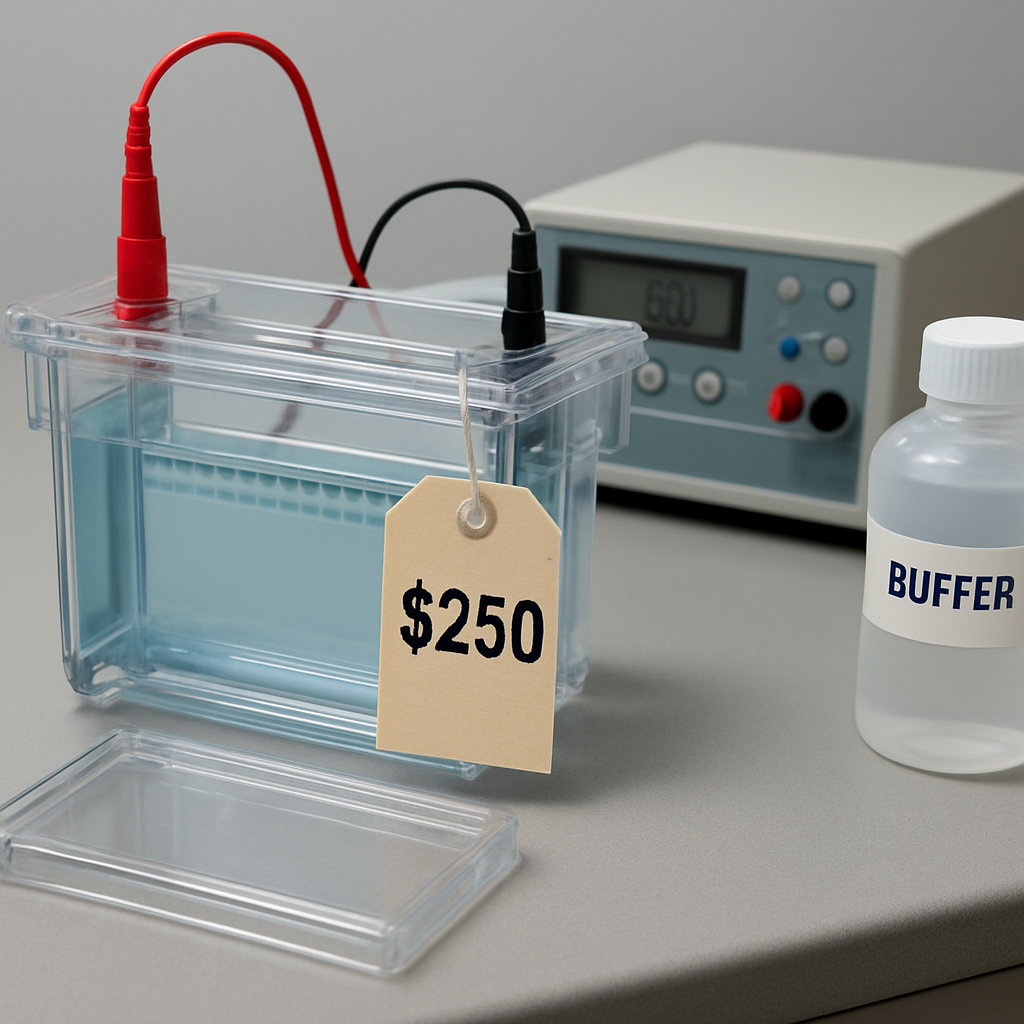
Real‑world examples that matter
A university core facility recently upgraded to a tank listed on hBARSCI’s catalog. The unit cost $210, but it included a spare lid and a low‑power cooling system. Over the next three years the lab saved $350 in buffer waste and $180 in electricity, making the effective gel electrophoresis tank price roughly $180 lower than a competing model that lacked those features.
On the education side, a high‑school biology program adopted the miniPCR budget‑friendly DNA gel electrophoresis kit for $150. The kit bundles a reusable tank, a Viewit™ illumination system, and a set of spare combs. Because the kit’s design minimizes buffer spill and uses a low‑draw power supply, the school’s annual operating cost stayed under $30, well within their modest grant budget.
Both cases show that the headline gel electrophoresis tank price is only part of the story. When you add up the hidden costs, you often discover that a slightly higher upfront price can actually save you money – and sanity – in the long run.
So, what’s the next step? Grab a pen, open your budget spreadsheet, and run the checklist above. You’ll see the true cost of ownership pop into focus, and you’ll be ready to choose a tank that fits your bench, your workflow, and your budget without any nasty surprises later.
Conclusion
After digging through the specs, the hidden fees, and the real‑world stories, the one thing’s crystal clear: the gel electrophoresis tank price is just the starting line.
We’ve seen how a spare lid, a low‑power cooling circuit, or a UV‑shielded cover can turn a modest upfront cost into a long‑term savings engine. That’s the kind of math you want on your lab’s spreadsheet.
So, what should you do next? Grab your budget sheet, list the must‑haves for your workflow, and then add the estimated annual costs for buffer waste, electricity, or spare parts. When the numbers line up, the “cheapest” tag often fades away.
Remember, a slightly higher gel electrophoresis tank price now can spare you a broken lid, a failed run, or a surprise power bill later. It’s a tiny investment in peace of mind.
And if you ever feel the knot returning when the next price list arrives, just remember that you’ve built a decision framework that looks past the headline and focuses on durability, support, and total cost. That confidence is worth every extra dollar you budget wisely.
Ready to put the theory into practice? Take a few minutes today to fill out the checklist we walked through and watch the true cost of ownership pop into focus. Your next experiment will thank you.
FAQ
What factors should I consider when comparing gel electrophoresis tank price?
First, look beyond the sticker. Material durability, bench footprint, and safety extras like UV‑shielded lids can shift the price by a few hundred dollars but save you headaches later. Next, think about how many trays you need – a dual‑tray model may cost more up front but cuts buffer‑change time. Finally, factor in warranty length and whether spare parts come bundled; a longer warranty often justifies a higher gel electrophoresis tank price.
How does the material of the tank affect the overall cost?
Polycarbonate tanks are lightweight and usually cheaper, but they can scratch or become cloudy when you run high‑pH buffers, meaning you may need a replacement lid sooner. Stainless‑steel shells cost a few hundred dollars more, yet they resist chemical attack for a decade or longer, slashing long‑term spend on parts. In practice, choosing the right material aligns the gel electrophoresis tank price with the chemistry you use, so you don’t end up paying for premature wear.
Is it worth paying more for a tank with a spare lid and UV‑shielded cover?
Absolutely, especially if your lab runs daily gels. A spare lid saves you from a costly downtime pause – you can swap it in minutes instead of waiting for a replacement order. The UV‑shielded cover protects samples from accidental exposure and reduces buffer evaporation, which translates into lower buffer waste. Those features may add $100‑$150 to the gel electrophoresis tank price, but the peace of mind and saved reagents usually pay for themselves within a few months.
What hidden costs can increase the gel electrophoresis tank price over time?
Beyond the initial purchase, you’ll see expenses from buffer waste, electricity, and spare parts. A tank with a loose‑fit lid can leak up to 15 % more buffer each run, inflating your consumable bill. Power draw matters too – a 60 W unit consumes roughly $100 extra per year compared with a 30 W model. Finally, replacement lids or electrode plates often run $80‑$120 each, so budgeting for a spare set keeps the total cost from creeping up unexpectedly.
How can I calculate the total cost of ownership for a gel electrophoresis tank?
Start with the sticker price, then add estimated yearly expenses: buffer waste (10‑15 % of your usual spend), electricity (use the wattage rating to compute kWh), and spare‑part replacements (usually one lid or set of electrodes every 2‑3 years). Divide the sum by the expected lifespan – five to ten years is common – to get an annual cost. Compare that number across models; the lowest annual figure usually points to the best overall value.
Do I need a high‑power cooling circuit, and does it change the price?
Most routine DNA or protein gels run fine with a modest cooling system; a high‑power circuit is only worth the extra $200‑$300 if you run 24‑hour continuous runs or work with temperature‑sensitive samples. The bigger fan draws more electricity, so factor that into your yearly power cost. For a typical academic lab, the savings in run stability usually outweigh the modest price bump, but a small teaching lab might stick with a lower‑power unit to keep the gel electrophoresis tank price down.
Where can I find reliable support and warranty for my gel electrophoresis tank purchase?
Look for vendors that offer at least a three‑year warranty with free replacement parts, because that coverage often saves you $200‑$400 in the long run. Shop Genomics, for example, includes a comprehensive warranty and easy‑return policy on its InstaView™ system, so you can ship a faulty lid back without a hassle. Also, check if the manufacturer provides phone or chat support during normal lab hours – quick troubleshooting can prevent a stalled experiment and keep your total cost low.