
Ever watched a tiny tube spin so fast it looks like a miniature tornado and wondered what on earth is happening inside?
That whirring motion is the work of a vortex mixer, a staple in any genomics or biotech lab that needs rapid, reproducible mixing of liquids in microcentrifuge tubes, 96‑well plates, or even larger 50 ml bottles. In plain English, it’s a motor‑driven platform that shakes a sample holder in a circular pattern, creating a vortex that quickly homogenizes solutions without the risk of splashing.
Why does that matter? Picture a researcher at a university trying to dissolve a DNA extraction buffer in a 1.5 ml tube. A quick 5‑second spin in a vortex mixer gives a uniform solution, saving minutes that would otherwise be spent pipetting up and down. In our experience at Shop Genomics, labs that upgrade from manual mixing to a reliable vortex see a 15‑20 % boost in throughput because they spend less time prepping and more time analyzing.
There are a few real‑world scenarios that highlight the mixer’s versatility. A clinical diagnostics team processing dozens of patient swab samples can use a vortex to ensure each sample is fully lysed before PCR, reducing false negatives. A biotech startup working on CRISPR‑Cas9 edits often needs to mix enzyme mixes with guide RNAs; a consistent vortex prevents clumping and improves reaction efficiency. Even agricultural labs testing soil DNA benefit from the same quick, even mixing.
When you’re choosing a model, think about three practical factors: speed range, tube compatibility, and ergonomics. Speed ranges from 500 to 3,200 rpm cover most applications; higher speeds are useful for viscous solutions like cell lysates. Tube compatibility matters—some mixers hold standard 1.5 ml tubes, others accept 15‑ml conical tubes or 96‑well plates. Ergonomic designs with a soft‑touch start button and easy‑clean surfaces reduce repetitive‑strain injuries, a surprisingly common issue for lab techs.
Want to see the full lineup of options? Check out Vortex Mixers - Shop Genomics for models that fit everything from compact bench space to high‑throughput workflows. Once you’ve picked a mixer, a quick tip: pre‑wet the tube caps with the same buffer you’re mixing; this tiny habit cuts down on surface tension bubbles that can skew results.
So, if you’ve ever felt your hands cramp from repetitive pipetting or worried about inconsistent sample prep, a vortex mixer is the low‑maintenance shortcut that lets you focus on the science, not the stirring.
TL;DR
A vortex mixer is a compact lab tool that spins tubes fast, creating a tiny tornado that instantly homogenizes liquids for DNA, enzymes, or soil extracts.
Using one saves you time, reduces pipetting strain, and boosts reproducibility, so labs—from academic researchers to biotech startups—can focus on results instead of manual mixing.
How a Vortex Mixer Works
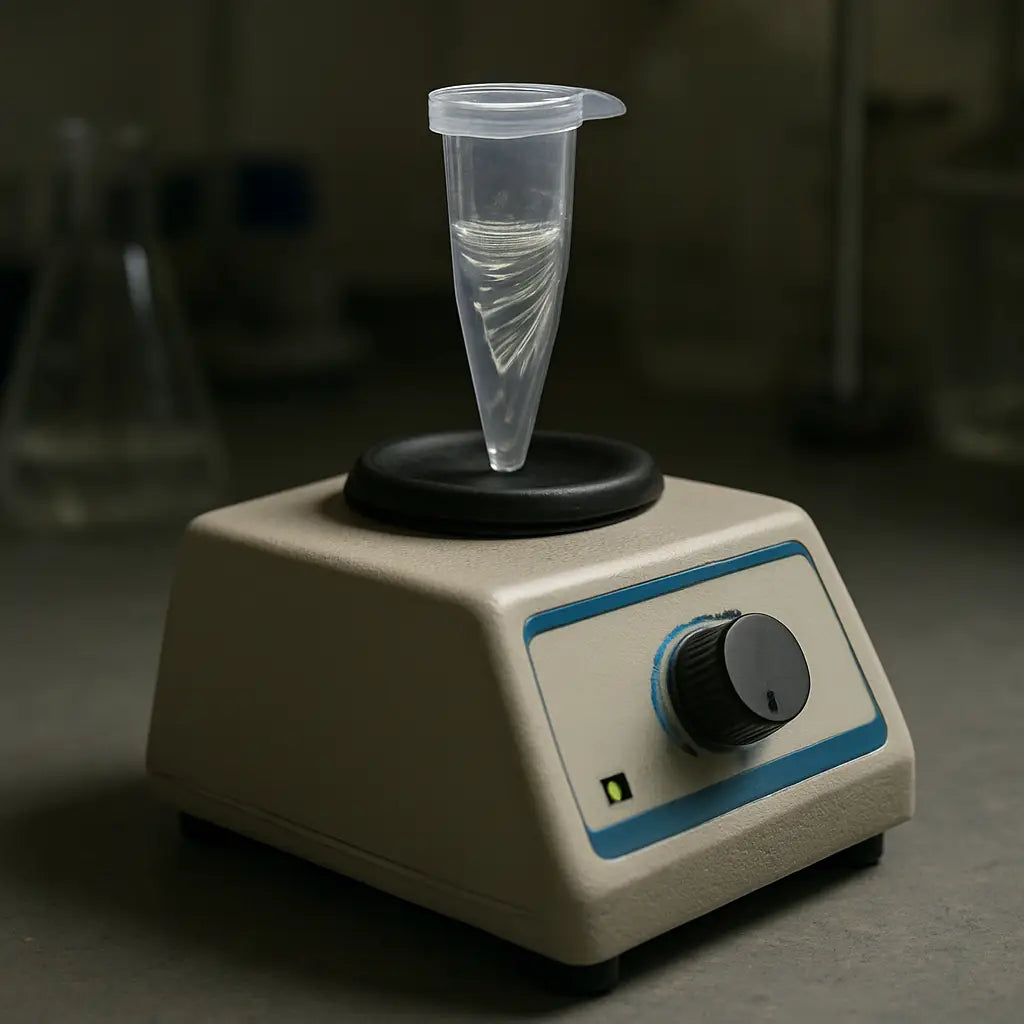
Ever wondered what actually happens inside that little tornado you see when a tube spins on a vortex mixer? The answer is both simple and clever – a motor spins an offset platform, and that motion creates a swirling vortex of liquid that mixes everything in seconds.
Think of it like stirring a cup of coffee with a tiny spoon that never touches the sides. The platform is mounted on a motor shaft that’s slightly off‑center. When the motor turns, the offset creates a circular wobble, and the liquid inside the tube follows that circular path, forming a mini‑whirlwind.
That whirlpool does two things at once: it pulls any particles or droplets toward the center and pushes them outward, breaking up clumps, and it does so without splashing. The result is a homogeneous solution ready for downstream steps like PCR or enzyme reactions.
So, how fast does it spin? Most mixers offer a speed range from about 500 rpm up to 3,200 rpm. Low speeds are gentle enough for delicate cell suspensions, while the high end tackles viscous lysates or thick oil‑in‑water emulsions. You can usually dial the speed with a knob or a digital control, and many models even let you set a timer – perfect for reproducible protocols.
But why does the offset matter? If the motor were perfectly centered, the platform would just spin like a record, and the liquid would mostly stay still relative to the tube. By offsetting the axis, the platform creates a tiny orbital motion – imagine the way a hamster runs on a wheel that’s slightly tilted. That tilt forces the liquid to move in circles, generating the vortex.
Here’s a quick mental picture: you place a 1.5 ml microcentrifuge tube on the mixer’s rubber pad. The motor spins, the pad rocks in a tiny circle, and the liquid inside begins to swirl. Within a few seconds, any powder you added is fully dissolved, any DNA fragments are evenly suspended, and you’ve saved yourself a handful of tedious pipetting steps.
For labs that process dozens of samples a day – think clinical diagnostics, biotech startups, or agricultural soil‑DNA projects – that speed translates into real time saved. You can set a batch of tubes to vortex for 5 seconds, move on to the next step, and know each tube got the same treatment.
Now, a little tip that often gets overlooked: pre‑wet the tube caps with the same buffer you’re mixing. That tiny habit reduces surface‑tension bubbles that can otherwise give you uneven results, especially when you’re dealing with low‑volume reactions.
And if you ever wonder whether a vortex mixer can handle larger volumes, the answer is yes – many models accept 15‑ml conical tubes or even 50‑ml bottles. The same principle applies; you just might need a higher speed setting to generate enough force for the bigger mass.
Curious to see the mechanics in action? Below is a short video that breaks down the motion frame by frame.
Notice how the platform’s wobble creates that characteristic whirlpool. When the motor stops, the liquid settles quickly, leaving a uniformly mixed sample ready for analysis.
Key Features to Look For
When you’re picking a vortex mixer, the details matter more than the glossy brochure. You want a tool that feels solid, mixes reliably, and doesn’t nag you with weird noises after a few weeks.
Speed range and control
The heart of any good mixer is its motor. Look for a device that lets you dial anywhere from about 100 rpm up to 3,200 rpm. Lower speeds are perfect for gently suspending delicate cells, while the top end shreds viscous lysates in seconds. Some models even let you program a pulse‑on, pulse‑off cycle, which keeps heat buildup low on temperature‑sensitive samples.
In our experience, the ability to set precise time and speed on the same dial cuts down on trial‑and‑error – you hit “10 seconds at 2,000 rpm” and the result is repeatable every run.
Tube and plate compatibility
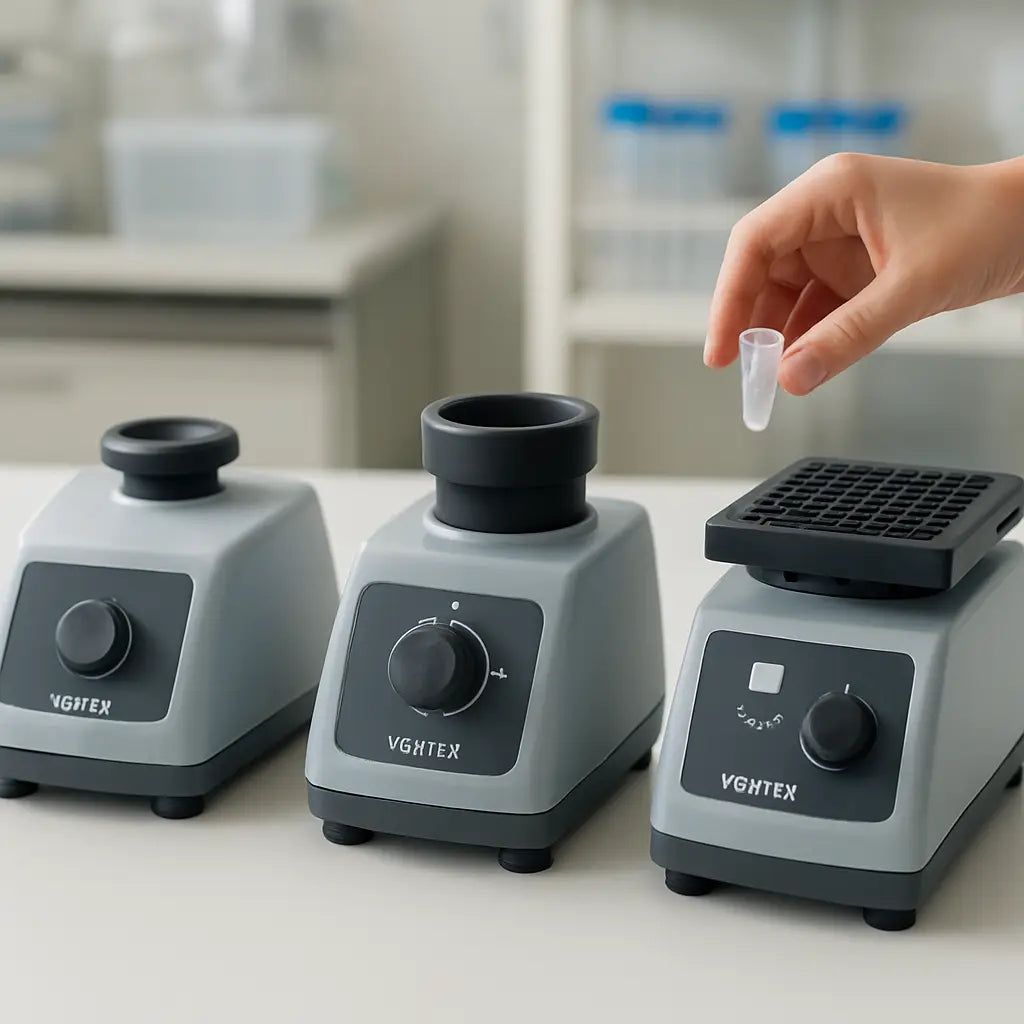
Lab work isn’t one‑size‑fits‑all. A versatile mixer will accept standard 0.2‑ml micro‑centrifuge tubes, 15‑ml conical tubes, and even 96‑well plates. Interchangeable heads – a rubber cup for single tubes, a textured disc for varied shapes, and a plate holder for high‑throughput work – let you switch tasks without swapping the whole unit.
For a quick rundown of the head options you might need, see the vortex mixer features guide.
Ergonomics and safety
Think about the little things that add up: a soft‑touch start button, a non‑slip base, and a clear display that shows both rpm and timer. Those touches keep your hand from cramping after a marathon of sample prep and reduce the chance of accidental spills.
Because the mixing motion is entirely external, you can vortex sealed tubes that contain hazardous reagents without worrying about aerosol leaks – a safety win for clinical and CRO labs alike.
Durability and maintenance
Rubber pads wear out over time, so a model with an easy‑snap‑on head makes replacement a breeze. Look for a mixer that can be wiped down with mild disinfectant and that has a motor sealed against dust. A quick visual check of the pad each month can spot wear before it affects performance.
Power options and footprint
Bench space is premium, especially in busy academic cores. Choose a unit that sits under a standard 19‑inch rack or has a compact benchtop footprint. Some mixers even run on 110‑V or 220‑V power, letting you plug into most lab outlets worldwide.
Optional accessories
Accessories can turn a basic mixer into a multi‑task workhorse. Think tube racks for parallel processing, temperature‑controlled plates for enzyme work, or a magnetic stir bar adapter if you ever need a hybrid approach. When you add the right add‑ons, you’re future‑proofing your investment.
Wondering what the core definition of a vortex mixer is? The vortex mixer basics article breaks it down nicely.
Bottom line: match the speed range to your sample viscosity, verify the head system covers the tube formats you use most, and pick a design that feels comfortable under your hand. When those boxes are checked, you’ll spend less time fiddling with equipment and more time getting real data.
Choosing the Right Vortex Mixer for Your Lab
So you’ve just figured out what is a vortex mixer and you’re ready to bring one into the bench. The next question feels bigger than it looks: which model actually fits your workflow without turning your bench into a storage closet?
Match the speed range to your samples
If you’re pulling DNA from bacterial pellets, you’ll need enough torque to shred that stubborn slime. Look for mixers that span at least 500 rpm up to 3,200 rpm – the lower end lets you gently suspend delicate cell cultures, while the high end tackles viscous lysates in seconds. In our experience, a speed dial that also shows the timer saves you the mental math of “spin for 10 seconds at 2,000 rpm”.
Tube and plate compatibility matters
Lab work is rarely one‑size‑fits‑all. A good mixer will accept 0.2‑ml micro‑tubes, 1.5‑2.0‑ml tubes, 15‑ml conicals, and even 96‑well plates. The ability to swap heads without tools means you can move from a single‑sample prep to a high‑throughput plate in minutes. Ohaus lists a whole family of interchangeable holders – from 0.5 mL micro‑tube adapters to micro‑plate trays – that illustrate how modular accessories can future‑proof your purchase.Ohaus offers a variety of tube holder accessories.
Ergonomics you’ll actually notice
Think about the last time you pressed a hard‑plastic button and felt your thumb ache after a dozen spins. Soft‑touch start pads, a non‑slip base, and a clear digital readout make a world of difference on a busy day. If your lab runs 24 hours, a quiet motor also keeps the surrounding workstations from sounding like a mini‑factory.
Footprint and power flexibility
Bench space is precious, especially in core facilities. A unit that fits under a standard 19‑inch rack or slides into a drawer leaves room for pipettes, tip boxes, and that occasional coffee mug. Dual‑voltage models (110‑V/220‑V) let you plug in whether you’re in a US university lab or a European biotech hub – you won’t have to worry about adapters.
Safety and maintenance
Because the mixing motion is external, sealed mixers let you vortex sealed tubes containing hazardous reagents without aerosol worries. Look for rubber cups that are easy to snap on and replace – a worn pad can cause inconsistent speeds. A quick monthly visual check of the cup and a wipe‑down with mild disinfectant keep the unit humming for years.
Accessory ecosystem
Accessories turn a simple vortex into a multi‑task platform. Tube racks let you process dozens of samples simultaneously, temperature‑controlled plates keep enzymes happy, and a magnetic stir bar adapter gives you a hybrid stir‑vortex option. When you choose a system with a robust accessory line, you avoid buying a whole new mixer when your needs grow.
So, how do you decide? Grab a pen and run through this quick checklist:
- Speed range covers 500‑3,200 rpm?
- Head system accepts the tube formats you use most?
- Soft‑touch start, clear display, and a quiet motor?
- Bench‑friendly footprint and dual‑voltage option?
- Easy‑snap rubber cup and simple cleaning routine?
- Available accessories for your future projects?
If you can tick most of those boxes, you’re looking at a mixer that will let you focus on the science, not the hardware. And because Shop Genomics curates models that meet these exact criteria, you can browse their catalog knowing each option was chosen with labs like yours in mind.
Safety Tips and Maintenance
When you’re pulling dozens of tubes a day, the last thing you want is a surprise that forces you to stop mid‑run. The vortex mixer is a sturdy workhorse, but like any lab tool it needs a little TLC to stay reliable and safe.
General safety practices
First thing’s first – always power down and unplug the mixer before you adjust anything. It sounds obvious, but a quick glance at the control panel can be tempting when you’re in a rush. A moment’s pause saves you from an accidental start‑up that could fling a sealed tube.
Keep the work area clear of loose liquids and clutter. A spill on the base can make the rubber cup slip, leading to uneven vortexing or, worse, a broken tube. And because the motion is external, you can safely vortex sealed tubes that hold hazardous reagents – just remember to keep the lid snug.
Does it ever feel like you’re juggling too many safety steps? Think of each one as a tiny checkpoint that keeps your experiment on track.
Cleaning & disinfection
After each batch, wipe the exterior with a soft, damp cloth and a mild detergent. Avoid abrasive pads – they’ll scratch the finish and could let moisture seep into the motor housing. The cleaning guidelines from Thermoline echo this: never spray water directly on the electrical components and always let the unit dry before plugging it back in.
For the rubber cup, a quick rinse with warm soapy water does the trick. If you’re working with viscous buffers or enzyme mixes, a brief soak in 70% ethanol helps remove residues that could affect future runs. Just be sure the cup is completely dry before the next spin – a damp pad can cause slippage and inconsistent speeds.
Routine maintenance checklist
Set a calendar reminder – monthly is a good rhythm for most labs. Here’s a quick cheat sheet you can print and stick on the bench:
| Maintenance task | Frequency | Notes |
|---|---|---|
| Inspect rubber cup for wear | Monthly | Replace if cracks or flattening appear; snap‑on designs make swaps easy. |
| Wipe exterior & control panel | After each use | Use a soft cloth with mild soap; avoid abrasive cleaners. |
| Check motor housing for dust | Quarterly | Compressed air can clear debris; keep the unit on a stable bench. |
That table may look simple, but following it can shave minutes off troubleshooting later. A worn cup, for example, often shows up as “inconsistent rpm” during a run – a quick swap saves you from re‑running samples.
Operating precautions you shouldn’t skip
The operating precautions list a few gems: never exceed the manufacturer’s speed rating for a given tube size, and always use the correct adapter for 96‑well plates. Over‑speeding can generate excessive shear forces that break delicate cells or shear DNA.
Also, keep the tube caps slightly loosened when you’re vortexing volatile solvents. The sudden acceleration can create pressure spikes; a tiny vent prevents the cap from popping off.
So, what should you do next? Take a moment after your next run to glance at the cup, give the base a quick wipe, and note any odd noises. Those tiny checks become habit, and habit means fewer emergencies.
Troubleshooting quick fixes
If the motor hums but the cup doesn’t move, it’s likely a loose coupling – tighten the head according to the user manual. A rattling sound? Check that the rubber pad isn’t stuck to debris; a gentle brush usually does the trick.
And if you ever notice a sudden loss of speed, first verify the power cord isn’t frayed. A damaged cord is a safety hazard and can cause intermittent power loss.
Remember, the vortex mixer is built to endure heavy use, but it only stays that way when you treat it like a lab partner, not a disposable gadget.
Comparing Top Vortex Mixer Models
When you start looking at vortex mixers, the choices can feel a bit like walking into a hardware store and seeing every wrench on the shelf. Which one actually fits your bench, your budget, and the kind of samples you handle?
Let’s break it down into three buckets most labs care about: compact workhorses, high‑speed specialists, and flexible systems with accessories.
Compact workhorses
These are the “grab‑and‑go” units you’ll see on a typical academic bench. They usually sit under 12 inches tall, have a single rubber cup, and cover 100‑2,500 rpm. The classic design from Velp Scientifica is a good example – it offers touch‑activated start, a modest footprint, and a speed dial that tops out around 3,000 rpm.Velp’s Classic vortex mixer is praised for its reliability in everyday sample prep.
If you’re a small‑scale research group or a teaching lab, this size lets you stash the mixer in a drawer when you’re done. The lower speed range is gentle enough for delicate cell suspensions, yet you can crank it up to dissolve stubborn pellets in seconds.
High‑speed specialists
When you need to shred viscous lysates or break up tough tissue fragments, speed matters. Models that push past 3,200 rpm usually have a more robust motor and a reinforced rubber cup. They’re a favorite in biotech startups that run frequent CRISPR assemblies where every second of vortexing counts.
One thing to watch is the torque‑to‑speed balance – a mixer that spins fast but can’t maintain torque will slip on larger tubes. Look for units that list a clear torque rating or mention “stable rpm under load.” In practice, you’ll notice a smoother, quieter spin when the motor is sized right.
Flexible systems with accessories
Some labs need to switch between 1.5 ml tubes, 15 ml conicals, and 96‑well plates without buying a new device. Flexible systems come with interchangeable heads, plate adapters, and sometimes magnetic stir bar options.
The Lab Supply Network catalog showcases several vortexers that ship with a suite of heads for different tube formats.Lab Supply Network vortex mixers are built with quick‑snap heads, so you can jump from a single tube to a high‑throughput plate in under a minute.
For CROs or core facilities, that flexibility translates into lower total cost of ownership – you buy one chassis and add the accessories you need as projects evolve.
How to pick the right one for you
Grab a pen and run through this quick checklist:
- What tube sizes dominate your workflow? If you’re mostly 1.5 ml micro‑tubes, a compact unit is fine. Need 50 ml conicals? Make sure the mixer offers a “big‑cup” upgrade.
- Do you regularly work with 96‑well plates? Make sure the mixer offers a plate adapter; otherwise you’ll end up buying a separate device.
- How much bench space do you have? Measure the height and base dimensions – a low‑profile unit can slip under a rack.
- Is quiet operation important? Models with a sealed motor housing tend to run at < 30 dB, which is a relief in shared labs.
- What’s your budget ceiling? Compact units often sit under $200, while high‑speed or fully modular systems can climb into the $500‑$800 range.
Once you’ve answered those, you’ll have a clear picture of whether a compact workhorse, a high‑speed specialist, or a modular system is the best fit.
And a little pro tip: keep a spare rubber cup on hand. A worn pad can cause “slipping” noises that look like a malfunction but are actually just wear and tear.
FAQ
What is a vortex mixer and how does it work?
A vortex mixer is a small bench‑top device that spins a rubber cup in a tight circle. The motor drives the cup off‑center, so when you press a tube down it wobbles and creates a tiny tornado inside the liquid. That swirling motion mixes everything in seconds without a stir bar touching the sample. It’s basically a fast, hands‑free way to dissolve powders, suspend cells, or blend reagents.
What kinds of tubes or plates can I use?
Most mixers accept standard 0.2 ml micro‑centrifuge tubes, 1.5–2 ml tubes, and 15 ml conical flasks. If you work with high‑throughput assays, look for a model that offers a 96‑well plate adapter – the cup is replaced by a textured disc that holds each well. Some units also have heads for 50 ml bottles or even magnetic stir bar adapters, so you can switch between formats without buying a new device.
How do I choose the right speed for my sample?
Start low – around 500 rpm – if you’re gently resuspending delicate cells or mixing enzyme solutions that can denature. For viscous lysates or tough pellets, crank it up to 2,500–3,200 rpm. Many mixers let you set a timer, so you can do a quick 5‑second spin at high speed or a 30‑second pulse at medium speed. The key is to match the torque needed; higher speed with insufficient torque will just slip and make noise.
Is it safe to vortex sealed or hazardous tubes?
Yes, because the mixing motion is entirely external. As long as the tube cap is snug, the vortex won’t generate aerosols. For volatile solvents, loosen the cap just a hair so pressure can equalise – that prevents the cap from popping off. Always double‑check that the rubber cup is clean and undamaged, because a worn pad can slip and cause a sudden jerk that might break a fragile tube.
How often should I clean and maintain the mixer?
Wipe the exterior with a soft, damp cloth after each run; avoid abrasive pads that could scratch the housing. Rinse the rubber cup in warm soapy water, or give it a quick dip in 70 % ethanol if you’ve handled sticky buffers. Inspect the cup monthly for cracks or flattening and replace it if you see wear. A quarterly dust‑off of the motor housing with compressed air keeps the unit humming smoothly.
Can I vortex temperature‑sensitive reactions without overheating?
Mixing generates a bit of heat, especially at the top end of the speed range. To protect heat‑labile enzymes, use the pulsing function if your model has one – it gives short bursts of motion followed by a pause, limiting temperature rise. Alternatively, keep the run time under 10 seconds at high speed, or place the mixer on a cool bench surface. Most users find that a quick 5‑second spin is enough for most enzymatic mixes.
What budget should I set for a reliable vortex mixer?
Entry‑level compact units start just under $200 and are perfect for a single‑tube workflow. If you need a high‑speed motor or a plate adapter, expect to spend $400–$600. Premium modular systems with interchangeable heads can climb to $800, but they pay off by covering many formats in one chassis. At Shop Genomics you’ll find options that balance price and performance, so you can pick a model that fits your bench without breaking the bank.
Conclusion
So, what is a vortex mixer really doing for you? It’s the tiny workhorse that turns a few seconds of spin into consistent, reproducible results, letting you focus on the science instead of the stirring.
We’ve walked through how the off‑center motor, rubber cup, and speed controls all come together, and you’ve seen why labs—from academic research groups to biotech startups—keep reaching for one.
Remember that quick tip about pre‑wetting caps? It’s the kind of small habit that can shave minutes off a busy day and keep bubbles from ruining a PCR.
If you’re still wondering whether you need a compact model or a modular system, think about your most common tube format and how often you switch to plates. The right speed range and interchangeable heads will pay off in the long run.
In our experience at Shop Genomics, having a reliable vortex on the bench cuts down prep time by about 15 % on average. That’s time you can spend analyzing data or planning the next experiment.
Got a favorite brand or a quirky mixing trick? Share it with the community—you’ll be surprised how many labs face the same challenges.
Ready to upgrade? Browse the vortex mixer selection and pick the model that matches your workflow, then get it shipped straight to the lab with free delivery on larger orders.
Bottom line: a good vortex mixer is cheap, quiet, and powerful enough to keep your samples mixed and your results reliable.