

More than 60 percent of american research labs now rely on advanced screening technologies to keep up with the pace of modern science. High-throughput screening is changing how discoveries are made, helping scientists process thousands of samples in far less time than ever before. For anyone invested in cutting-edge research or drug development, understanding how this process works—and why it is reshaping everything from genomics to pharmaceuticals—can provide valuable insight into the future of scientific innovation.
Table of Contents
- Defining High Throughput Screening In Research
- Types Of High Throughput Screening Methods
- How Automation Drives Throughput And Precision
- Key Applications In Genomics And Beyond
- Comparing HTS With Traditional Screening Methods
- Cost, Scalability, And Implementation Risks
Key Takeaways
| Point | Details |
|---|---|
| High-throughput screening (HTS) | HTS is an automated process that efficiently tests large libraries of compounds, accelerating discovery in various scientific fields. |
| Automation’s Role | Automation in HTS enhances speed and precision, enabling researchers to process hundreds of thousands of samples daily while minimizing human error. |
| Diverse Screening Methods | HTS encompasses various methodologies, including fluorescence and luminescence assays, tailored to specific research objectives and offering unique advantages. |
| Cost and Implementation Considerations | Implementing HTS requires significant investment but can lead to long-term productivity gains when managed strategically. |
Defining High Throughput Screening in Research
High-throughput screening (HTS) represents a groundbreaking methodology in scientific research that enables researchers to conduct systematic, rapid evaluations of large compound libraries. At its core, HTS is an automated process designed to efficiently test thousands of biological or chemical compounds against specific targets or biological mechanisms.
The fundamental purpose of high-throughput screening is to accelerate discovery processes across multiple scientific domains, particularly in drug development, molecular biology, and pharmaceutical research. By utilizing advanced robotics, sophisticated detection systems, and powerful computational platforms, researchers can simultaneously screen numerous samples with unprecedented speed and precision. Case Study: How a Small Research Team Used Genomics Testing provides excellent context for understanding how such technologies transform research workflows.
Key characteristics of high-throughput screening include:
- Automated testing of large compound libraries
- Rapid biological activity assessment
- Minimized human intervention
- High-precision data collection and analysis
- Cost-effective research methodology
Typically, HTS involves several critical stages: target identification, assay development, primary screening, secondary screening, and hit-to-lead optimization. Researchers leverage specialized equipment like multi-well plates, robotic liquid handlers, and advanced detection instruments to execute these complex screening protocols. The ultimate goal is to identify promising molecular candidates that demonstrate specific biological interactions or therapeutic potential with maximum efficiency.
Types of High Throughput Screening Methods
High-throughput screening (HTS) encompasses a diverse array of sophisticated methodologies designed to systematically evaluate large compound libraries with remarkable precision and efficiency. These screening techniques have revolutionized research across multiple scientific disciplines, offering researchers powerful tools to accelerate discovery processes in drug development, molecular biology, and pharmaceutical research.
The most prevalent HTS methods include several sophisticated approaches that leverage advanced technological platforms. Fluorescence-based assays represent a cornerstone technique, enabling researchers to detect molecular interactions with exceptional sensitivity. Another critical method is luminescence-based cellular assays, which provide robust measurements of biological activity. Droplet Digital PCR: Complete Guide for Researchers offers additional insights into cutting-edge screening technologies that researchers can employ in their investigations.
Key HTS screening methods include:
- Fluorescence-based detection systems
- Luminescence cellular assays
- Label-free techniques like surface plasmon resonance
- Mass spectrometry screening
- Microfluidics-based platforms
- Next-generation sequencing screening approaches
- Affinity chromatography methods
- Nuclear magnetic resonance screening
- Biochemical and cellular assay platforms
Each screening method offers unique advantages and is tailored to specific research objectives. Surface plasmon resonance, for instance, allows real-time monitoring of molecular interactions without requiring extensive sample preparation. Mass spectrometry provides comprehensive molecular characterization, while microfluidics-based platforms enable highly precise, miniaturized screening processes. Researchers select these methods based on their specific research questions, target complexity, and desired resolution, ensuring they can efficiently explore vast molecular landscapes with unprecedented depth and accuracy.
How Automation Drives Throughput and Precision
Automation has become the cornerstone of modern high-throughput screening (HTS), transforming scientific research by enabling unprecedented levels of efficiency and precision. By integrating advanced robotic systems, sophisticated liquid handling devices, and sensitive detection technologies, researchers can now process extraordinary volumes of samples with remarkable accuracy and speed.
The fundamental advantage of automated HTS platforms lies in their ability to dramatically scale research capabilities. Modern systems can screen over 100,000 samples per day, a feat impossible through manual processes.
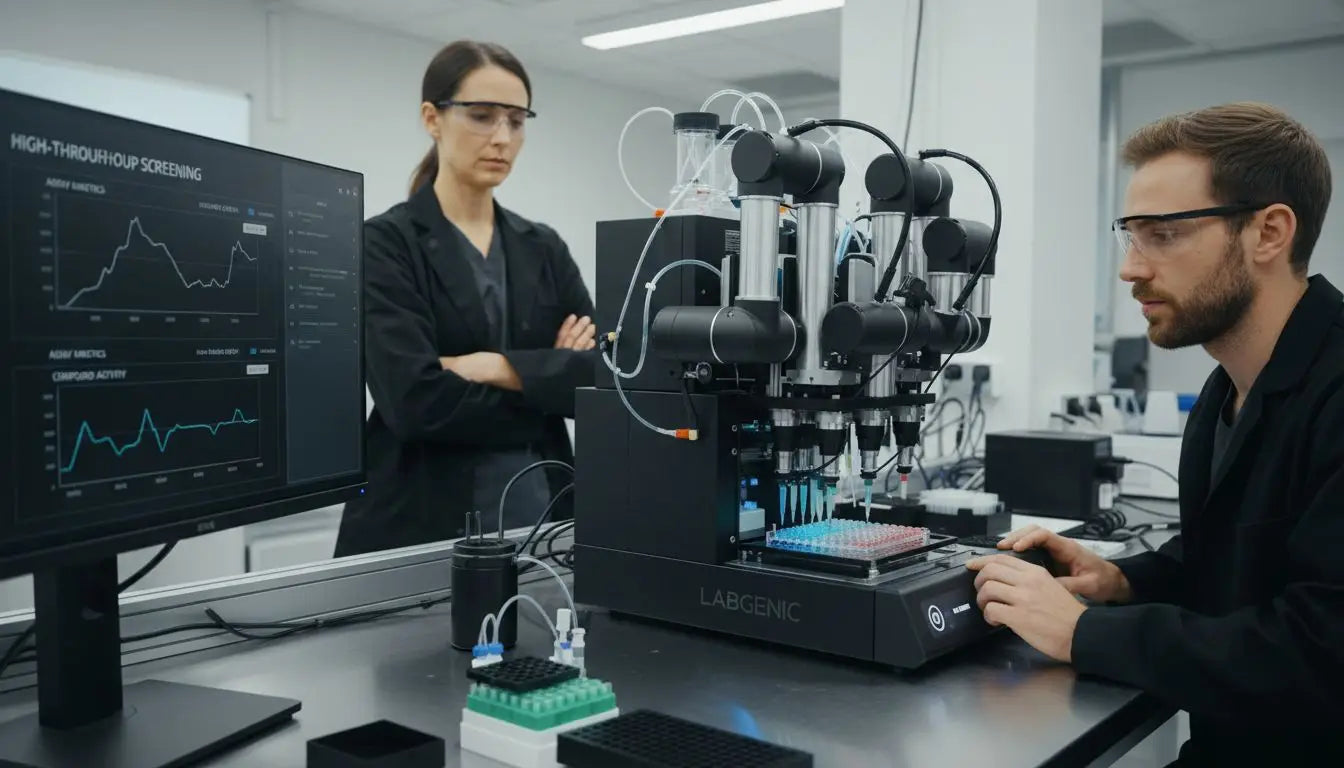 Laboratory Workflow Optimization: Boost Efficiency Step-by-Step illustrates how technological integration can revolutionize research productivity. These automated systems eliminate human error, ensure consistent experimental conditions, and provide reproducible results across complex screening protocols.
Key components driving automation in high-throughput screening include:
- Precision robotic liquid handling systems
- Advanced multi-well plate management
- Integrated detection and measurement technologies
- Automated sample preparation modules
- Sophisticated data acquisition and processing platforms
- Real-time monitoring and analysis systems
- Standardized experimental protocols
- High-speed computational interfaces
The implementation of automation in HTS goes beyond simple speed optimization. These sophisticated systems enable researchers to explore molecular interactions with unprecedented depth and complexity. Microfluidic platforms, robotic screening technologies, and intelligent data management systems work in concert to create a seamless, highly efficient research environment. By minimizing manual intervention and maximizing technological capabilities, automated HTS platforms are redefining the boundaries of scientific discovery across drug development, molecular biology, and pharmaceutical research.
Key Applications in Genomics and Beyond
High-throughput screening (HTS) has emerged as a transformative technology with remarkable applications spanning multiple scientific domains, revolutionizing research methodologies across genomics, pharmaceuticals, and biomedical sciences. This powerful approach enables researchers to systematically explore complex biological systems, accelerating discoveries that were previously impossible through traditional screening methods.
In genomics, HTS plays a critical role in unraveling genetic complexities and identifying potential therapeutic interventions. Complete Guide to Genomic Data Interpretation highlights how these advanced screening techniques facilitate comprehensive genetic analysis. Researchers can now rapidly evaluate genetic variations, screen for disease-related mutations, and investigate gene function with unprecedented precision and efficiency.
Key applications of high-throughput screening include:
- Drug discovery and development
- Genetic mutation screening
- Antibacterial research
- Neurodegenerative disease investigation
- Metabolic disorder studies
- Cardiovascular disease research
- Cancer therapeutic target identification
- Antiviral compound screening
- CRISPR/Cas9 genetic modification studies
- MicroRNA inhibitor research
Beyond genomics, HTS has revolutionized multiple scientific disciplines by providing researchers with powerful tools to explore molecular interactions, identify potential therapeutic compounds, and understand complex biological pathways. From investigating rare genetic disorders to developing targeted cancer treatments, high-throughput screening continues to push the boundaries of scientific understanding, offering hope for breakthrough discoveries that can transform human health and medical treatment strategies.
Comparing HTS With Traditional Screening Methods
High-throughput screening (HTS) represents a quantum leap in scientific research methodology, fundamentally transforming how researchers analyze and evaluate biological compounds compared to traditional screening approaches. While conventional methods relied on manual, time-consuming processes with limited sample processing capabilities, HTS introduces unprecedented efficiency, precision, and scalability to scientific investigation.
The core differences between HTS and traditional screening methods are stark and revolutionary.
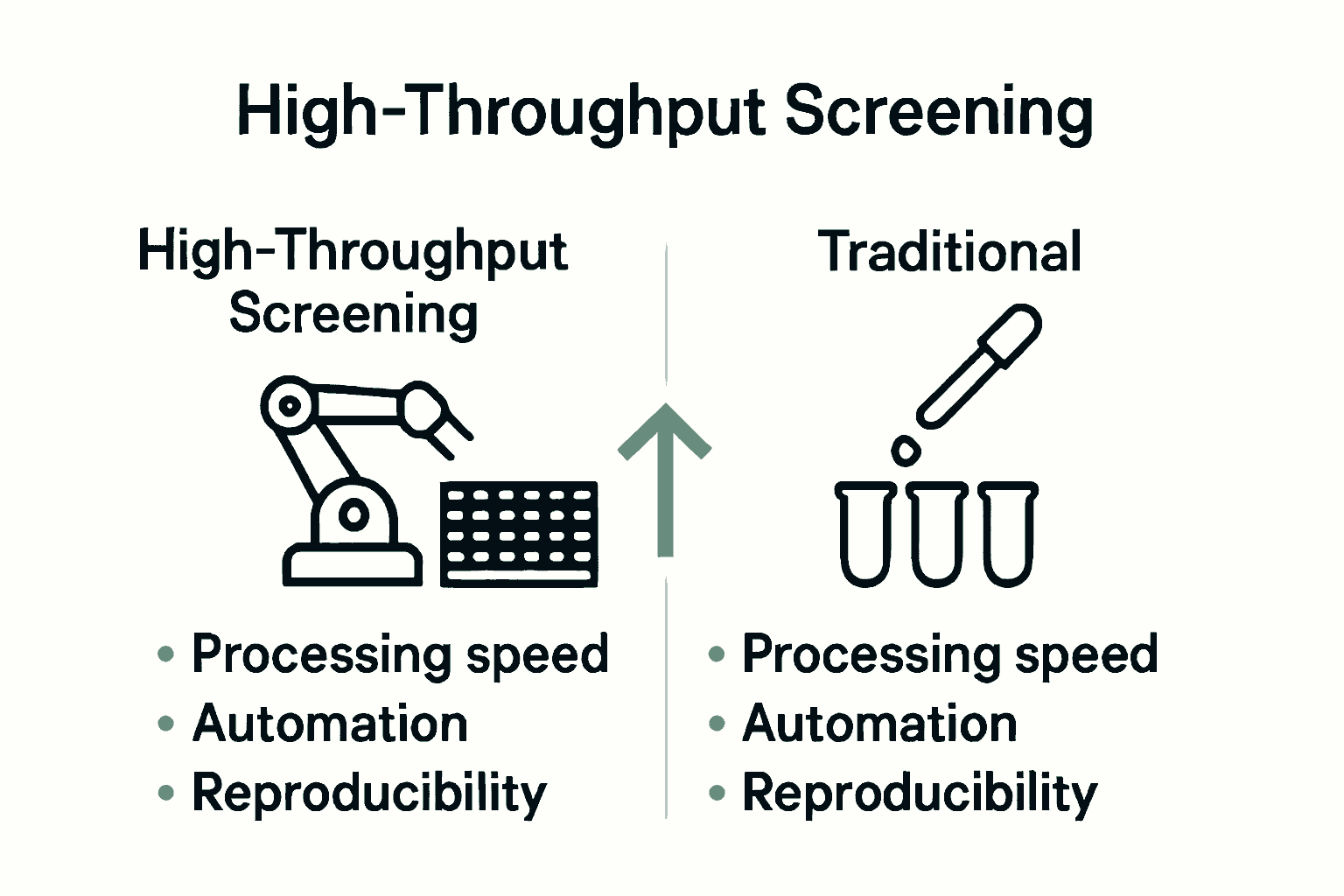 Traditional approaches typically involved labor-intensive, sequential testing of small compound batches, often requiring weeks or months to generate meaningful results. In contrast, modern HTS platforms can process hundreds of thousands of compounds per day, dramatically reducing research timelines. Precision in Practice: The Role of Controllers and Gauges in Laboratory provides additional context on how technological advancements have transformed laboratory research methodologies.
Key comparative aspects between HTS and traditional screening include:
- Processing speed (HTS: hundreds of thousands vs. traditional: dozens of samples)
- Cost-effectiveness
- Reproducibility of results
- Complexity of analyzable compounds
- Automation level
- Statistical significance
- Error reduction
- Comprehensive data generation
- Scalability of research
- Potential for discovering rare interactions
Ultimately, high-throughput screening has democratized scientific research by lowering barriers to extensive compound analysis. The technology enables researchers to explore molecular interactions with unprecedented depth, efficiency, and accuracy. By minimizing human error, maximizing computational power, and providing robust data collection mechanisms, HTS has become an indispensable tool across multiple scientific disciplines, from drug discovery to genetic research.
Cost, Scalability, and Implementation Risks
High-throughput screening (HTS) represents a significant technological investment that requires careful consideration of financial implications, scalability potential, and potential implementation challenges. Organizations must strategically evaluate the complex balance between initial infrastructure costs and long-term research productivity gains when contemplating HTS adoption.
The financial landscape of HTS implementation is multifaceted, involving substantial upfront investments in specialized equipment, automated platforms, and sophisticated detection systems. Affordable Genetic Testing Solutions for Small Labs provides insights into managing these financial considerations. While the initial costs can be substantial, the potential for accelerated research outcomes and reduced long-term experimental expenses often justifies the strategic investment.
Key considerations in HTS cost and scalability include:
- Initial equipment and infrastructure investments
- Ongoing maintenance and calibration expenses
- Training requirements for technical personnel
- Software and computational infrastructure
- Potential return on research investment
- Scalability across different research domains
- Flexibility of existing laboratory infrastructure
- Compatibility with current research protocols
- Long-term cost-effectiveness
- Potential for reducing per-sample screening costs
Implementation risks demand comprehensive risk management strategies. Organizations must carefully assess their technological readiness, staff expertise, and research objectives. Successful HTS integration requires not just financial investment, but a holistic approach that includes staff training, protocol development, and continuous technological adaptation. By anticipating potential challenges and developing robust implementation frameworks, research institutions can effectively leverage HTS technologies to accelerate scientific discoveries and optimize research productivity.
Empower Your Research with Accessible High-Throughput Screening Solutions
High-throughput screening is revolutionizing scientific discovery but many researchers face challenges like costly equipment, complex automation, and scalability concerns. You want to accelerate your experiments while maintaining precision and reproducibility. At Shop Genomics, we understand these pain points and are dedicated to making advanced screening technologies affordable and user-friendly. Whether you need reliable robotic liquid handlers or cutting-edge detection systems, our solutions help you overcome implementation risks and scale your research seamlessly.
Experience the power of automated screening platforms designed to maximize throughput without sacrificing data quality. Explore how automation boosts workflow efficiency and dive deeper into genomic data interpretation techniques that complement your high-throughput screening projects.
Take control of your research today and accelerate your discoveries by partnering with Shop Genomics.

Unlock the future of your lab by visiting Shop Genomics now and gain access to affordable, high-performance tools that push the boundaries of scientific innovation.
Frequently Asked Questions
What is high-throughput screening (HTS)?
High-throughput screening (HTS) is an automated methodology in research that allows for the rapid evaluation of large libraries of compounds against specific biological targets, significantly accelerating discovery processes in fields like drug development and molecular biology.
How does automation impact high-throughput screening?
Automation enhances high-throughput screening by increasing processing speed, reducing human error, and providing consistent experimental conditions. Modern automated systems can screen over 100,000 samples per day, which enables researchers to explore complex biological interactions with greater precision and efficiency.
What are the primary methods used in high-throughput screening?
Primary methods in high-throughput screening include fluorescence-based assays, luminescence cellular assays, label-free techniques like surface plasmon resonance, mass spectrometry, and microfluidics-based platforms, each offering unique advantages for specific research objectives.
What are some common applications of high-throughput screening?
High-throughput screening has applications in drug discovery, genetic mutation screening, neurodegenerative disease investigations, cancer therapeutic target identification, antiviral compound screening, and much more, making it a versatile tool across multiple scientific disciplines.