

Imagine you’re setting up a new molecular biology lab in a university department. The grant you just won covers reagents, salaries, and a modest amount for equipment. When you look at the price list for a qPCR machine, the numbers jump from $5,000 to $30,000. Your team freezes. You need a clear path to an affordable qPCR machine price that won’t stall the project. In this guide I’ll walk you through what drives those numbers, how to match features to your real work, and how to pull the best deal without losing sleep. By the end you’ll know exactly where to cut waste, what to ask a vendor, and which models give the most bang for your buck. And you’ll have a step‑by‑step plan you can use tomorrow.
Understanding Affordable qPCR Machine Prices
The phrase affordable qPCR machine price can feel vague. It isn’t just a sticker on a box. The price is built from three layers: hardware, optics, and ongoing costs. The hardware core is the thermal block that holds your plates. A basic 96‑well block can start around $5,000. Add a high‑resolution fluorescence detector and you’re looking at $10,000‑$15,000. Add a second detection channel for multiplexing and the price can climb another $5,000. That’s why a “budget” model often still sits near $8,000.
Why does optics matter? Think of fluorescence as tiny lights that tell you how much DNA was made. More channels let you watch several targets at once, which saves reagents and time. But each extra laser adds cost. That’s why many labs start with a single‑channel unit and upgrade later.
Beyond the hardware, the software license is another hidden cost. Some vendors bundle data analysis for free; others charge $1,000‑$2,000 per year for cloud storage and reporting tools. If you already have a spreadsheet workflow, you can skip the paid add‑on and keep the price low.
Finally, total cost of ownership (TCO) includes consumables, calibration kits, and service contracts. A typical qPCR run uses $1‑$2 in reagents per plate. Over a year of 100 plates, that’s $100‑$200 extra. Service contracts can be $2,000‑$4,000 per year but protect you from a $7,000 emergency repair. Adding these items to the base price gives the true affordable qPCR machine price you can budget for.
Here’s a quick way to break down the numbers:
- Base unit: $5,000‑$8,000 for entry‑level.
- Optics upgrade: +$5,000‑$10,000 for multiplex.
- Software: $0‑$2,000 per year.
- Consumables: $1‑$2 per run.
- Service: $2,000‑$4,000 per year.
When you add them up, a modest lab can aim for an affordable qPCR machine price of about $12,000‑$15,000 total over three years. That’s a realistic target for most grant budgets.
For a deeper look at how price breaks down for real‑time PCR, see Understanding Real-Time PCR Machine Price: What You Need to Know. It explains the same concepts for a related technology and helps you compare apples to apples.
Now that you know what makes up the affordable qPCR machine price, let’s move on to setting a budget that fits your lab’s workflow.
How to Set a Budget and Compare Key Features
Setting a budget starts with mapping your experiments. Ask yourself: how many plates per week? Do you need multiplex detection? Do you need a 384‑well format for high throughput? Answering these questions lets you filter out models that are over‑spec’d and saves money.
Next, list the must‑have features and rank them. Use a simple table in a spreadsheet:
- Plate format (96 vs 384).
- Number of detection channels.
- Ramp speed (°C per second).
- Software package (basic vs advanced).
- Warranty and service length.
Give each item a score from 1 (nice‑to‑have) to 5 (essential). Multiply the score by the estimated cost impact to get a weighted total. The model with the highest weighted score at the lowest affordable qPCR machine price is your sweet spot.
Here are two external resources that walk through budgeting methods:
- Photo Booth Rental for Graduation Party: A Step‑by‑Step Guide – the budgeting checklist style can be adapted for lab gear.
- Photo Booth Rental Murrieta: A Complete Guide for 2026 Events – shows how to compare multiple vendors side by side.
Once you have a shortlist, request a detailed quote that breaks out each cost component. Ask the vendor to itemize optics, software, and service. Compare those line items across vendors rather than just the headline affordable qPCR machine price.
Actionable tip: Ask for a “total cost of ownership” spreadsheet from the vendor. If they can’t provide it, you may be dealing with a hidden‑cost seller.
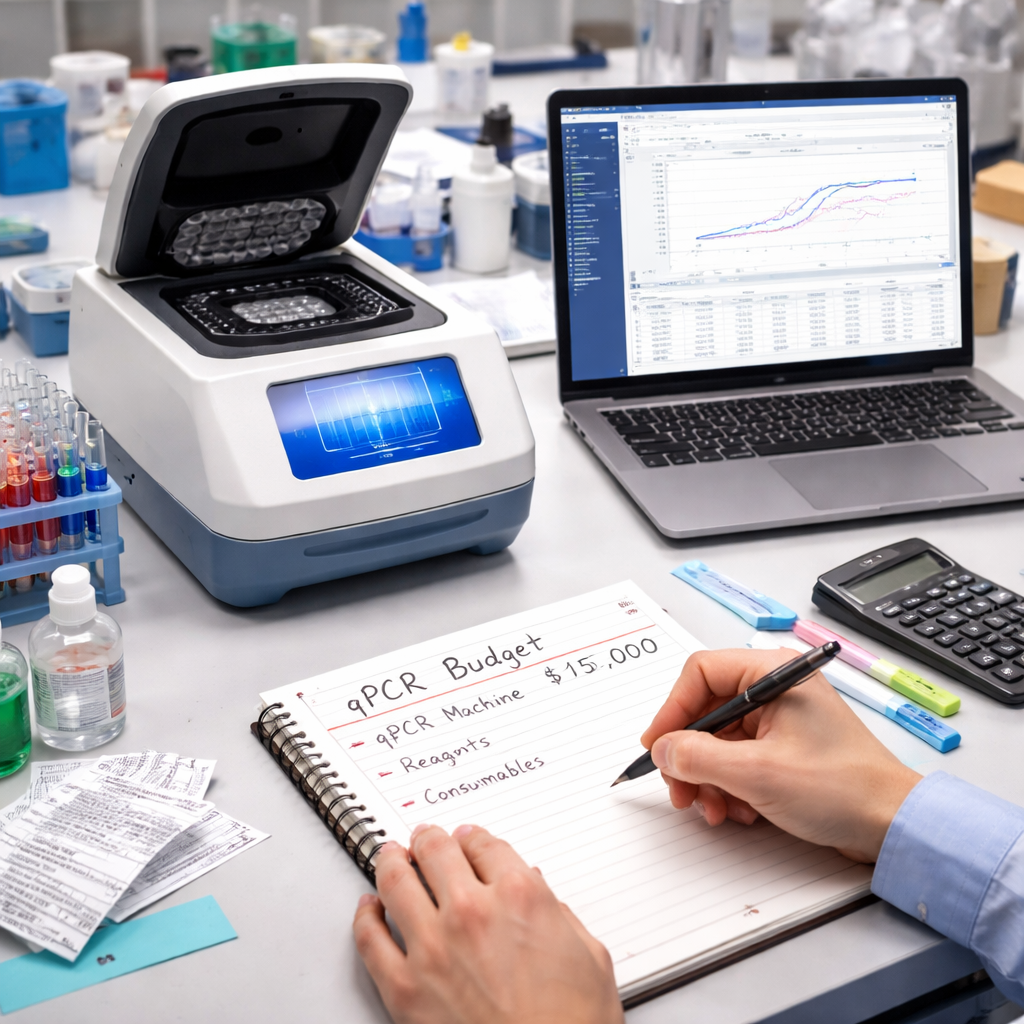
By the end of this step you should have a clear budget range (e.g., $10,000‑$16,000) and a feature list that matches your workflow. This makes the next stage—finding the best deal—much faster.
Step‑by‑Step: Finding the Best Deal (Video)
Now that you know your budget and feature needs, it’s time to hunt for the best price. The cheapest tag isn’t always the best value, so follow this video‑guided checklist.
Pause the video after the intro and write down three things you see:
- The model name and its detection channels.
- The warranty length shown on the screen.
- The price tag shown in the lower right corner.
Then compare those notes with the list you built in the previous section. If the video shows a model that meets your must‑haves but the price is higher than your affordable qPCR machine price target, look for bundled service contracts that could lower long‑term costs.
Two more external guides can help you negotiate:
- Your Complete Guide to Photo Booth Rental Temecula for Unforgettable Events – offers negotiation tactics that work for equipment purchases too.
- Birthday Party Photo Booth Rental Guide for 2026 – includes a checklist for hidden fees, which you can adapt for lab gear.
When you contact a vendor, reference the video’s price point and ask if they can match or beat it. Most sales reps will at least offer a discount on accessories or free shipping if you mention a competitor’s offer.
Pro tip: Ask for a “price match guarantee” that covers the entire affordable qPCR machine price, not just the hardware.
Comparison Table: Top Budget qPCR Machines
Below is a quick side‑by‑side look at three models that many labs call “budget‑friendly.” All three sit under the $20,000 affordable qPCR machine price ceiling, but each shines in a different use case.
| Model | Base Price (USD) | Detection Channels | Plate Formats | Best For |
|---|---|---|---|---|
| Model A – MiniCycler 96 | $5,500 | 1‑2 | 96‑well only | Teaching labs, small research groups |
| Model B – FlexiQuant 384 | $12,800 | 3‑4 | 96‑well & optional 384‑well | Mid‑size biotech startups, medium academic labs |
| Model C – ProMax 5‑Channel | $18,200 | 5‑6 | 384‑well high‑throughput | CROs, clinical diagnostics, large pharma |
Take note of the “Best For” column. If your lab runs fewer than 20 plates a week, Model A will keep the affordable qPCR machine price low and still give reliable results. If you need a bit more flexibility, Model B adds optional 384‑well plates without a huge jump in price.
Two more external articles to help you read the specs:
- How to Choose the Perfect Prom Photo Booth Rental for an Unforgettable Night – shows how to compare feature lists, a method you can copy for qPCR machines.
- How to Choose the Best Corporate Event Photo Booth Rental for Your Business – gives a checklist for warranty and service, which applies to affordable qPCR machine price decisions.
Actionable checklist:
- Identify your plate throughput.
- Match throughput to the model’s plate format.
- Count detection channels needed for your assays.
- Add up base price + optics + software to get the total affordable qPCR machine price.
- Factor in service contract costs for the full TCO.
With this table and checklist you can quickly spot the model that meets your needs without overspending.
Conclusion
Finding an affordable qPCR machine price isn’t about chasing the lowest sticker. It’s about understanding the three cost layers—hardware, optics, and ongoing fees—then matching those to the exact work you do. Start by mapping your plate volume, decide how many detection channels you truly need, and build a weighted feature score. Use the budgeting tips and the comparison table to keep your total cost of ownership in line with grant limits. When you watch the short video checklist, you’ll spot hidden fees and negotiate smarter. Remember to ask for a detailed quote, check service contracts, and use the total affordable qPCR machine price as your guide, not just the headline number. With this plan you’ll equip your lab with a reliable qPCR system that supports discovery while staying within budget. Ready to start? Check the latest offers on Shop Genomics and put your new machine to work in weeks, not months.
FAQ
What should I look for in the hardware of an affordable qPCR machine price?
Focus on the thermal block uniformity, ramp speed, and plate format compatibility. A uniform block keeps Ct values consistent across wells. Faster ramp speeds cut run time, which saves labor costs. Choose a model that supports the plate size you need—96‑well for most teaching labs, 384‑well if you expect high throughput. These hardware choices directly affect the affordable qPCR machine price you’ll pay over the life of the instrument.
How do optics affect the affordable qPCR machine price?
Optics determine how many fluorescence channels the machine can read at once. A single‑channel unit is the cheapest, but you’ll need more if you plan multiplex assays. Each extra laser or filter can add $5,000‑$10,000 to the price. Weigh the cost against reagent savings: multiplexing can cut consumable costs by 30‑40% per run, which may offset the higher optics price in the long run.
Are there financing options that help lower the upfront affordable qPCR machine price?
Many vendors offer lease‑to‑own or financing plans that spread the cost over three to five years. Look for low down‑payment options and include the service contract in the monthly payment. This turns a large upfront affordable qPCR machine price into a manageable line‑item on your budget. Compare the annualized cost with a straight purchase to see which is cheaper over the instrument’s expected life.
What consumables impact the total cost of an affordable qPCR machine price?
Consumables include PCR plates, optical seals, and calibration kits. A standard 96‑well plate costs about $1‑$2 per run. Some vendors lock you into proprietary plates that can cost $3‑$5 each. Check if the machine accepts generic tubes or strip caps—this can shave hundreds of dollars off your annual budget and keep the affordable qPCR machine price realistic.
How important is the service contract when calculating affordable qPCR machine price?
A service contract covers calibration, firmware updates, and on‑site repairs. Without it, a single breakdown can cost $7,000‑$10,000 in emergency repairs. Most contracts run $2,000‑$4,000 per year. Adding this to the base price gives you the true affordable qPCR machine price you’ll actually spend. Think of the contract as insurance that protects your research timeline.
Can I buy a refurbished qPCR system and still get a good affordable qPCR machine price?
Yes. Refurbished units are often 20‑30% cheaper than new models and come with a limited warranty. Verify the calibration logs and ask for a short service period to ensure the instrument works reliably. A refurbished system can bring the affordable qPCR machine price down to $8,000‑$12,000 total, which is attractive for labs on a tight grant.