

Over 80 percent of scientific breakthroughs rely on precise laboratory consumables, yet many american researchers still face confusion over what these vital tools actually include. From pipette tips to cryogenic tubes, choosing the right supplies can directly impact experimental accuracy and data integrity. Understanding the real differences between reusable and single-use items helps modern labs save money, minimize waste, and ensure that every experiment produces reliable results.
Table of Contents
- Defining Lab Consumables And Misconceptions
- Major Categories And Essential Examples
- Applications Across Research And Industry
- Purchasing, Costs, And Supply Management
- Best Practices For Use And Disposal
Key Takeaways
| Point | Details |
|---|---|
| Understanding Lab Consumables | Laboratory consumables are essential materials used in research, including liquid handling tools, containment vessels, and protective equipment, and are not solely single-use. |
| Sustainability Focus | Modern labs are increasingly prioritizing sustainability, exploring reusable alternatives to reduce waste while maintaining research integrity. |
| Research-Specific Needs | Consumables are tailored to specific research domains, making it crucial for researchers to select materials suited to their experimental requirements. |
| Optimal Procurement Strategies | Strategic procurement and management of lab consumables can enhance efficiency, reduce costs, and promote environmental responsibility in research settings. |
Defining Lab Consumables and Misconceptions
Laboratory consumables represent the essential, often disposable materials that form the backbone of scientific research and experimental workflows. These critical supplies range from precision instruments like pipette tips to fundamental containers such as test tubes, petri dishes, and vials - each playing a crucial role in maintaining experimental integrity and scientific accuracy.
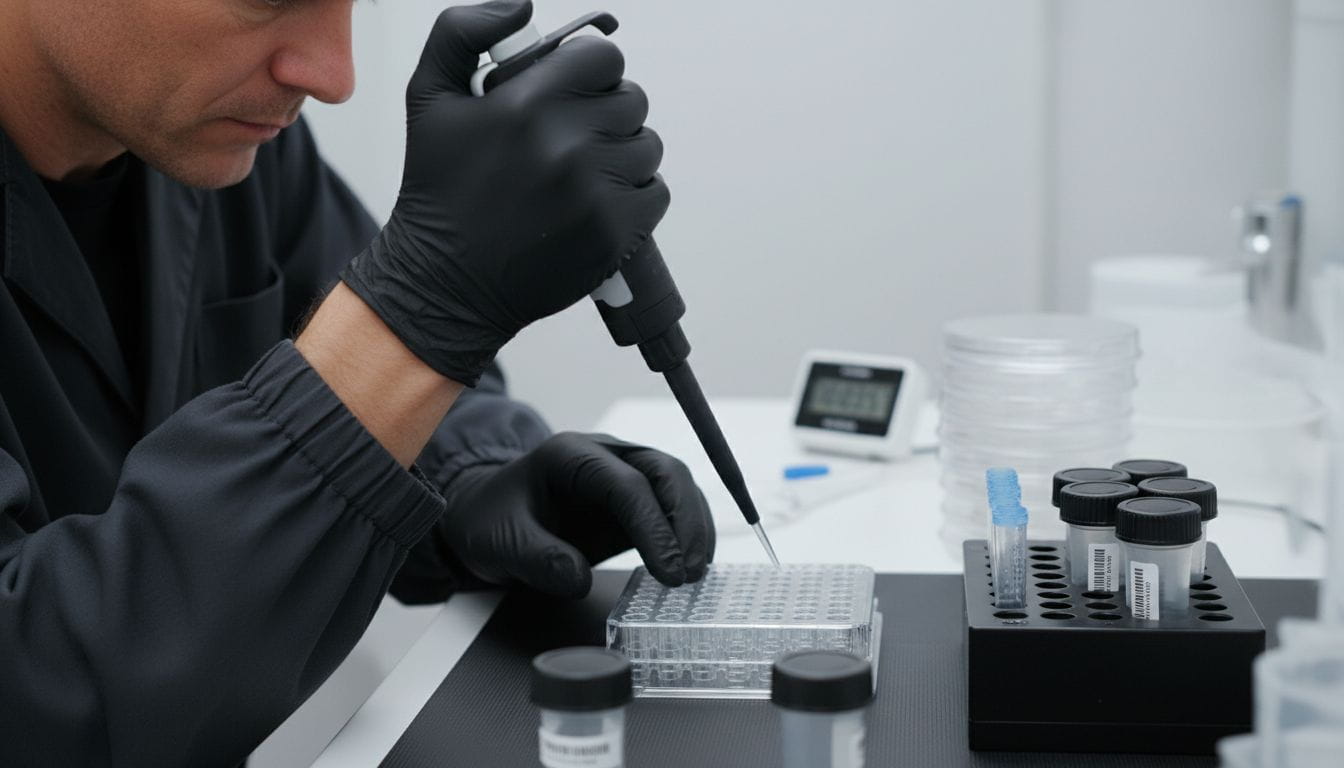
At their core, lab consumables encompass a diverse array of single-use and specialized materials designed for specific research purposes. Key categories include:
- Liquid Handling Tools: Pipette tips, serological pipettes, dispensing syringes
- Containment Vessels: Microcentrifuge tubes, cell culture plates, cryogenic storage containers
- Sample Processing Materials: Filter papers, extraction kits, swabs
- Protective Equipment: Gloves, protective eyewear, lab coats
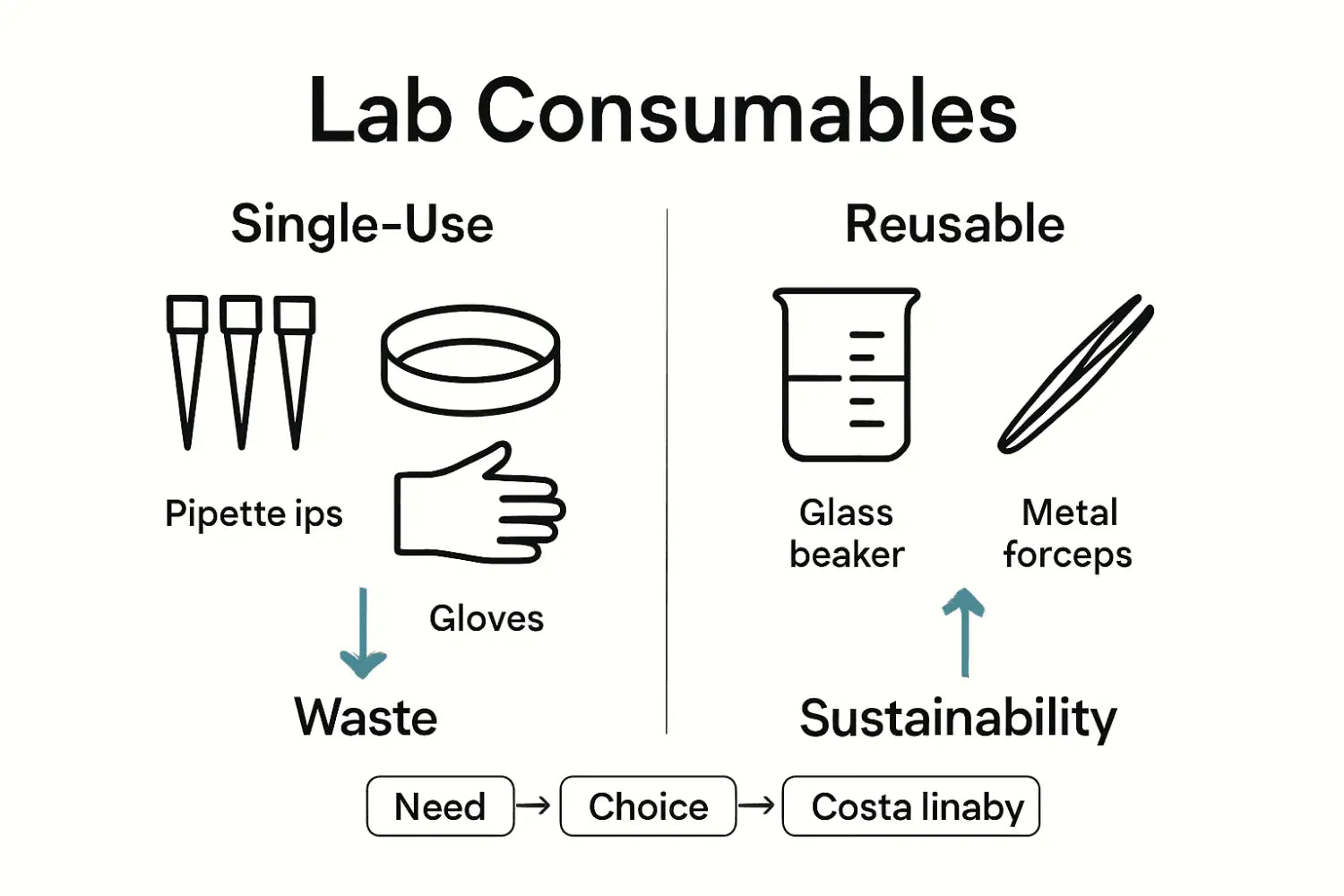
Contrary to popular belief, not all lab consumables are inherently single-use. Sustainable alternatives for lab consumables are increasingly available, challenging the traditional narrative of disposability. Researchers can now explore reusable options made from materials like silicone, specialized glass, and metal, which can significantly reduce environmental waste without compromising experimental precision.
One prevalent misconception is that all laboratory consumables are identical and interchangeable. In reality, these materials are highly specialized, with specific performance characteristics tailored to particular research domains. Molecular biology, clinical diagnostics, microbiology, and agricultural research each demand unique consumable specifications. Understanding these nuanced requirements is essential for selecting the right tools that ensure experimental reproducibility and data reliability.
While cost and convenience often drive consumable selection, modern laboratories are increasingly prioritizing sustainability, performance, and environmental responsibility. The shift towards more conscious consumption reflects a broader scientific commitment to reducing plastic waste and minimizing the ecological footprint of research activities. By carefully selecting consumables and exploring innovative alternatives, researchers can maintain high scientific standards while contributing to more sustainable laboratory practices.
Major Categories and Essential Examples
Laboratory consumables are strategically categorized based on their function, material composition, and specific research applications. These categories represent a comprehensive ecosystem of scientific tools designed to support precise experimental protocols across multiple disciplines. Research-grade consumables are meticulously engineered to meet exacting standards of quality, reliability, and performance.
Liquid Handling Consumables
Liquid handling consumables form the foundational toolkit for transferring, measuring, and manipulating liquid samples with extraordinary precision. Essential examples include:
- Pipette Tips: Available in multiple sizes (10µL, 200µL, 1000µL)
- Serological Pipettes: Graduated volumes ranging from 1mL to 50mL
- Microcentrifuge Tubes: Standard volumes from 0.5mL to 2.0mL
- Repeat Dispensing Pipettes: For consistent multi-step liquid transfers
Containment and Storage Consumables
These specialized consumables provide critical protection and preservation for biological and chemical samples. Their design ensures sample integrity, prevents contamination, and facilitates long-term storage across various research environments. Key examples include:
- Cell Culture Plates: Multi-well formats (6, 12, 24, 96 wells)
- Cryogenic Storage Containers: Specialized tubes for ultra-low temperature preservation
- Sterile Petri Dishes: Multiple diameter sizes for microbial and cell culture work
- Sample Vials: Glass and plastic variants for different research requirements
Laboratory workflow optimization techniques play a crucial role in selecting the most appropriate consumables for specific research needs. Researchers must consider factors like material compatibility, sterilization requirements, and experimental sensitivity when making selection decisions.
Specialized consumables extend beyond traditional plastic and glass materials, now incorporating advanced compositions like low-binding surfaces, UV-transparent materials, and chemically resistant polymers. These innovations address complex research challenges in molecular biology, genomics, proteomics, and clinical diagnostics. Modern consumables are not merely containers or tools but sophisticated instruments engineered to enhance experimental precision and reproducibility.
The diversity of laboratory consumables reflects the complexity of contemporary scientific research. From ultra-precise micropipette tips to specialized cryogenic storage systems, each consumable represents a carefully designed solution addressing specific experimental requirements. Researchers must approach consumable selection as a strategic decision, balancing performance, cost-effectiveness, and sustainability to achieve optimal scientific outcomes.
Applications Across Research and Industry
Laboratory consumables serve as the critical backbone across diverse scientific and industrial sectors, enabling breakthrough research and maintaining rigorous operational standards. From molecular biology to pharmaceutical development, these specialized tools are essential for conducting precise, reproducible experiments that drive scientific innovation and technological advancement.
Research Domain Applications
The application spectrum of lab consumables spans multiple critical research domains:
- Molecular Biology: DNA/RNA extraction, PCR sample preparation
- Clinical Diagnostics: Patient sample processing, disease screening
- Pharmaceutical Research: Drug development, compound screening
- Biotechnology: Cell culture, genetic engineering experiments
- Environmental Science: Soil, water, and air sample analysis
Industrial Sector Utilization
Industrial laboratories leverage consumables with extraordinary specificity, integrating advanced technologies to enhance experimental precision. Top lab equipment comparisons highlight the critical role of specialized consumables in maintaining high-performance research environments.
The pharmaceutical and biotechnology industries represent significant consumers of laboratory consumables, requiring extraordinary precision and compliance. Digital traceability has emerged as a game-changing innovation, with technologies like RFID-enabled pipette racks and barcode-coded reagent bottles transforming sample management and tracking protocols. These smart consumables enable unprecedented levels of operational efficiency, reducing human error and ensuring comprehensive documentation.
Beyond traditional research settings, laboratory consumables play pivotal roles in emerging fields like personalized medicine, agricultural biotechnology, and forensic science. Each domain demands unique consumable specifications that address complex experimental requirements. Whether supporting genetic sequencing, pathogen detection, or environmental monitoring, these specialized tools represent the fundamental infrastructure enabling scientific discovery and technological progress.
The versatility of modern laboratory consumables reflects the dynamic nature of contemporary research. Researchers and industrial professionals must continuously adapt their consumable strategies, balancing performance, cost-effectiveness, and sustainability. By selecting appropriate materials and leveraging advanced technologies, scientific teams can push the boundaries of knowledge and drive transformative innovations across multiple disciplines.
Purchasing, Costs, and Supply Management
Managing laboratory consumables requires a strategic approach that balances scientific precision, budgetary constraints, and organizational efficiency. Procurement strategies have evolved beyond simple purchasing decisions, transforming into complex ecosystems of resource management that directly impact research productivity and financial sustainability.
Strategic Procurement Considerations
Effective lab consumable procurement involves multiple critical dimensions:
- Quantity Planning: Precise inventory forecasting
- Quality Assessment: Verifying product specifications
- Cost-Effectiveness: Comparing price points and performance
- Sustainability: Minimizing environmental impact
- Vendor Reliability: Ensuring consistent supply chains
Cost Management Techniques
Laboratories can optimize consumable expenditures through several innovative approaches:
- Consolidating bulk purchases
- Negotiating institutional pricing agreements
- Exploring shared resource opportunities
- Implementing just-in-time inventory systems
- Developing internal resource-sharing protocols
Laboratory workflow optimization techniques play a crucial role in streamlining procurement processes. Sophisticated labs are increasingly adopting data-driven approaches that leverage digital inventory management systems to track consumption patterns, predict needs, and minimize unnecessary spending.
Sustainable procurement has emerged as a critical consideration for modern research institutions. Laboratories can significantly reduce costs and environmental impact by implementing strategic practices such as producing media and buffers on-site, selecting suppliers offering flexible kit configurations, and minimizing packaging waste. These approaches not only optimize resource utilization but also demonstrate institutional commitment to environmental responsibility.
The complexity of consumable procurement demands a holistic approach that transcends traditional purchasing models. Successful laboratories integrate financial planning, scientific requirements, and sustainability objectives into a comprehensive strategy. By developing robust supplier relationships, leveraging technology for inventory management, and continuously reassessing consumption patterns, research organizations can create more efficient, cost-effective, and environmentally conscious laboratory environments.
Best Practices for Use and Disposal
Laboratory consumable management represents a critical intersection of scientific precision, environmental responsibility, and operational efficiency. Researchers must navigate complex considerations that balance experimental integrity, safety protocols, and sustainable practices while minimizing waste and maximizing resource utilization.
Sustainable Usage Strategies
Best practices for lab consumables encompass multiple strategic approaches:
- Experiment Planning: Minimizing unnecessary material consumption
- Resource Optimization: Using smallest appropriate vessel sizes
- Decontamination: Properly cleaning and repurposing suitable materials
- Waste Reduction: Implementing systematic recycling protocols
- Equipment Preservation: Maintaining proper storage and handling conditions
Disposal Protocol Considerations
Responsible disposal requires comprehensive understanding of material-specific requirements:
- Categorizing waste by biological/chemical hazard levels
- Implementing segregation protocols
- Using specialized containment for contaminated materials
- Following institutional and regulatory disposal guidelines
- Documenting disposal processes for compliance tracking
Laboratory workflow optimization techniques play a pivotal role in developing comprehensive consumable management strategies. Sophisticated laboratories are increasingly adopting holistic approaches that integrate technological solutions with sustainable practices, transforming traditional waste management paradigms.
Sustainability in laboratory consumable usage extends beyond simple waste reduction. Researchers can implement advanced strategies such as regenerating nucleic acid extraction columns, utilizing appropriate water purity levels for specific applications, and developing internal protocols for material reuse. These approaches not only reduce environmental impact but also demonstrate a commitment to responsible scientific practice.
The future of laboratory consumable management lies in a sophisticated, multidimensional approach that balances scientific requirements with environmental consciousness. By integrating technological innovations, developing comprehensive training programs, and fostering a culture of sustainability, research institutions can create more efficient, responsible, and forward-thinking laboratory environments.
 The goal is not merely to reduce waste, but to fundamentally reimagine how scientific resources are conceived, utilized, and managed.
Optimize Your Lab Consumable Choices with Shop Genomics
Selecting the right lab consumables is crucial for achieving scientific precision while managing costs and sustainability. This article highlights common challenges such as balancing quality, contamination risks, and supply management. At Shop Genomics, we understand your need for reliable, specialized consumables that boost experimental accuracy and support sustainable labs with innovative options.

Explore our comprehensive range of research-grade consumables designed for precise liquid handling, sample storage, and optimized workflows. Empower your research with trusted tools that help minimize waste and reduce costs. Visit Shop Genomics to discover products that match your unique laboratory demands. Don’t wait to enhance your procurement strategy and embrace more efficient, cost-effective consumable solutions today.
Frequently Asked Questions
What are laboratory consumables?
Laboratory consumables are essential, often disposable materials used in scientific research and experimental workflows, including items like pipette tips, test tubes, and vials, that maintain experimental integrity.
Are all lab consumables single-use?
Not all lab consumables are single-use. Many sustainable alternatives are available, including reusable options made from silicone, glass, and metal to reduce environmental waste while maintaining precision in experiments.
How should I choose lab consumables for my experiments?
Choosing lab consumables requires considering specific performance characteristics, compatibility with materials, sterilization needs, and specific requirements of your research domain to ensure experimental reproducibility and accuracy.
What are some best practices for disposing of lab consumables?
Best practices for disposing of lab consumables involve categorizing waste by hazard levels, following segregation protocols, ensuring proper containment for contaminated materials, and adhering to regulatory and institutional disposal guidelines.
Recommended
- Top Lab Equipment for Biotech – Expert Comparison 2025 – Shop Genomics
- 7 Essentials for Small Labs: Tools and Tips for Success – Shop Genomics
- Best 7 Laboratory Equipment for Universities – Expert Comparison 2025 – Shop Genomics
- Discover the Ultimate $1000-$1500 Laboratory Equipment Collection – Shop Genomics