
Finding the right genomic equipment can feel overwhelming even for experienced american researchers. With so many advanced technologies available today, one overlooked decision can significantly impact research quality and funding outcomes. Over 60 percent of american laboratories cite equipment selection as their top challenge in new genomics projects. This guide helps you cut through the complexity so you can make informed choices that support both your scientific goals and your lab’s growth for years to come.
Table of Contents
- Step 1: Assess Research And Application Requirements
- Step 2: Determine Technical And Performance Needs
- Step 3: Compare Trusted Equipment Brands And Models
- Step 4: Evaluate Budget, Warranty, And Support Options
- Step 5: Verify Equipment Compatibility And Compliance
Quick Summary
| Key Takeaway | Explanation |
|---|---|
| 1. Assess research needs carefully | Conduct a thorough analysis of your specific genomic techniques and laboratory requirements before selecting equipment. |
| 2. Establish performance thresholds | Determine key performance metrics like accuracy and sensitivity metrics to ensure reliable genomic research outcomes. |
| 3. Compare brands and platforms | Evaluate trusted equipment based on technical capabilities, support, and scientific literature to ensure informed decisions. |
| 4. Analyze budget and support options | Look beyond the initial cost to assess maintenance, warranty terms, and long-term support for your equipment. |
| 5. Confirm compatibility and compliance | Ensure selected equipment aligns with regulatory standards and integrates smoothly with your existing lab infrastructure. |
Step 1: Assess research and application requirements
Before investing in genomic equipment, understanding your specific research requirements is crucial. Researchers need a comprehensive approach to evaluating their laboratory needs, considering multiple technical and practical dimensions that will ultimately determine equipment selection.
Start by conducting a thorough assessment of your research protocols and expected workflow. Map out the precise genomic techniques you will perform such as DNA sequencing, PCR amplification, genetic mapping, or RNA analysis. Consider factors like sample volume, throughput requirements, resolution specificity, and compatibility with existing laboratory infrastructure. Examine the technical specifications your research demands including temperature ranges, processing speeds, accuracy parameters, and integration capabilities with other analytical instruments.
Practical considerations extend beyond pure technical specifications. Evaluate your budget constraints, available laboratory space, maintenance requirements, and potential future research expansion needs. Create a detailed checklist that includes quantitative metrics like required processing speed, expected sample throughput, accuracy tolerances, and budget limitations. This systematic approach ensures you select genomic equipment that not only meets current research objectives but provides scalability for future scientific investigations.
Pro Tip: Always consult with senior research colleagues or institutional core facilities who have experience with similar equipment selections. Their practical insights can help you avoid common pitfalls and identify nuanced equipment requirements specific to your research domain.
Step 2: Determine technical and performance needs
Determining technical and performance needs is a critical step in selecting genomic equipment that will deliver reliable and precise research outcomes. This phase requires a systematic evaluation of key performance metrics and quality standards that align with your specific scientific objectives.
Following recommendations from the FDA and Australian Department of Agriculture, researchers should focus on comprehensive performance validation. Start by establishing clear performance thresholds including accuracy, precision, and detection limits. For next-generation sequencing equipment, prioritize metrics like base call quality scores, read depth, and uniformity of read coverage. The FDA guidance emphasizes documenting these performance parameters and identifying potential limitations that could impact test reliability. Implement rigorous quality control measures by using well-characterized DNA samples as internal standards and creating validation protocols that comprehensively assess equipment performance across different operational scenarios.
Beyond technical specifications, consider practical performance factors such as reproducibility, processing speed, and data output consistency. Develop a detailed performance evaluation matrix that includes quantitative benchmarks for measuring equipment effectiveness. This approach ensures you select genomic tools that not only meet immediate research requirements but also provide robust, reproducible results across various experimental conditions.
Pro Tip: Whenever possible, request performance demonstration data and equipment validation reports directly from manufacturers. Independent verification of technical claims can provide critical insights into real-world equipment performance and help you make more informed selection decisions.
Step 3: Compare trusted equipment brands and models
Comparing trusted equipment brands and models is a critical phase in selecting the right genomic equipment for your research needs. This step requires a strategic approach to evaluating different platforms and their unique capabilities across multiple performance dimensions.
Researchers should draw insights from scientific literature when comparing genomic equipment. As highlighted in the Journal of Molecular Diagnostics, considerations extend far beyond simple brand recognition. Evaluate platforms based on key factors like complexity, scale, cost, and required throughput. While Illumina currently dominates much of the sequencing application space, your specific research requirements will determine the most appropriate platform. Focus on critical technical parameters such as read length, paired-end read capabilities, automation potential, and workflow complexity. Recent comparative studies demonstrate significant variations in performance between platforms like the Tecan MagicPrep NGS system and Illumina Nextera DNA Flex Library Prep, underscoring the importance of comprehensive platform assessment.
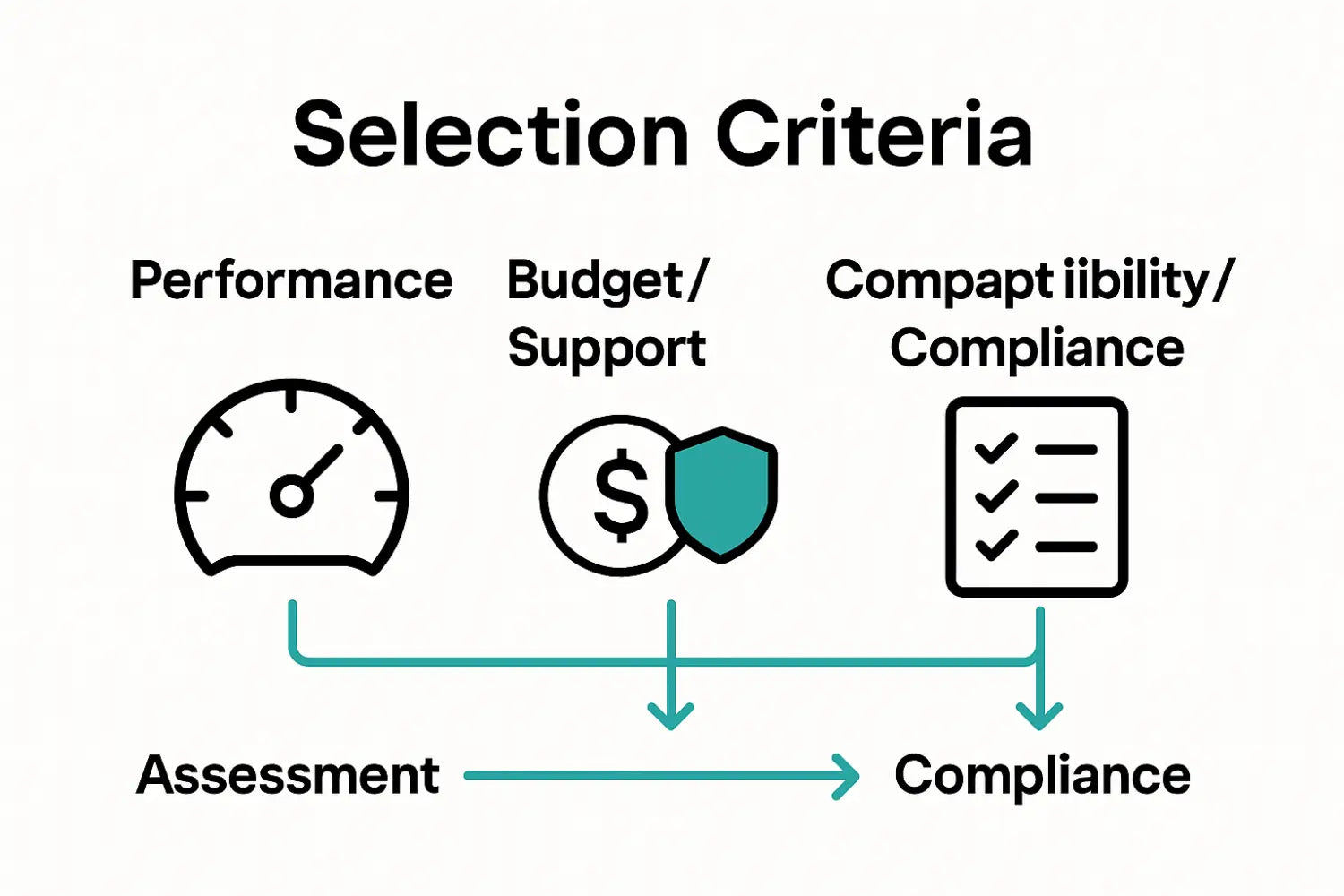
Develop a systematic comparison framework that goes beyond surface level specifications. Create a detailed evaluation matrix that ranks potential equipment based on objective performance metrics, including data quality, reproducibility, technical support, compatibility with existing laboratory infrastructure, and long term scalability. Consider factors like instrument reliability, software integration capabilities, and potential upgrade paths. Pay close attention to manufacturer reputation, published validation studies, and peer recommendations from research institutions with similar scientific objectives.
Pro Tip: Always request equipment demonstration sessions and detailed performance validation reports directly from manufacturers. These hands-on evaluations provide invaluable insights into real world performance that cannot be gleaned from specification sheets alone.
Step 4: Evaluate budget, warranty, and support options
Evaluating budget, warranty, and support options is a crucial step that goes beyond initial equipment pricing to understand the comprehensive financial implications of your genomic research investment. This phase requires a strategic approach to assessing total cost of ownership and long term equipment sustainability.
According to Thermo Fisher Scientific’s comprehensive guidance on laboratory equipment selection, researchers must look far beyond the initial purchase price. Develop a detailed financial analysis that encompasses not just the upfront equipment cost but also ongoing expenses such as maintenance contracts, potential repair costs, calibration requirements, and software update fees. Consider the long term value proposition by examining warranty terms that cover critical components, response times for technical support, and potential upgrade pathways. Some manufacturers offer tiered support packages that can significantly impact your total cost of ownership, so carefully evaluate these options against your research budget and anticipated equipment usage.
Create a comprehensive financial evaluation matrix that ranks potential equipment options based on multiple economic factors. This should include initial purchase price, estimated annual maintenance costs, warranty coverage duration, technical support responsiveness, and potential productivity gains from advanced features. Pay special attention to the flexibility of warranty terms, looking for comprehensive coverage that includes parts replacement, on site repairs, and software updates. Remember that the cheapest option is not always the most cost effective in the long run especially when considering potential research disruptions from inadequate support or frequent equipment failures.
Pro Tip: Always negotiate warranty and support terms before finalizing your purchase. Many manufacturers are willing to customize support packages or provide additional coverage when researchers demonstrate a clear understanding of their long term scientific requirements.
Step 5: Verify equipment compatibility and compliance
Verifying equipment compatibility and compliance is a critical step that ensures your genomic research meets rigorous scientific and regulatory standards. This phase involves a comprehensive evaluation of technical integration and adherence to established professional guidelines.
Drawing from insights by Christine M. Eng at Baylor College of Medicine, researchers must prioritize regulatory compliance from the outset. Focus on securing necessary certifications such as CLIA certification and CAP accreditation for clinical applications. Evaluate your chosen equipment against these stringent standards, ensuring that every instrument and protocol meets established regulatory requirements. Beyond certification, examine the equipment’s compatibility with your existing laboratory infrastructure, including software systems, data management platforms, and computational resources. The GigaScience recommendations underscore the importance of reliable data storage solutions and seamless integration across research technologies.
Develop a systematic compatibility assessment framework that comprehensively reviews technical specifications, data management capabilities, and regulatory compliance. This should include detailed evaluations of instrument interfaces, data export mechanisms, software compatibility, and long term storage potential. Consider factors such as file format standards, interoperability with existing research platforms, and the ability to maintain data integrity across different computational environments. Pay special attention to potential limitations in data transfer, archiving processes, and cross platform functionality that could impact your research workflow.
Pro Tip: Consult with your institution’s compliance officer or core facility manager before finalizing equipment purchases. Their specialized knowledge can help you identify potential compatibility challenges and ensure your research infrastructure meets all necessary regulatory and technical standards.
Find the Perfect Genomic Equipment for Precise Research Outcomes
Choosing the right genomic equipment is a complex challenge. From aligning technical specifications to ensuring regulatory compliance, you must balance accuracy, reproducibility, budget constraints, and integration needs. The frustration of navigating brand comparisons, performance validations, and warranty options can slow down your research progress. You deserve equipment that fits your exact workflow and scales with your future discoveries.
At Shop Genomics, we understand these pain points and make it simple to access trusted genomic tools that empower your scientific goals. Explore our carefully curated selection to find advanced sequencing platforms, optimized PCR systems, and compatible laboratory instruments all in one place. Take control of your research with reliable equipment that supports CLIA certification and industry performance standards.

Don’t wait to elevate your research. Visit Shop Genomics now to discover affordable, scalable genomic equipment solutions. Begin your journey toward precise, reproducible results and breakthrough science today. For more detailed guidance, check out our resources at Shop Genomics and get expert support tailored to your research needs.
Frequently Asked Questions
How do I assess the research and application requirements for genomic equipment?
Start by evaluating your specific research protocols and workflows. Map out the genomic techniques you plan to use, identify critical technical specifications, and create a checklist of budget constraints and maintenance needs to ensure your equipment selection aligns with your research goals.
What technical and performance needs should I consider when selecting genomic equipment?
Focus on establishing clear performance metrics such as accuracy, precision, and processing speed. Develop a performance evaluation matrix that includes quantitative benchmarks to systematically assess how well each piece of equipment meets your research requirements.
How can I compare different genomic equipment brands and models effectively?
Evaluate equipment using a systematic comparison framework that includes essential factors like data quality, reproducibility, and long-term scalability. Create a detailed evaluation matrix that ranks equipment based on objective performance metrics to make a well-informed decision.
What budget considerations should I keep in mind when choosing genomic equipment?
Look beyond the initial purchase price and analyze the total cost of ownership, including maintenance, potential repairs, and support options. Create a comprehensive financial evaluation matrix that factors in all associated costs to identify the most cost-effective equipment for your research.
How do I verify the compatibility and compliance of genomic equipment?
Ensure that your chosen equipment meets all necessary regulatory standards and is compatible with your existing laboratory infrastructure. Develop a compatibility assessment framework that thoroughly reviews technical specifications, data management capabilities, and compliance requirements to prevent operational issues.