

Over half of all American research institutions cite outdated lab infrastructure as a major barrier to scientific progress. The pressure to keep up with rapid technological changes extends far beyond equipment upgrades and now demands a strategic approach to every aspect of laboratory design. Understanding the components and impact of modern lab infrastructure helps American organizations drive innovation, manage costs, and maintain a competitive edge in global scientific discovery.
Table of Contents
- Defining Lab Infrastructure And Its Role
- Types Of Lab Infrastructure Investments
- Key Features Driving Research Innovation
- Financial And Operational Benefits Explained
- Risks Of Underinvestment And Common Pitfalls
Key Takeaways
| Point | Details |
|---|---|
| Investment in Lab Infrastructure is Crucial | Organizations should view lab infrastructure as a strategic investment to enhance research quality and innovation potential. |
| Comprehensive Components Drive Success | A successful lab infrastructure includes physical spaces, advanced technology, and stringent quality control systems. |
| Underinvestment Poses Significant Risks | Failing to invest in lab infrastructure can lead to outdated technology, reduced research quality, and competitive disadvantages. |
| Modern Infrastructure Requires Strategic Planning | Institutions must adopt a forward-thinking approach to lab infrastructure investments to stay competitive in scientific research. |
Defining Lab Infrastructure and Its Role
Lab infrastructure represents the comprehensive ecosystem that enables scientific research and innovation. At its core, laboratory infrastructure encompasses more than just physical spaces and equipment—it is a sophisticated network of scientific principles, practices, quality control systems, and technological resources that collectively support advanced research across multiple disciplines.
Comprehensive lab infrastructure includes several critical components that work synergistically to drive scientific progress. These include:
- Physical Spaces: Purpose-designed laboratories with specialized environmental controls
- Scientific Equipment: State-of-the-art instruments for precise measurements and analysis
- Quality Control Systems: Rigorous protocols for maintaining research integrity, including proficiency testing methods
- Information Resources: Access to computational software, research databases, and scientific journals
- Safety Guidelines: Compliance with federal and state regulatory standards
Modern scientific research demands an integrated approach to infrastructure. Laboratories are no longer just rooms with equipment, but dynamic environments that require strategic planning and continuous technological adaptation. Organizations must view lab infrastructure as a strategic investment that directly impacts research quality, productivity, and breakthrough potential.
The role of robust lab infrastructure extends far beyond basic research functionality. It serves as the critical foundation for advancing scientific knowledge, driving innovation across sectors like biotechnology, healthcare, environmental science, and pharmaceuticals. By providing researchers with sophisticated tools, controlled environments, and comprehensive support systems, lab infrastructure transforms theoretical possibilities into tangible scientific progress.
Types of Lab Infrastructure Investments
Lab infrastructure investments encompass a wide range of strategic expenditures designed to enhance scientific research capabilities and technological performance. These investments are not uniform but vary significantly across different scientific disciplines, research objectives, and organizational needs. Strategic planners must consider multiple categories of infrastructure investment to create comprehensive and adaptable research environments.
The primary categories of lab infrastructure investments include:
-
Physical Infrastructure
- Laboratory building design and construction
- Climate-controlled research spaces
- Safety-compliant work areas
-
Technological Infrastructure
- Advanced scientific instrumentation
- Digital research platforms
- Specialized lab automation systems
-
Computational Resources
- High-performance computing systems
- Data storage and management solutions
- Advanced analytical software platforms
-
Research Support Infrastructure
- Quality control systems
- Calibration and maintenance equipment
- Reference material repositories
Research institutions must approach infrastructure investments strategically, recognizing that modern scientific progress depends on sophisticated technological ecosystems. Successful investments require comprehensive planning that anticipates future research trends, technological advancements, and evolving scientific methodologies.

Infrastructure investments are not merely financial transactions but critical decisions that shape scientific capabilities. By allocating resources thoughtfully across physical, technological, computational, and support domains, organizations can create dynamic research environments that foster innovation, accelerate discovery, and maintain competitive scientific excellence.
Key Features Driving Research Innovation
Research innovation emerges from a complex interplay of technological capabilities, collaborative frameworks, and strategic infrastructure design. Cutting-edge laboratories are no longer isolated spaces but dynamic ecosystems that continuously adapt to emerging scientific challenges and technological advancements. The key features driving research innovation represent a multifaceted approach to creating transformative scientific environments.
Critical features that propel research innovation include:
-
Technological Interconnectivity
- Cross-institutional laboratory networking
- Real-time collaborative research platforms
- Global experimental synchronization
-
Advanced Instrumentation
- High-precision measurement technologies
- Automated research systems
- Accessible research equipment with adaptive capabilities
-
Collaborative Infrastructure
- Decentralized research coordination
- Interdisciplinary interaction spaces
- Virtual and physical research integration
-
Knowledge Production Systems
- Data-driven research methodologies
- Open-source research platforms
- Transparent experimental documentation
The convergence of technological capabilities and human expertise creates unprecedented opportunities for scientific discovery. Modern research infrastructure transcends traditional boundaries, enabling researchers to collaborate across geographic, disciplinary, and technological constraints.
Innovation in scientific research is fundamentally about creating flexible, interconnected systems that can rapidly respond to emerging challenges. By investing in infrastructure that supports dynamic collaboration, advanced instrumentation, and knowledge sharing, research institutions can unlock transformative potential and accelerate scientific progress across multiple domains.
Financial and Operational Benefits Explained
Laboratory infrastructure investments represent strategic financial decisions that extend far beyond simple equipment procurement. These investments create comprehensive ecosystems that generate substantial operational and economic advantages for research organizations, transforming traditional cost centers into dynamic value generators that drive scientific progress and institutional competitiveness.
The primary financial and operational benefits of robust lab infrastructure include:
-
Cost Efficiency
- Reduced equipment redundancy
- Streamlined resource allocation
- Lower long-term maintenance expenses
-
Operational Performance
- Enhanced research productivity
- Faster experimental turnaround times
- Improved data collection and analysis capabilities
-
Risk Management
- Standardized safety protocols
- Compliance with regulatory requirements
- Minimized experimental failure rates
-
Talent Attraction
- Competitive research equipment access
- Enhanced institutional reputation
- Better recruitment of top scientific talent
Strategic infrastructure investments create multiplier effects that transform financial expenditures into long-term organizational capabilities. By allocating resources intelligently, research institutions can develop adaptive environments that continuously generate intellectual and economic value.
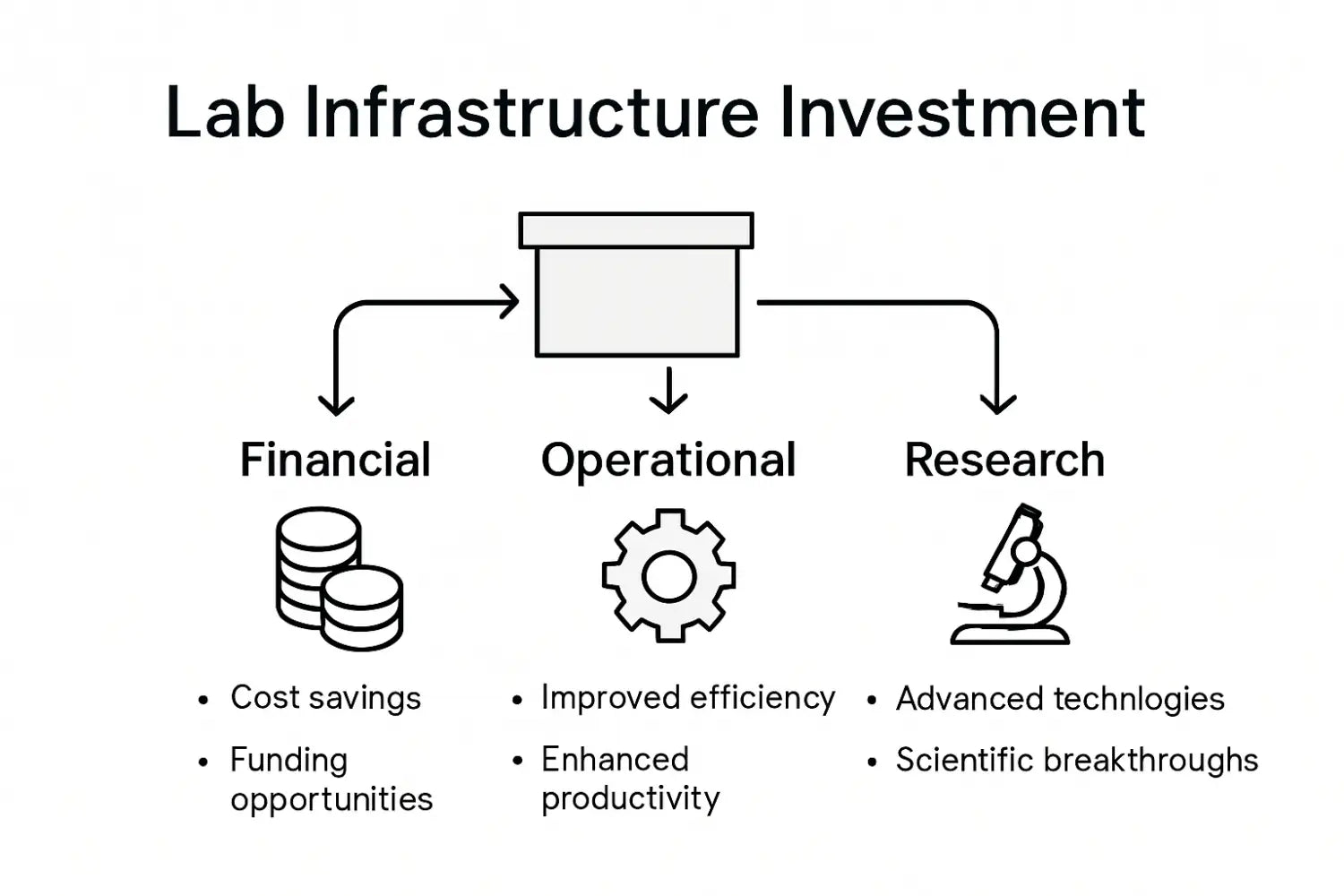
Modern scientific organizations recognize that infrastructure is not an expense but a critical investment in future innovation. The most successful research institutions view their laboratory infrastructure as a dynamic asset that generates returns through enhanced research capabilities, improved operational efficiency, and the potential to unlock groundbreaking scientific discoveries that can revolutionize entire fields of study.
Risks of Underinvestment and Common Pitfalls
Laboratory infrastructure underinvestment represents a critical strategic vulnerability that can dramatically compromise scientific research capabilities and institutional competitiveness. Organizations that fail to maintain robust research environments risk falling behind in technological advancements, limiting their ability to attract top talent, conduct cutting-edge research, and secure critical funding opportunities.
The most significant risks of lab infrastructure underinvestment include:
-
Research Capability Limitations
- Restricted experimental scope
- Outdated technological resources
- Reduced research quality and reliability
-
Operational Constraints
- Inefficient workflow processes
- Higher equipment maintenance costs
- Increased experimental failure rates
-
Competitive Disadvantages
- Difficulty attracting skilled researchers
- Limited grant and funding opportunities
- Reduced institutional reputation
-
Compliance and Safety Risks
- Inadequate research equipment standards
- Potential regulatory violations
- Compromised experimental integrity
Common pitfalls in laboratory infrastructure management often stem from short-sighted financial planning and a failure to recognize infrastructure as a strategic investment. Research institutions frequently underestimate the long-term consequences of deferred maintenance and technological obsolescence, creating cascading challenges that can take years to overcome.
Successful scientific organizations understand that infrastructure is not a luxury but a fundamental requirement for breakthrough research. By proactively addressing potential weaknesses, maintaining flexible and adaptive research environments, and consistently investing in technological capabilities, institutions can mitigate risks and position themselves at the forefront of scientific innovation.
Empower Your Research With Accessible Lab Infrastructure Solutions
The article highlights critical challenges like underinvestment in lab infrastructure that restricts research capabilities and slows scientific progress. If you face limitations due to outdated or inaccessible equipment, achieving cost efficiency and operational performance can feel out of reach. Investing in cutting-edge research equipment, robust quality control systems, and scalable technology platforms is essential to unlocking breakthrough discoveries and attracting top talent.
At Shop Genomics, we understand these pain points and support your mission by making advanced genomic research equipment both accessible and affordable. Explore our wide selection of tools designed to enhance productivity and ensure regulatory compliance while reducing long-term maintenance costs. Discover how strategic investments in technology can transform your lab into a dynamic innovation hub.

Don’t let infrastructure challenges hold back your scientific potential. Visit Shop Genomics today to explore reliable research equipment options and join a community dedicated to accelerating discoveries. Take the first step toward empowering your lab with the resources it needs to thrive now.
Frequently Asked Questions
What are the main components of lab infrastructure?
Lab infrastructure typically includes physical spaces designed for research, scientific equipment for measurements and analysis, quality control systems, information resources like databases, and safety guidelines to ensure compliance with regulations.
How does lab infrastructure impact research quality?
Robust lab infrastructure supports advanced research by providing researchers with the necessary tools, controlled environments, and comprehensive support systems, all of which enhance the overall quality and integrity of scientific outputs.
What are the financial benefits of investing in laboratory infrastructure?
Investing in lab infrastructure can lead to cost efficiency, enhanced operational performance, improved risk management, and the ability to attract and retain top talent, ultimately transforming research organizations into value-generating entities.
What are the risks of underinvesting in lab infrastructure?
Underinvestment can lead to limited research capabilities, operational constraints, competitive disadvantages, and compliance and safety risks that compromise the quality and reliability of scientific research.