

More than half of american research labs now seek affordable lab equipment that rivals premium options in precision and durability. Scientific success no longer depends on the highest price tag but on choosing tools that match budget limitations without sacrificing quality or performance. This guide reveals how cost-effective choices empower institutions of all sizes to access reliable technology and challenge old myths about scientific reliability in the modern lab.
Table of Contents
- Defining Affordable Lab Equipment and Common Myths
- Types and Categories for Varied Research Needs
- Core Benefits: Accessibility, Innovation, and Scalability
- Real-World Applications Across Scientific Fields
- Financial Impact: Cost, Quality, and Budget Planning
- Comparing Affordable Equipment With Premium Alternatives
Key Takeaways
| Point | Details |
|---|---|
| Understanding Affordable Lab Equipment | Affordable lab equipment can deliver high-quality performance without compromising functionality, challenging the misconception that lower cost means inferior reliability. |
| Total Cost of Ownership | Evaluating lab equipment involves considering initial purchase price alongside maintenance costs and overall value to ensure long-term investment success. |
| Innovative Accessibility | The development of modular and open-source lab tools is democratizing access to advanced scientific equipment for diverse research communities. |
| Performance Comparison | Affordable instruments are increasingly shown to match or exceed the performance of premium options, reshaping perceptions of equipment value in scientific research. |
Defining Affordable Lab Equipment and Common Myths
Affordable lab equipment represents scientifically precise instruments and tools that deliver exceptional performance while maintaining a cost-effective price point. Cost-effectiveness doesn’t mean compromising quality, but rather strategically selecting research-grade equipment that provides maximum functionality within budget constraints. Learn more about lab equipment selection in our comprehensive guide on lab consumables.
Research institutions and laboratories often misunderstand what constitutes affordable lab equipment. Common myths include believing that lower-priced instruments automatically mean inferior performance or reduced scientific reliability. Contrary to these misconceptions, affordable lab equipment can offer robust capabilities when carefully selected from reputable manufacturers. The key is understanding performance metrics, durability, and long-term value rather than focusing solely on upfront costs.
Key characteristics of truly affordable lab equipment include:
- Consistent performance across multiple experimental runs
- Reasonable maintenance requirements
- Compatibility with standard research protocols
- Appropriate precision and accuracy for intended scientific applications
- Reasonable lifespan relative to investment
Critical considerations when evaluating affordable lab equipment involve assessing total cost of ownership beyond initial purchase price. This includes evaluating maintenance expenses, calibration requirements, potential downtime, and potential productivity gains. Researchers must look beyond superficial price tags and analyze comprehensive value propositions that align with their specific scientific workflows and budget limitations.
Types and Categories for Varied Research Needs
Affordable lab equipment spans diverse categories designed to meet the specialized needs of different research domains. From molecular biology to environmental science, these instruments are engineered to provide precise functionality without excessive financial investment. Discover more about budget-friendly lab solutions in our guide to affordable genetic testing.
Research equipment can be broadly categorized into several key types that cater to specific scientific disciplines. These categories include analytical instruments, measurement tools, specialized research devices, and modular systems. Recent innovations have demonstrated remarkable possibilities in creating low-cost, high-performance equipment. For instance, the OpenFlexure Delta Stage represents a breakthrough in affordable microscopy, offering a 3D-printed design capable of performing automated experiments across multiple imaging modalities.
Key equipment categories encompass:
- Analytical Instruments: Spectrometers, chromatographs, and spectrophotometers
- Measurement Tools: Precision balances, microplate readers, digital calipers
- Imaging Systems: Microscopes, digital imaging equipment, cell imaging platforms
- Experimental Apparatus: Incubators, centrifuges, thermal cyclers
- Electrochemical Research Equipment: Potentiostats, electrochemical cells
Advanced research often requires flexible, adaptable equipment that can be customized to specific experimental protocols. The emerging trend of open-source and modular design, exemplified by projects like the low-cost multi-channel potentiostat system, demonstrates how researchers can access sophisticated technology without prohibitive expenses. This approach allows scientific institutions with limited budgets to acquire high-quality research tools that deliver robust performance and scientific reliability.
Core Benefits: Accessibility, Innovation, and Scalability
Accessibility in scientific research equipment represents a transformative approach that democratizes technological capabilities across diverse institutional environments. By reducing financial barriers, affordable lab equipment enables smaller research centers, educational institutions, and emerging scientific communities to participate in cutting-edge investigations. Explore our ultimate laboratory equipment collection for budget-conscious researchers.
Innovative design strategies are revolutionizing scientific instrumentation, creating modular, adaptable tools that maximize research potential. Projects like the Foldscope demonstrate how ultra-low-cost technologies can dramatically expand scientific exploration. This microscope, an origami-based design, exemplifies how thoughtful engineering can produce precise instruments accessible to researchers worldwide, from academic laboratories to field research settings in remote locations.
Key benefits of accessible scientific equipment include:
- Reduced financial entry barriers for research
- Enhanced technological democratization
- Increased global scientific participation
- Flexibility in experimental design
- Rapid prototyping and customization capabilities
Scalability emerges as a critical advantage of modern affordable lab equipment. Researchers can now acquire baseline instruments and incrementally upgrade or modify their setups without massive reinvestment. The COBLE project, which developed a collection of 3D-printable laboratory equipment, illustrates this principle perfectly. Such approaches allow scientific teams to create repairable, adaptable tools that can evolve alongside research requirements, ensuring long-term value and continuous technological advancement.
Real-World Applications Across Scientific Fields
Affordable lab equipment has revolutionized scientific research by enabling groundbreaking discoveries across multiple disciplines. From molecular biology to environmental science, these cost-effective instruments provide researchers with powerful tools that bridge technological gaps and expand investigative capabilities. Explore our comprehensive guide to lab consumables for more insights.
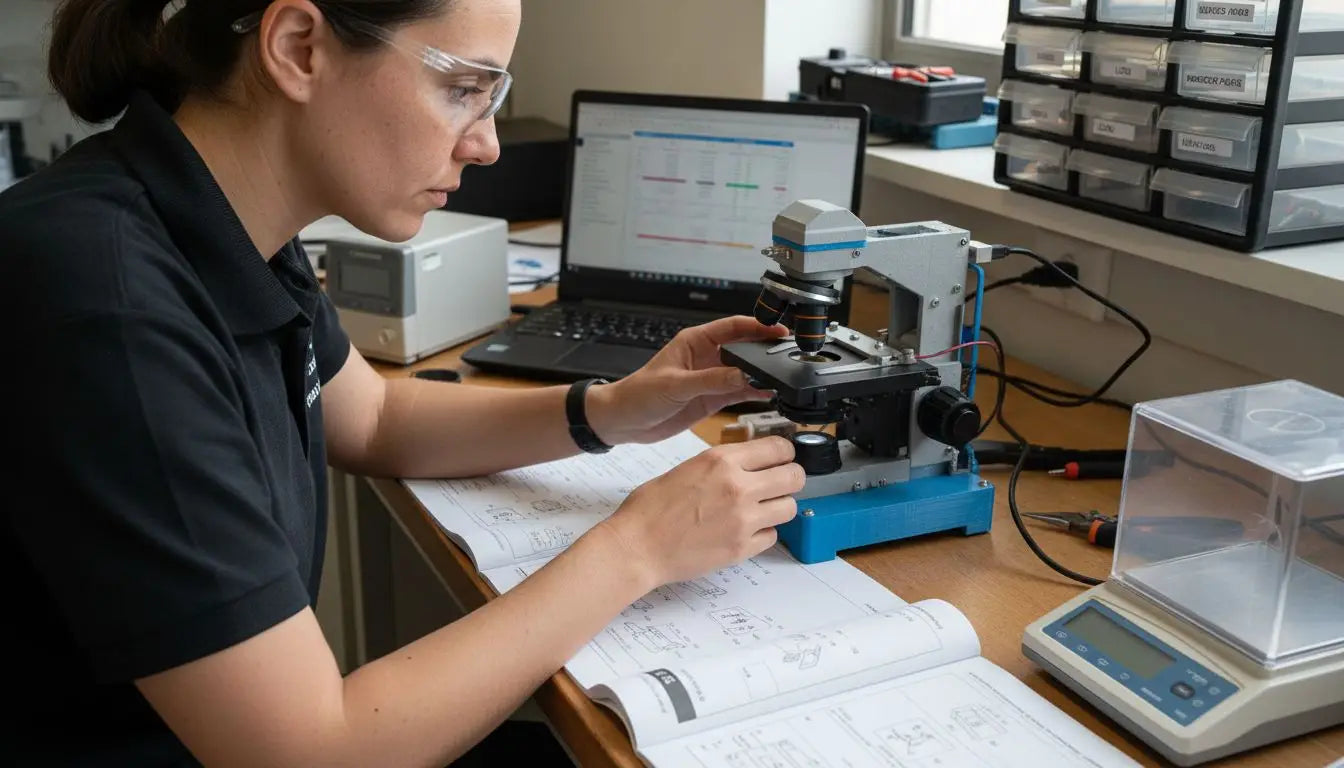
Different scientific domains showcase remarkable applications of low-cost, high-performance equipment. The OpenFlexure Delta Stage represents a prime example, offering a 3D-printed microscope capable of multi-modal imaging that can be utilized in biological research, materials science, and environmental monitoring. Similarly, innovative X-ray absorption spectrometers demonstrate how sophisticated analytical techniques can be made accessible through intelligent design and strategic cost reduction.
Key scientific fields benefiting from affordable lab equipment include:
- Molecular Biology: PCR machines, electrophoresis systems
- Environmental Science: Portable spectrometers, water quality analyzers
- Medical Research: Microplate readers, cell culture equipment
- Materials Science: Microscopy systems, spectroscopic instruments
- Agricultural Research: Soil analysis tools, plant growth monitoring devices
The versatility of modern affordable lab equipment extends beyond traditional research boundaries. By democratizing access to sophisticated scientific instruments, these technologies enable researchers in resource-constrained settings to conduct high-quality investigations. From remote field studies to emerging research centers, affordable equipment breaks down financial barriers, fostering innovation and scientific collaboration across global research communities.
Financial Impact: Cost, Quality, and Budget Planning
Budget planning for laboratory equipment represents a critical strategic process that extends far beyond simple price comparisons. Researchers must carefully evaluate the total cost of ownership, considering not just initial purchase price but long-term performance, maintenance requirements, and potential productivity gains. Explore our guide to affordable genetic testing solutions for comprehensive budget strategies.
Effective financial management in scientific procurement involves a nuanced approach to evaluating equipment value. The most cost-effective solutions are not necessarily the cheapest instruments, but those offering optimal performance-to-price ratio. Sophisticated research institutions now employ comprehensive evaluation frameworks that assess instrument reliability, calibration costs, potential downtime, and alignment with specific research protocols.
Key financial considerations for lab equipment procurement include:
- Initial Purchase Cost: Upfront investment required
- Maintenance Expenses: Annual servicing and repair budgets
- Operational Efficiency: Potential productivity improvements
- Calibration Requirements: Ongoing technical maintenance costs
- Replacement Frequency: Expected equipment lifecycle
Strategic budget planning requires a holistic view of scientific instrumentation investment. By carefully analyzing performance metrics, maintenance requirements, and long-term research goals, laboratories can make informed decisions that maximize scientific capabilities while maintaining fiscal responsibility. This approach transforms equipment procurement from a simple financial transaction into a strategic investment in research potential.
Comparing Affordable Equipment With Premium Alternatives
Performance comparison between affordable and premium laboratory equipment reveals nuanced insights that challenge traditional assumptions about scientific instrumentation. While expensive alternatives have long dominated research settings, innovative low-cost solutions are proving capable of delivering remarkable precision and reliability. Discover our ultimate laboratory equipment collection for budget-conscious researchers.
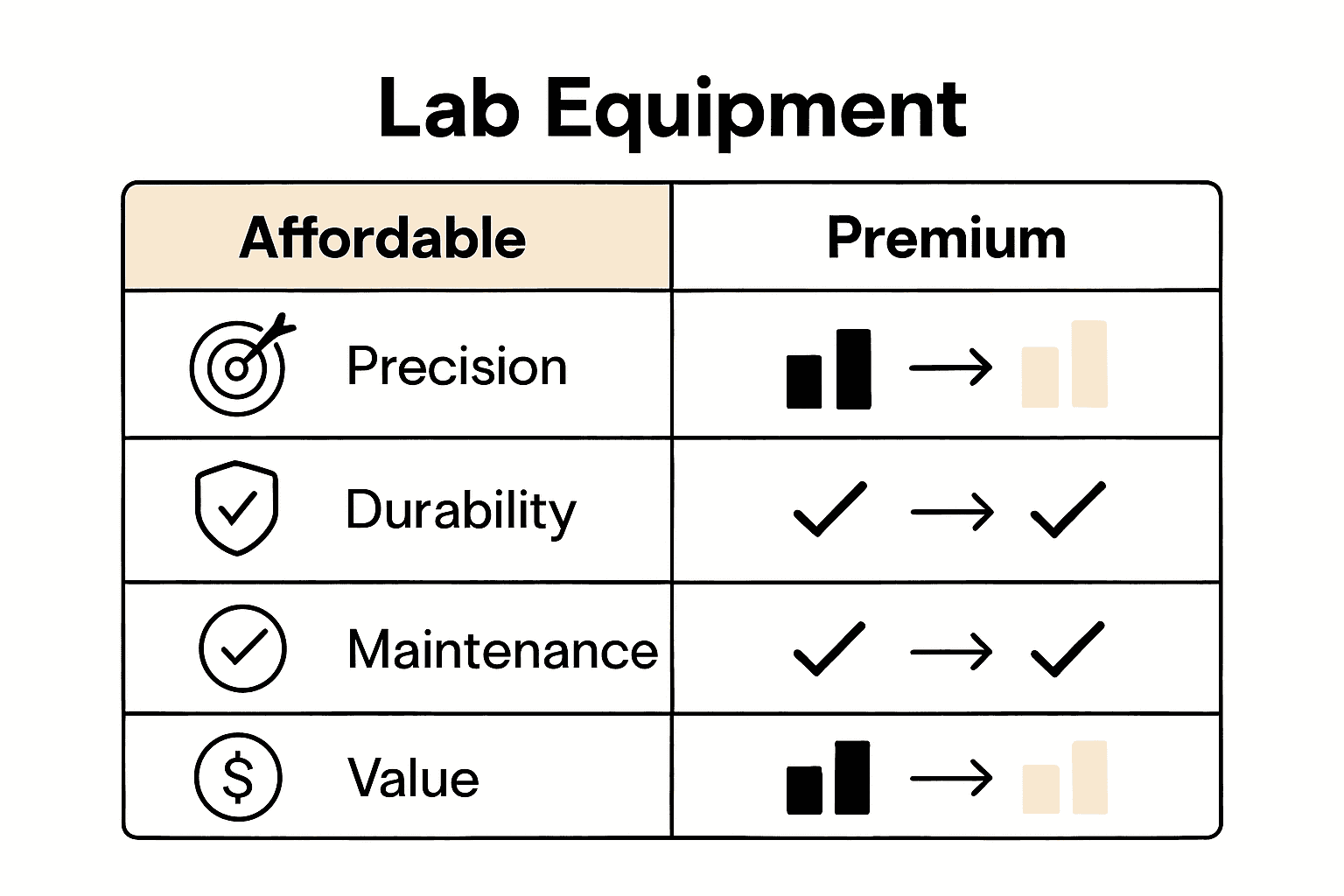
Recent technological innovations demonstrate that affordable equipment can match or even exceed premium alternatives in critical performance metrics. The Foldscope microscope, for instance, represents a revolutionary approach to scientific imaging, providing comparable functionality to traditional microscopes at a fraction of the cost. Similarly, multi-channel potentiostat systems developed for budget-conscious laboratories have shown comparable performance to significantly more expensive commercial instruments.
Key comparative factors between affordable and premium equipment include:
- Precision and Accuracy: Measurement reliability
- Durability: Long-term operational stability
- Technological Adaptability: Upgrade and modification potential
- Maintenance Requirements: Servicing complexity and costs
- Specialized Feature Sets: Advanced functionality availability
The technological landscape is rapidly evolving, with affordable equipment challenging traditional notions of scientific instrumentation quality. Researchers now recognize that cost-effective solutions can provide robust, reliable performance across diverse scientific disciplines.
This shift represents more than a financial consideration – it’s a fundamental transformation in how scientific communities approach technological access and innovation.
Empower Your Research with Affordable Lab Equipment from Shop Genomics
The article highlights a major challenge faced by many researchers and institutions like you: balancing cost with the need for precise, reliable lab equipment. The struggle to find affordable tools that do not compromise on quality or long-term value can feel overwhelming. You want consistent performance, durability, and scientific accuracy without breaking your budget. This is exactly where Shop Genomics steps in with solutions designed to democratize access to cutting-edge research technology.
At Shop Genomics we understand the emotional importance of feeling confident in your equipment choice while managing tight budgets. We offer a range of carefully selected, cost-effective instruments that empower you to accelerate discoveries and expand your scientific impact. Whether you seek modular systems for scalability or specialized devices that match your workflow, our offerings deliver both quality and innovation.
Discover budget-friendly options by exploring our ultimate laboratory equipment collection.

Take control of your lab’s capabilities today by visiting Shop Genomics. Choose tools that support your research goals and experience the freedom to innovate without financial barriers. Don’t let cost hold back your scientific breakthroughs. Start your journey with us now and transform the future of your research.
Frequently Asked Questions
What defines affordable lab equipment?
Affordable lab equipment includes scientifically precise instruments that provide exceptional performance while being cost-effective, emphasizing functionality without sacrificing quality.
Why is total cost of ownership important when selecting lab equipment?
Total cost of ownership considers not only the initial purchase price but also ongoing maintenance, calibration needs, and potential productivity gains, helping researchers make more informed financial decisions.
How do affordable lab instruments compare to premium alternatives in terms of performance?
Affordable lab instruments can match or even surpass premium equipment in precision, reliability, and durability, often providing similar functionalities at a significantly lower cost.
What are the key characteristics of reliable affordable lab equipment?
Key characteristics include consistent performance, reasonable maintenance requirements, compatibility with standard protocols, and adequate precision and accuracy for specific scientific applications.
Recommended
- 7 Essentials for Small Labs: Tools and Tips for Success – Shop Genomics
- Top Lab Equipment for Biotech – Expert Comparison 2025 – Shop Genomics
- Lab Consumables Explained: Types, Uses, and Procurement – Shop Genomics
- Laboratory Workflow Optimization: Boost Efficiency Step-by-Step – Shop Genomics
- What Pro Photographers Won’t Tell You: A Honest Camera Equipment List for Beginners - Amateur Photographer Guide