

More than 85 percent of American genomic laboratories now follow advanced best practices to ensure research credibility and data integrity. As genomic science becomes even more central to medical breakthroughs and public health strategies, the ways laboratories manage quality, compliance, and risk shape results that impact millions. This guide reveals how American researchers set the global example through meticulous protocols, rigorous safety, and secure data management.
Table of Contents
- Defining Genomic Laboratory Best Practices
- Essential Workflow and Quality Control Measures
- Data Integrity, Security, and Management Standards
- Global Compliance and Regulatory Requirements
- Risk Mitigation and Safety Protocols
Key Takeaways
| Point | Details |
|---|---|
| Quality Management | Establishing a rigorous quality management system is crucial for ensuring high standards in genomic research, including comprehensive documentation and equipment calibration. |
| Data Integrity | Protecting data integrity through advanced cybersecurity measures and systematic management practices is essential for maintaining trust and reproducibility in research findings. |
| Global Compliance | Adhering to international regulatory frameworks enhances collaboration and ensures consistent research quality across various genomic laboratories. |
| Risk Mitigation | Implementing proactive risk mitigation and safety protocols is vital for protecting personnel and maintaining research integrity in genomic environments. |
Defining Genomic Laboratory Best Practices
Genomic laboratory best practices represent a comprehensive framework of systematic protocols, quality control measures, and standardized procedures designed to ensure exceptional research outcomes and data integrity. These practices go beyond mere technical guidelines - they are fundamental standards that transform raw scientific potential into reliable, reproducible scientific discoveries.
At the core of genomic laboratory best practices are several critical components that distinguish high-performing research environments. Quality management systems serve as the foundational infrastructure, establishing rigorous standards for every aspect of genomic research. The benchmark standards guide highlights how these systems incorporate detailed documentation, precise equipment calibration, personnel training protocols, and continuous performance monitoring.
The Genomic Standards Consortium, an international community dedicated to scientific advancement, emphasizes the importance of standardized descriptions and comprehensive data exchange protocols. Their recommendations focus on creating consistent methodological approaches that enable researchers to compare and validate findings across different laboratories and research contexts. This standardization is crucial for maintaining scientific credibility and accelerating global research progress.
Key elements of genomic laboratory best practices include:
- Implementing robust quality control mechanisms
- Developing comprehensive standard operating procedures (SOPs)
- Establishing precise documentation protocols
- Maintaining rigorous equipment calibration standards
- Ensuring continuous staff training and competency assessment
- Creating systematic data management and integrity verification processes
By adhering to these meticulously designed practices, genomic laboratories can minimize experimental variability, reduce potential errors, and generate high-quality research outcomes that contribute meaningfully to scientific knowledge.
Essential Workflow and Quality Control Measures
Essential workflow and quality control measures form the critical backbone of genomic research, transforming complex scientific processes into reliable, reproducible outcomes. These comprehensive strategies encompass a systematic approach to managing every stage of genomic investigation, from initial sample preparation to final data analysis. Precision and consistency are the hallmarks of effective laboratory management.

In modern genomic research, computational infrastructure plays a pivotal role in maintaining workflow integrity. The standardized laboratory workflow guide emphasizes the importance of developing robust computational systems that can handle large-scale data processing while ensuring accuracy and traceability. Effective workflow management involves integrating advanced technological solutions with meticulous human oversight.
The Association for Clinical Genomic Science underscores the significance of internal quality control mechanisms. These mechanisms are designed to detect and mitigate potential errors at multiple research stages, including:
- Sample collection and preservation protocols
- DNA extraction and preparation techniques
- Sequencing library preparation
- Data generation and initial processing
- Computational analysis and interpretation
- Results verification and validation
Key quality control strategies involve implementing multiple verification checkpoints, using standardized reference materials, conducting regular instrument calibration, and maintaining comprehensive documentation. Researchers must establish clear standard operating procedures that outline precise steps for each experimental process, ensuring reproducibility and minimizing variability across different research teams and laboratory environments. By adopting these rigorous quality control measures, genomic laboratories can generate high-integrity data that withstands the most stringent scientific scrutiny.
Data Integrity, Security, and Management Standards
Data integrity, security, and management standards represent the critical framework that protects the foundational value of genomic research, ensuring that scientific discoveries remain trustworthy, reproducible, and protected from potential compromise. These comprehensive standards encompass a multifaceted approach to safeguarding the most sensitive and valuable scientific information across genomic research environments.
The core of robust data management begins with establishing sophisticated cybersecurity protocols that protect against unauthorized access, data manipulation, and potential breaches. Laboratory workflow optimization techniques highlight the importance of implementing multi-layered security measures that integrate technological solutions with stringent procedural controls. These protocols must address both digital and physical aspects of data protection, creating comprehensive barriers against potential vulnerabilities.
Key components of effective data integrity and security standards include:
- Implementing advanced encryption technologies
- Establishing strict access control mechanisms
- Creating comprehensive audit trail documentation
- Developing robust backup and recovery systems
- Ensuring compliance with international data protection regulations
- Maintaining continuous monitoring and threat detection protocols
The Dubai Health Authority’s genomics testing laboratory standards underscore the critical nature of traceability and preventive controls. Genomic laboratories must develop systematic approaches that not only protect data but also provide transparent mechanisms for tracking every modification, access point, and computational interaction. This requires a holistic strategy that combines technological infrastructure, rigorous personnel training, and ongoing evaluation of security protocols to maintain the highest levels of scientific integrity and confidentiality.
Global Compliance and Regulatory Requirements
Global compliance and regulatory requirements represent the intricate framework of standards that govern genomic research, ensuring scientific integrity, ethical conduct, and consistent quality across international research landscapes. These comprehensive guidelines serve as a critical mechanism for maintaining the highest levels of scientific rigor and protecting the fundamental principles of research ethics and data management.
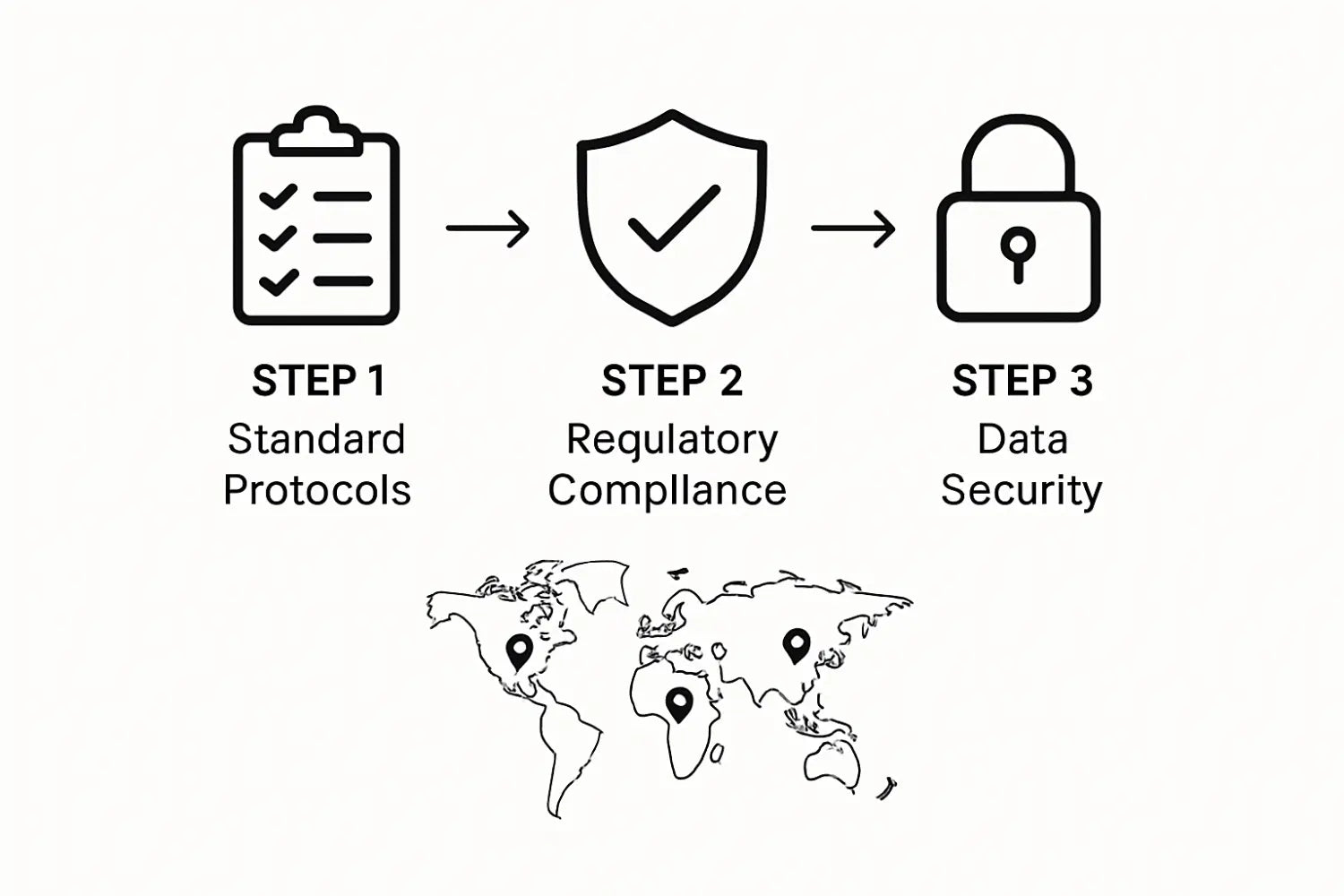
Regulatory standardization emerges as a cornerstone of global scientific collaboration, creating a unified approach to research methodologies and data handling. How to set up lab equipment demonstrates the critical connection between technical infrastructure and compliance requirements. Laboratories must navigate a complex ecosystem of international regulations that address multiple dimensions of scientific research, from ethical considerations to technical performance standards.
Key elements of global compliance frameworks typically encompass:
- Comprehensive ethical review processes
- Rigorous data protection and privacy standards
- Transparent research methodology documentation
- Standardized informed consent protocols
- International cross-border research collaboration guidelines
- Systematic quality assurance mechanisms
- Regular external audit and verification processes
The Centers for Disease Control and Prevention’s Laboratory Medicine Best Practices report highlights the critical importance of continuous quality improvement and adaptive regulatory frameworks. Genomic laboratories must develop dynamic compliance strategies that not only meet current regulatory requirements but also anticipate emerging scientific and technological challenges. This proactive approach demands ongoing education, systematic documentation, and a commitment to maintaining the highest standards of scientific integrity and operational excellence across diverse research environments.
Risk Mitigation and Safety Protocols
Risk mitigation and safety protocols represent a comprehensive framework designed to protect personnel, research integrity, and institutional resources within genomic research environments. These intricate systems go beyond basic safety guidelines, creating a proactive approach that anticipates potential hazards and systematically prevents their occurrence through strategic planning and continuous monitoring.
At the core of effective safety protocols lies a comprehensive risk assessment strategy that identifies, evaluates, and systematically addresses potential threats. Laboratory safety tips demonstrate the critical importance of developing multilayered safety mechanisms that integrate technological safeguards with rigorous human intervention protocols. This approach requires laboratories to create dynamic safety frameworks that can adapt to emerging technological and biological challenges.
Key components of robust risk mitigation protocols include:
- Comprehensive personal protective equipment (PPE) standards
- Advanced biosafety containment procedures
- Systematic hazard identification and documentation
- Regular training and competency verification programs
- Emergency response and incident management protocols
- Continuous risk assessment and modification processes
- Stringent equipment maintenance and calibration procedures
The Dubai Health Authority’s genomics testing laboratory standards underscore the critical nature of proactive safety management. Successful risk mitigation requires more than simply following prescribed guidelines - it demands a culture of continuous learning, open communication, and a collective commitment to maintaining the highest standards of scientific safety and operational excellence. Genomic laboratories must cultivate an environment where safety is not just a protocol, but a fundamental philosophical approach to scientific research.
Elevate Your Genomic Research with Trusted Equipment and Support
Achieving genomic laboratory best practices requires precise equipment and reliable workflows that support quality control, data integrity, and compliance standards. Researchers face challenges such as maintaining rigorous calibration, ensuring data security, and implementing effective risk mitigation protocols. At Shop Genomics, we understand these critical pain points and offer cutting-edge research equipment designed to empower your laboratory’s success and ensure consistent, reproducible outcomes.

Explore our selection of advanced tools and optimized solutions to enhance every step of your workflow. Visit Shop Genomics for equipment tailored to your needs and learn more about how to set up lab equipment for compliance and efficiency. Discover expert guidance on benchmark standards that will keep your lab aligned with the highest global quality protocols. Take control of your genomic research today and transform challenges into breakthroughs with trusted technology and support.
Frequently Asked Questions
What are genomic laboratory best practices?
Genomic laboratory best practices are systematic protocols and quality control measures designed to ensure reliable and reproducible scientific outcomes in genomic research.
Why is quality management important in genomic laboratories?
Quality management establishes rigorous standards for all aspects of genomic research, minimizing variability, reducing potential errors, and ensuring high-quality research outcomes.
How do quality control measures enhance genomic research?
Quality control measures include multiple verification checkpoints and standardized procedures that help detect and mitigate errors throughout various research stages, from sample collection to data analysis.
What role does data integrity play in genomic laboratories?
Data integrity ensures that the scientific data generated is trustworthy and reproducible, protecting it from unauthorized access and potential manipulation, thus maintaining the credibility of scientific findings.
Recommended
- The Essential Guide to Standardizing Laboratory Workflows – Shop Genomics
- How to Choose Genomic Equipment for Precise Research – Shop Genomics
- Laboratory Workflow Optimization: Boost Efficiency Step-by-Step – Shop Genomics
- 7 Practical Examples of Lab Automation for Every Lab – Shop Genomics
- Industry Standards for Testing in Diesel Injection Services – My WordPress