

Ever wonder why your DNA samples keep leaking or your cell cultures get contaminated? It’s often a silent culprit: the plastic tube you’re using.
We’ve all seen the dreaded “leaky tube” moment—one drop of buffer slipping out, wiping away months of work.
Choosing the right tube can feel like picking the right pair of shoes: if it’s wrong, the whole day falls apart.
Polypropylene (PP) and polystyrene (PS) are the two stars of the tube world. PP is flexible, heat‑resistant, and great for high‑throughput freezing and thawing. PS is rigid, cheap, and perfect for simple storage or quick assays.
Think about a lab that runs overnight sequencing: they need tubes that can handle repeated –80°C cycles without cracking. PP wins here. Meanwhile, a teaching lab that only needs to keep samples at room temperature will get good results from PS, saving a few bucks per batch.
To pick the best tube, start with a simple checklist: temperature range, volume, need for vortexing, and budget. If you’ll be centrifuging at 14,000 rpm, check the tube’s wall thickness and seal type.
When you’re ready to buy, we recommend checking out the Tubes - Shop Genomics collection—every tube is labeled with its exact specs and ideal use cases.
If you’re looking for a custom bottle that can hold your reagents in style, consider Quench Bottles for high‑quality, personalized options that fit your lab’s branding.
So, next time you’re about to order, ask yourself: Do I need durability or cost savings? The right tube choice will keep your experiments clean, consistent, and on schedule.
TL;DR
Choosing the right tube is like picking the right tool for an experiment; polypropylene offers durability for –80°C cycles, while polystyrene provides a cost‑effective solution for short‑term storage.
At Shop Genomics we curate types so labs can match tube choice to budget, workflow, and integrity, ensuring clean data without leaks.
Understanding Polypropylene Tubes
\nLet’s level with each other: choosing between polypropylene vs polystyrene tubes isn’t just about price. It’s about whether your samples survive the next freeze, thaw, or spin without leaking or cracking.
\nIn our experience, polypropylene tubes quietly outperform their cheaper cousins in demanding workflows. They’re flexible enough to handle repeated –80°C cycles, and they resist cracking when you vortex or spin at high speeds. If your lab runs long cryo sequences or overnight sequencing prep, PP tubes are the safe bet.
\nPolystyrene tubes, on the other hand, shine when you need a clear, rigid container for quick tests or short-term storage. But when stress is high—think many freeze-thaws, aggressive mixing, or ultrafast centrifugation—PS tubes can lose integrity. So in the polypropylene vs polystyrene tubes debate, PP typically wins for tough, data‑critical work.
\n\nDurability under cold storage and stress
\nPolypropylene’s combination of chemical resistance and fatigue tolerance matters in high‑throughput labs. A batch kept at –80°C won’t become brittle, and the caps stay sealed through repeated cycles. That translates into fewer sample losses and more reliable results across experiments for Academic & Research Institutions and CROs alike.
\n\nDesign details that influence performance
\nBeyond the material, the tube’s wall thickness, bottom geometry, and cap seal design all influence performance. Thick walls tolerate fast spins at high rpm, while a proven seal minimizes leakage during vortexing. Look for either conical or flat bottoms depending on your centrifuge rotor and plate format, and confirm that the cap remains secure at low temperatures.
\n\nIn practice, map your typical workflow: how often you freeze and thaw, what temperatures you’ll encounter, and whether you’ll centrifuge or vortex. A simple checklist helps: temperature range, nominal and usable volumes, sealing mechanism, and compatibility with your instruments. Think about labeling: is there space for durable barcode or laser etching so you don’t waste time chasing samples?
\n\nVolume options and labeling capabilities matter for efficiency. If you’re tracking dozens of samples, you’ll want a consistent scale (0.5 mL, 1.5 mL, 2 mL) and durable markings that don’t fade after multiple cycles. This is where polypropylene tubes’ stability shines compared with cheaper PS options.
\n\nQuality control matters too. Check lot-to-lot consistency, ensure the tubes are certified for your centrifuge speeds, and verify that seals maintain integrity after exposure to your typical workflow. This reduces the risk of hidden leaks that undermine data integrity.
\n\nOf course, there are times when PS makes sense—short-term storage at room temperature or quick, low-stress assays. But if your goal is reliability across many cycles and strict data integrity, the polypropylene vs polystyrene tubes choice clearly tilts toward polypropylene.
\n\n\n\nDoes that cover the practical side well? If you’re preparing a procurement brief, translate these specs into concrete questions for suppliers—cupro content, cap sealing method, and confirmed temperature ratings—so you pick tubes that won’t derail your experiments.
\n\nAnd to help visualize the idea, here’s a quick image to anchor what to look for in a lab setup:
\n\n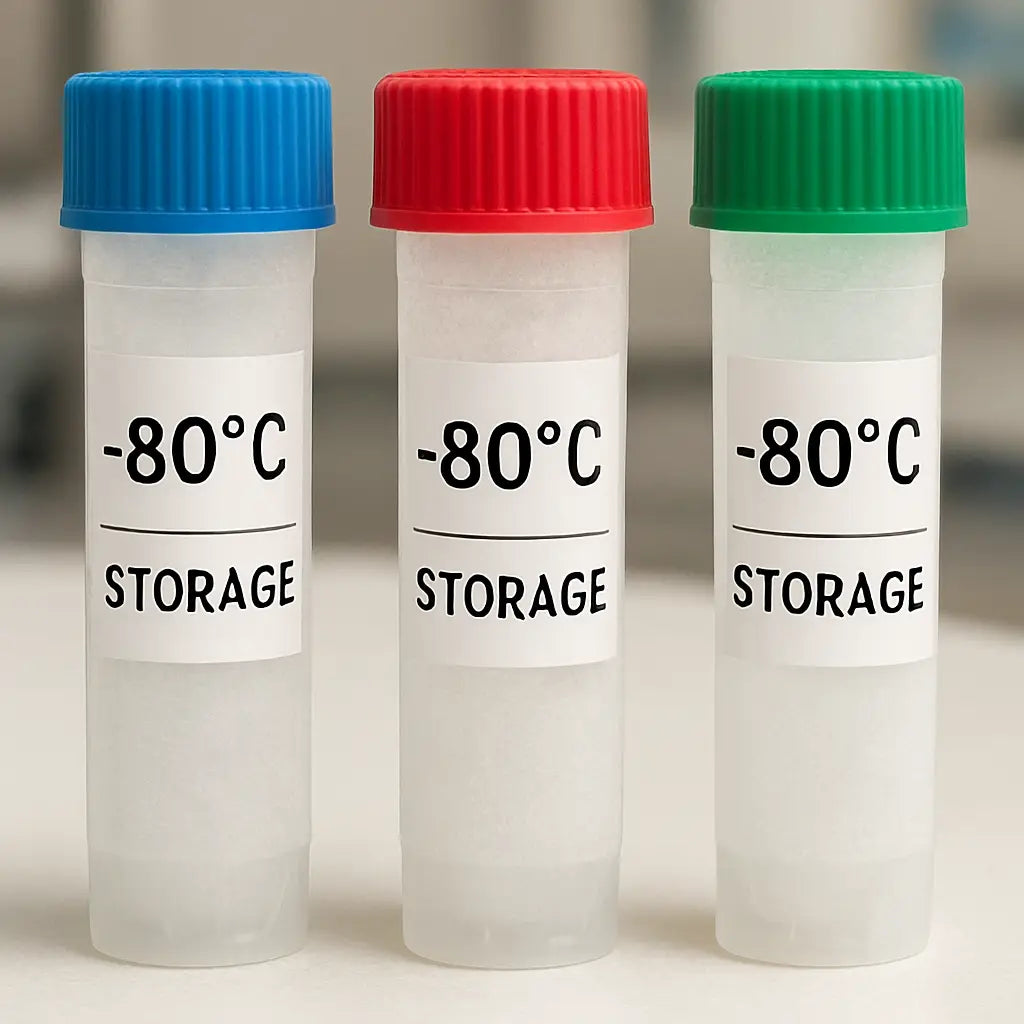 \n\n
\n\nBottom line: for most genomics workflows that demand durability, reproducibility, and long-term stability, polypropylene tubes are the safer bet. Keep this frame in mind next time you’re comparing tubes—your data and your freezer will thank you.
Understanding Polystyrene Tubes
When you reach for a tube, you’re not just grabbing a container—you’re picking a partner for your experiment. Polystyrene (PS) tubes have a long track record in labs, especially where optical clarity and cost matter more than extreme durability.
So what makes PS a go‑to choice for so many researchers? First, it’s rigid. That firmness helps you keep the shape of the tube intact even when you’re layering plates or running quick, one‑off assays. Second, PS is cheap. If you’re a teaching lab or a small startup that needs to stretch every dollar, the price point can be a game‑changer.
But it’s not just about money. PS has an optical advantage: it’s almost crystal clear, which means you get cleaner readings in spectrophotometers, plate readers, and microscopy. When you’re measuring absorbance in a 96‑well plate, that clarity can shave minutes off your workflow and reduce the chance of stray light skewing results.
Take a look at the Corning polystyrene tube line—these are the sort of tubes you’ll find on a bench in a high‑throughput sequencing lab or a biology classroom. They feature a dual‑position snap‑cap that keeps liquids sealed during short‑term storage and protects samples from accidental spills. Corning’s polystyrene tubes also come with a 1,400 RCF rating, so they’ll hold up if you need to spin down a quick pellet.
What does that mean for your day‑to‑day science? If you’re running a single‑use protocol—think a quick DNA extraction or a one‑time ELISA—PS can keep you on schedule and on budget. On the flip side, if you’re storing samples over months, especially in a freezer that cycles through –80°C, the PS wall can crack or craze, leading to leaks or contamination.
Imagine a lab that routinely freezes and thaws a large panel of patient samples. Even a small crack in a PS tube can release buffer, mix up the sample integrity, and throw off downstream sequencing. That’s where polypropylene’s flexibility comes in, but if you only need a few short‑term reactions, PS is the easier choice.
Do you ever wonder how the material itself affects the chemistry inside? PS is less permeable than PP, so gases can’t escape as easily. That’s great for assays that need a tight seal, but it also means that volatile reagents might slowly diffuse, altering concentrations over time. If your protocol uses ethanol or isopropanol, you might notice a drop in solvent potency after a week in a PS tube.
On the other hand, PS is more prone to crazing when exposed to high temperatures. If you heat a PS tube to 70°C for a quick denaturation step, the walls can develop micro‑cracks, compromising the seal. PP can handle those temperatures without a fuss, making it safer for protocols that involve thermal cycling.
Now let’s bring it back to your lab. Think of the volume you need: a 1.5‑mL tube that fits in a standard microcentrifuge? PS works fine for that size, but if you’re looking at larger volumes—say 50 mL for PCR mastermixes—PP is more reliable. The thicker wall of PP gives you room to handle larger liquids without bending or breaking.
When you’re choosing a tube, ask yourself two quick questions: (1) How long will the sample sit, and at what temperatures? (2) Do you need optical clarity or cost efficiency? Answering those will point you to the right material for the right job.
In practice, many labs keep a small stock of both materials. You’ll find PS tubes in the walk‑in cooler for quick assays, and PP tubes in the –80°C freezer for long‑term storage. That way, you get the best of both worlds without compromising data quality.
Take this insight into your next purchase: look at the seal type, the volume, and the storage conditions. If you’re unsure, start with a test run—use a PS tube for a single batch, then monitor for leaks or changes in optical clarity. If everything looks good, you can confidently roll out that protocol to the full cohort.
Bottom line: Polystyrene tubes shine in cost‑sensitive, short‑term, and optically demanding situations. They’re the sweet spot for labs that need quick results without a heavy budget. Just remember to keep them out of the freezer if you’re planning multiple freeze‑thaw cycles, or you might end up with cracked, leaky tubes and wasted samples.

Key Differences: Material Properties
When you’re juggling sample prep, the plastic you pick can feel like a quiet sidekick or a sneaky saboteur.
Polystyrene (PS) and polypropylene (PP) sound like science‑fiction characters, but in the lab they’re the real MVPs.
They each bring a set of strengths that can make or break your workflow.
What Makes PP Tough?
PP’s secret sauce is its flexible chain. Imagine a rubber band that never snaps— that’s PP. It can swing between -80 °C and 120 °C without cracking. That’s why high‑throughput sequencing labs love it. A single freeze‑thaw cycle that would nick a PS tube leaves PP looking fresh.
Its density is around 0.9 g/cm³, so a 50 mL PP tube feels light enough to lift in bulk, yet strong enough to keep your reagents safe. When you’re doing a 48‑hour PCR run, PP’s heat tolerance means you can hit 98 °C without the walls giving up.
According to a detailed review on Sales Plastics, PP resists acids, bases, and most organic solvents. That makes it a favorite for clinical labs that need to sterilize tubes with ethanol or bleach.
Why PS Is Cheap and Clear
PS is the textbook “plastic” you see in cafeteria lunch bags. It’s rigid, so you can stack a hundred of them on a rack without them bending. That rigidity also gives PS its crystal‑clear look— great for spectrophotometers where every bit of light matters.
But PS’s low melting point— around 170 °C— means it can’t survive the same thermal swings as PP. A quick spin at 14,000 rpm, followed by a 5 °C chill, can cause crazing— tiny micro‑cracks that leak.
Westlab’s blog illustrates how PS is ideal for single‑use assays or short‑term storage at room temperature. Think a teaching lab where students pull up a quick ELISA and walk away.
Real‑World Decision‑Making
Picture a CRO that needs to ship 200 samples to a partner in Toronto. The tubes will hit -80 °C in a freight container that can jump temperatures. PP’s flexibility means the tubes stay intact, preventing leaks that could ruin downstream sequencing.
Conversely, a university research lab that only stores plasmids for a week at 4 °C can cut costs by using PS. The weight savings translate to lower shipping bills, and the clarity helps when you’re reading absorbance curves.
To wrap it up, think about your lab’s biggest challenge:
- Frequent freeze‑thaw? Go PP.
- Short‑term, optical readouts? PS works fine.
- Cost is king and samples stay at room temp? PS saves money.
- You’re shipping large volumes internationally? PP keeps integrity.
Remember: The right tube isn’t just about material; it’s about matching the plastic’s personality to the experiment’s needs. A thoughtful choice can save you time, money, and a lot of headaches.
If you’re in doubt, run a small test batch: fill two 1.5 mL tubes—one PP, one PS—place them in a freezer, thaw them, and check for leaks or deformation. The one that keeps its shape is the one that will serve your big project.
| Feature | Polypropylene (PP) | Polystyrene (PS) |
|---|---|---|
| Thermal Range | -80 °C to 120 °C | -20 °C to 70 °C |
| Optical Clarity | Moderate | High |
| Cost per tube | Higher | Lower |
Applications and Use Cases
When you’re juggling sample prep, the choice between polypropylene vs polystyrene tubes feels like picking the right tool for the job.
If your lab routinely freezes samples, you’re probably leaning toward polypropylene—its flexible walls survive the freeze‑thaw dance better.
On the flip side, if your day is spent spinning plates and reading absorbance, polystyrene’s optical clarity gives you a clean, glare‑free read.
The real question is: how often does your workflow hit extremes—low temperatures, high‑speed centrifuges, or just room‑temperature storage?
Let’s walk through three archetypal labs and see how each material stacks up.
High‑Throughput Sequencing Centers
These centers run thousands of –80 °C samples daily. A single cracked tube can mean lost data and wasted reagents.
Polypropylene’s modulus of resilience lets it flex without cracking, even after 50+ freeze‑thaw cycles (Impact Plastics’ overview).
CROs shipping samples overseas also face temperature spikes in freight. PP’s lower density keeps containers lighter, trimming shipping costs.
A quick test: fill two identical tubes, freeze, then thaw. The PP keeps its shape; the PS shows micro‑cracks and a slight bulge.
If you’re on a tight budget, look for bulk PP tubes—Shop Genomics offers 50 mL and 5 mL options that fit standard microcentrifuge racks.
Clinical Diagnostic Labs
Clinics often use 1.5 mL tubes for blood collection and centrifuge pellets at 14,000 rpm.
Polystyrene’s snap‑on caps seal tight enough for a single freeze, but the rigid walls can crack under repeated spin‑freeze cycles.
PP’s screw caps provide a better seal for long‑term storage, reducing evaporation and contamination risk.
Needle.Tube’s guide highlights that PS tubes are durable for sample collection and easy visual inspection—great for quick assays.
If your lab only needs short‑term assays, PS saves you money without compromising data quality.
Educational and Small‑Scale Research Labs
Student labs often prioritize cost over extreme durability.
Polystyrene’s cheap price and bright transparency make it ideal for teaching plate readers and microscopy.
However, when you need to store samples for a week at 4 °C, PP’s lighter weight cuts shipping fees and reduces breakage during transport.
Here’s a good rule of thumb: if the sample will stay above –20 °C, PS is fine; if it dips below –20 °C, switch to PP.
Check your freezers’ temperature logs—if you notice occasional spikes, PP will keep your tubes safe.
At the end of the day, the key is to match the tube’s personality to the experiment’s temperament.
Here’s a quick checklist you can print and keep in your drawer:
- Temperature range: PP –80 °C to 120 °C; PS –20 °C to 70 °C.
- Optical clarity: PS > PP; choose PS for spectrophotometry.
- Seal type: PP screw cap for long storage, PS snap‑on for quick use.
- Volume: PP stronger for 50 mL, PS works fine for 1.5 mL.
- Cost: PP higher, PS cheaper—balance with budget.
If you’re still unsure, run a side‑by‑side test batch—label each tube, freeze, then thaw and inspect for cracks.
You’ll get a hands‑on feel for how each plastic reacts to your specific conditions.
That small experiment saves you time and money when scaling up.
Remember, the right tube is a silent partner; a misfit can derail an entire project.
So, what’s the best move for your lab?
If you’re in academia, start with PP for core sequencing workflows and PS for teaching kits.
Clinical labs can keep a stash of PP for long‑term biobanking and PS for rapid diagnostics.
For biotech startups, bulk PP 5 mL centrifuge tubes are a solid middle ground—cost‑effective, sturdy, and versatile.
And if you’re shipping internationally, the lighter PP reduces freight costs while ensuring integrity.
Your next purchase decision is easier when you keep the core criteria in mind: temperature, volume, seal, and budget.
With these guidelines, you can confidently choose the right plastic and keep your experiments running smoothly.
And if you have questions, our team at Shop Genomics is happy to help you pick the right tubes for your workflow.
Now you’re ready to order the right tubes and keep your data clean.
Happy pipetting!
Environmental and Safety Considerations
Every time you open a new plastic tube, you’re making a small environmental choice. The two most common materials, polypropylene and polystyrene, feel identical on the shelf but behave very differently inside and out. Let’s unpack what that means for safety, waste, and the bottom line.
Handling Hazards: What’s on the Inside?
Polypropylene’s flexible walls make it a good absorber of mechanical shock, which means you’re less likely to see cracks when you drop a tube on a bench. That’s great for labs that vortex or spin at high speeds, but it also means PP can release tiny plastic fragments if the tube is over‑heated or over‑pressed. Polystyrene, on the other hand, is rigid and brittle. A quick twist can cause it to crack, spilling contents or exposing you to sharp edges.
When you’re working with hazardous chemicals—acids, bases, or organic solvents—PP is usually the safer bet. Its chemical resistance keeps reagents from leaking into the lab atmosphere. PS can absorb some solvents, especially at higher temperatures, which might change your reaction mix or contaminate the environment.
Thermal Stability: The Temperature Game
PP’s melting point tops out around 170 °C, while PS starts to soften at about 80 °C. If your workflow includes heat‑stressed steps—think PCR or protein denaturation—PP keeps its shape. PS can warp, leading to leaks that contaminate downstream assays.
For researchers who run freeze–thaw cycles, PP’s lower density (about 0.9 g/cm³) also means lighter tubes that are easier to handle in –80 °C freezers. PS’s heavier mass can add up to higher shipping costs and more breakage when pallets are jostled.
Recycling & Lifecycle: A Bigger Picture
Both PP and PS are recyclable, but the pathways differ. PP’s wide use in food packaging and automotive parts means many recycling streams are well established. PS, while recyclable, often ends up in landfills because it’s harder to process and can be contaminated by residual reagents.
When you plan a lab’s waste strategy, consider the end‑of‑life impact. Choosing PP for high‑frequency use can reduce the frequency of replacement and the volume of plastic waste. PS is great for single‑use or short‑term assays, but plan for a proper disposal routine to avoid environmental contamination.
For a deeper dive into PP recycling options, check out this resource on plastic waste management plastic recycling guide.
Regulatory and Compliance: Stay on Track
Many institutional labs must comply with local hazardous waste regulations. PP tubes that have been exposed to biohazardous samples should be autoclaved or chemically disinfected before disposal. PS tubes that have held volatile or corrosive chemicals can release toxic gases if incinerated. Knowing the right disposal method protects both your team and the environment.
Practical Checklist: Quick Decision Guide
- What’s the temperature? PP for –80 °C to 120 °C; PS for room temp to 70 °C.
- How many freeze–thaw cycles? PP wins.
- Is optical clarity needed? PS for spectrophotometry or microscopy.
- What’s the budget? PP is pricier but lasts longer.
- Waste strategy? Choose PP for frequent use, PS for disposable assays.
Remember, the safest choice isn’t always the cheapest. If your project hinges on sample integrity, investing in the right tube can save you time, money, and headaches.
And if you’re ever stuck picking between PP and PS, just ask yourself: Will this tube survive the day’s stresses without compromising the sample? The answer will guide you to the right material.
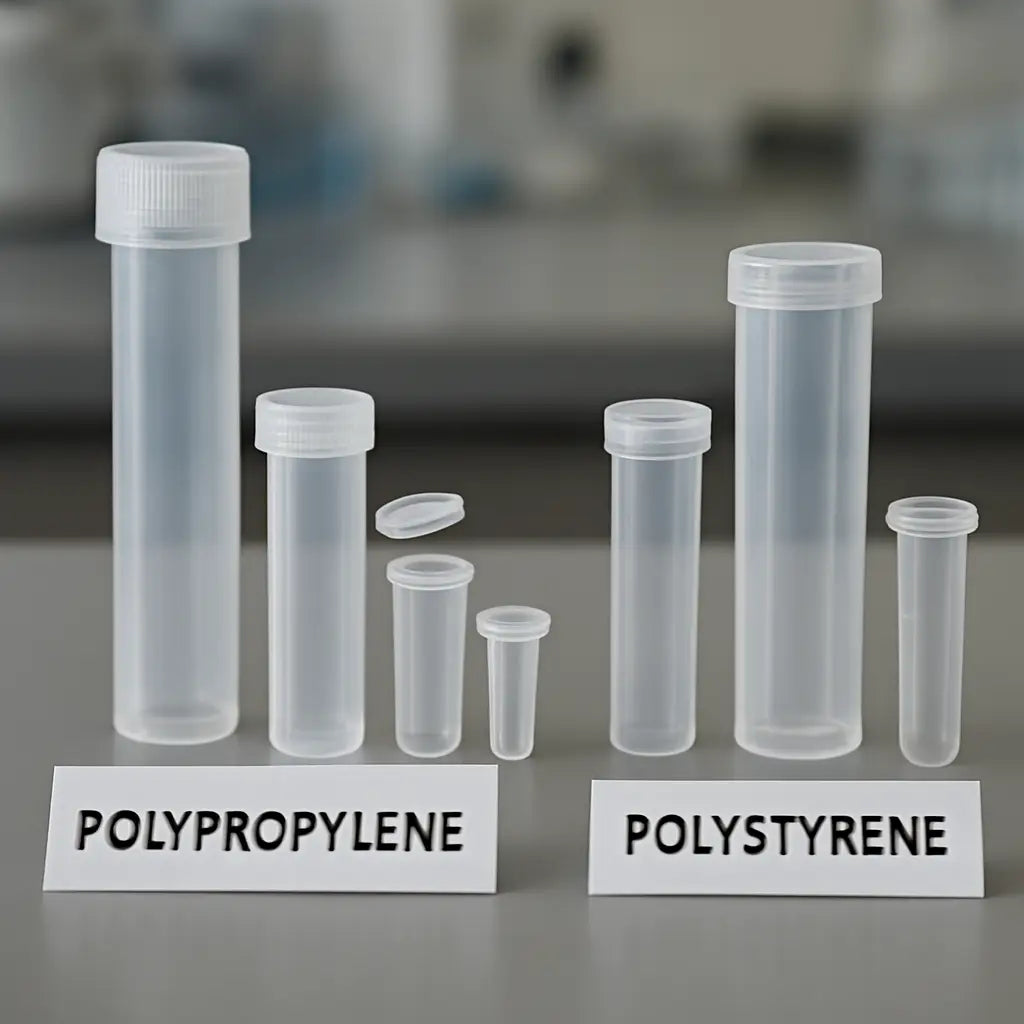
Choosing the Right Tube for Your Project
When you’re about to tackle a new experiment, the first thing that pops into your mind is usually the protocol, not the plastic. But the tube you pick can make or break the whole thing.
In our experience, a well‑chosen tube feels like a silent teammate. It keeps the sample safe, the data clean, and the workflow smooth. If you’ve ever seen a leak in the middle of a sequencing run, you know the cost of a bad tube.
Step 1: Map Your Workflow
Start with a quick mental map of what you’ll do with the sample.
- Will you freeze it at –80 °C and thaw it dozens of times?
- Do you need to vortex or spin at 14,000 rpm?
- Is the sample going to be read in a spectrophotometer?
- How much will you spend per tube?
Write those points on a sticky note and keep it on your bench. It’ll guide your choice in the moment.
Freeze‑Thaw Frequency
Polypropylene (PP) is the champ for repeated freeze‑thaw cycles. Its flexible walls absorb the shock of temperature swings, so the tube stays intact after 50+ cycles.
Polystyrene (PS), on the other hand, is rigid. Repeated –80 °C exposure can cause micro‑cracks that leak or contaminate your sample.
Heat Exposure
If your protocol involves heating to 95 °C for PCR, PP can handle it without warping. PS starts to soften around 80 °C, which might distort the shape and compromise the seal.
Optical Needs
Need clear readings in a plate reader? PS offers higher optical clarity. PP is moderate and can slightly scatter light.
Step 2: Match Size and Seal to Use
Pick the volume that fits your instruments. A 5 mL PP tube fits most microcentrifuge racks, while a 1.5 mL PS tube is handy for quick assays.
Seals matter too. PP usually comes with a screw cap that seals tight—great for long‑term storage. PS often has snap‑on caps, which are fine for short runs but can loosen over time.
Step 3: Budget Check
PP is pricier but lasts longer. PS is cheaper but may need frequent replacement if you’re doing freeze‑thaw or high‑temperature steps.
Think of it like buying a durable backpack vs. a disposable tote. The upfront cost matters, but the total cost of replacement can outweigh the initial savings.
Step 4: Do a Mini‑Test
When in doubt, run a quick side‑by‑side test. Fill two identical tubes—one PP, one PS—with the same buffer. Freeze them at –80 °C for 24 h, thaw, and inspect for cracks or leaks.
If the PP stays solid and the PS shows signs of crazing, you’ve got a clear winner for your workflow.
Step 5: Consider the End‑of‑Life
Both PP and PS are recyclable, but PP has more established recycling streams because of its use in food packaging. If your lab is committed to sustainability, choosing PP for high‑use tubes can reduce overall waste.
For single‑use or short‑term assays, PS can be disposed of responsibly with a local biohazard program.
Quick Decision Guide
- Frequent freeze‑thaw or high heat? Pick PP.
- Short‑term storage at room temperature or cost is king? Go PS.
- Need optical clarity for spectrophotometry? PS is the way.
- Looking to keep long‑term biobank samples stable? PP wins.
Remember, the right tube is a silent partner. A misfit can ruin the data, waste reagents, and add headaches.
If you’re still unsure, this resource gives a concise overview of the key differences and can help you decide which tube suits your needs best.
Now go grab a cup of coffee, grab a pen, and write down your workflow. Then pick the tube that matches it—your experiments will thank you.
FAQ
What’s the biggest difference between polypropylene and polystyrene tubes for everyday lab work?
It comes down to durability versus cost and clarity. Polypropylene (PP) can handle dozens of freeze‑thaw cycles without cracking, making it ideal for long‑term storage or high‑throughput sequencing. Polystyrene (PS), on the other hand, is rigid, cheap, and crystal‑clear—perfect for one‑off assays or spectrophotometry where optical quality matters more than extreme durability.
Can I use PS tubes in a –80 °C freezer for long‑term samples?
Not really. PS starts to craze and develop micro‑cracks after a few freeze‑thaw cycles at –80 °C. That can lead to leaks or contamination, which is a big problem for biobanking. If you need to keep samples frozen for months, PP is the safer bet. PS is fine for short‑term or room‑temperature storage.
Do the tubes’ seals affect sample integrity, and which material offers better sealing?
Yes, seals matter. PP tubes usually come with screw caps that stay tight even after repeated handling, reducing evaporation and cross‑contamination. PS tubes often use snap‑on caps that are easy to open but can loosen over time, especially after multiple centrifuge runs or temperature shifts. For critical experiments, the more reliable PP seal is worth the extra cost.
What about optical clarity for plate‑reader assays?
Polystyrene shines here. Its high optical clarity means fewer light‑scattering artifacts, giving you cleaner absorbance readings. Polypropylene is more translucent, which can slightly dampen signals. If you’re doing a lot of spectrophotometry or microscopy, PS gives you a clearer picture. For non‑optical work, PP’s durability outweighs the slight loss of clarity.
Is there a weight or cost trade‑off I should consider for large‑scale projects?
Absolutely. PP tubes are heavier and a bit pricier, but they last longer and reduce replacement costs. PS tubes are lighter and cheaper upfront, but you may end up buying more if they crack or need replacement after a few cycles. For high‑volume, long‑term projects, PP’s upfront cost can pay off in the long run.
How do environmental and safety regulations influence my choice?
Both polymers are recyclable, but PP has more established recycling streams because it’s common in food packaging. PS is harder to process and can end up in landfills if contaminated. If your lab follows strict waste‑management protocols, PP’s better recyclability can help you meet regulatory goals while keeping sample safety in check.
Conclusion
At the end of the day, the choice between polypropylene and polystyrene tubes boils down to what your project really needs.
Polypropylene wins when you’re juggling freeze‑thaw cycles, high‑speed spins, or long‑term storage. It stays flexible, keeps seals tight, and can survive the heat of a PCR run without warping.
Polystyrene shines in optical assays or quick, one‑off experiments where cost and clarity matter more than durability. Its crystal‑clear walls make spectrophotometry a breeze, and the price tag lets you stretch a lab budget.
So, what should you do next? Map out your workflow: how often will you freeze, spin, or read? If you need repeat stability, lean PP. If you’re running a single batch of ELISAs or teaching plate‑reader classes, PS is the smarter pick.
Remember, the tube you choose is a silent partner. A misfit can cost time, money, and data integrity. Take the small step of running a side‑by‑side test—two identical tubes, same sample, freeze and thaw. Watch for cracks or leaks, and let the results guide your decision.
When you’re ready to make a purchase, Shop Genomics offers a range of 50 mL and 5 mL options that match the needs we’ve outlined. Your experiments will thank you for the thoughtful choice.