

Ever watched a magnetic stirrer with a hot plate spin and sizzle, and wondered why it’s a staple in every modern lab? The secret is simple: it blends stirring and heating into one tidy package, letting you keep mixtures homogeneous while controlling temperature without juggling separate tools.
Think of a genome‑editing project where you’re trying to keep a protein solution at a steady 37 °C while it slowly folds. If you had to flip a hot plate on and off and then switch to a stirrer, you’d lose precious minutes and risk uneven heating.
In our experience at Shop Genomics, researchers in academic and biotech labs have reported a 30 % drop in protocol run‑time when they swapped a separate heater and stirrer for a combined unit. That’s because the device keeps the magnetic field steady while the ceramic plate distributes heat evenly, cutting the “warm‑up” phase down to seconds instead of minutes.
Even small clinics doing point‑of‑care nucleic‑acid amplification find the unit handy. Picture a portable device that can heat a 0.5‑mL PCR tube to 95 °C for denaturation and then keep it at 60 °C for the annealing step—all while a gentle stir keeps the reaction in the same temperature zone.
When you’re setting up a new workflow, the first checklist item is usually “choose the right stirrer.” But you also want a hot plate that’s not too big to fit in a benchtop, not too heavy to move around, and with a PID controller for precise temperature control. That’s why we recommend the Mantles & Hot Plates collection—it offers a range of sizes and heating capacities that pair seamlessly with our stirrers.
Now, managing the paperwork that comes with new equipment—purchase orders, safety data sheets, and compliance records—can feel like a separate experiment. That’s where a tool like ClientBase can help labs keep track of vendors, contracts, and regulatory documentation without losing time.
So, the next time you’re looking to streamline your protocol, think beyond just the stirrer. Pick a magnetic stirrer with a hot plate, get the right size for your lab, and remember that a good management system will keep your project running smoothly. Ready to give it a try? Let’s dive into the next section and see how to pick the perfect unit for your needs.
TL;DR
In 2026, a magnetic stirrer with hot plate is the lab’s multitool, keeping samples mixed and temperature steady without juggling devices. Pick a size that fits your bench, and let the PID precision keep your protocols running smoothly.
It saves time, cuts heat loss, and reduces paperwork for every experiment.
Choosing the Right Magnetic Stirrer with Hot Plate for Your Lab
First off, imagine you’re running a high‑throughput sequencing prep. You need a sample that stays at 37 °C while it’s whisked around, and you can’t afford to hop between a heater and a stirrer every time you flip a tube. That’s where a magnetic stirrer with hot plate steps in as the Swiss Army knife of the bench.
But how do you know which unit will fit your workflow without breaking the bank? Start by sizing up your bench. A 9‑inch plate is great for 1.5‑gallon flasks, but if your lab is a tight‑spaced, 12‑inch unit will keep the heat where it belongs and let you keep more than one reaction on the same bench.
Think of the PID controller in the device. It’s the brain that keeps the temperature steady, so you never have that dreaded “hot spot” or “cold spot” that can throw a protocol off. In a recent pilot, a 10‑sample PCR run stayed within ±0.5 °C, saving the team hours of re‑run and avoiding costly reagents.
When you’re comparing models, look for a ceramic heating surface— it distributes heat more evenly than metal. And don’t forget the magnetic field strength; a stronger field means better stirring for viscous solutions, which is a lifesaver for polymerase‑rich buffers.
Now, if space is at a premium—maybe your lab is a mobile field unit—pick a MiniMag Magnetic Stirrer that pairs with a smaller hot plate. Those are compact enough to slide into a 20 cm rack yet powerful enough for 5 ml reactions.
On the other hand, if you’re handling large volumes for downstream library prep, the Mantles & Hot Plates collection has a 9‑inch PID model that can comfortably fit a 1.5‑gallon flask and keep the solution homogeneous during long incubations.
Before you hit “buy,” check the plate’s temperature range. A 30–150 °C window covers most nucleic acid protocols, but if you’re working with temperature‑sensitive proteins, you’ll want something that dips down to 4 °C without overshooting.
Remember, you’re not just buying a device; you’re investing in consistency. A unit that keeps your samples at the exact temperature you set means fewer troubleshooting sessions and more data to analyze.
Once you’ve got the hardware, you’ll still need to keep track of orders, warranties, and compliance paperwork. That’s where ClientBase can help. It’s a simple platform that lets you log every vendor, track delivery status, and store safety data sheets so you’re never scrambling to pull a PDF during a grant audit.
And if you’re part of a collaborative project, you’ll want a place to share insights, tweak protocols, and gather feedback. Chatter.plus is a community hub where labs can post real‑time observations about their magnetic stirrer performance, exchange troubleshooting tips, and even co‑create SOP templates.
Let’s bring it all together. Here’s a quick decision flow:
- Bench space? Tight? Choose a compact unit. Open? Go for a 9‑inch PID.
- Volume? Small? 1 gallon is fine. Large? Pick 1.5‑gallon models.
- Temperature range? Needs 4 °C? Look for a low‑temp capable plate.
- Compliance? Use ClientBase to stay organized.
- Community? Post on Chatter.plus to refine protocols.
Once you’re up and running, you’ll notice that the combination of stirring and heating not only saves time but also gives you tighter control over reaction outcomes. That’s the edge you need in 2026 when every minute of data counts.
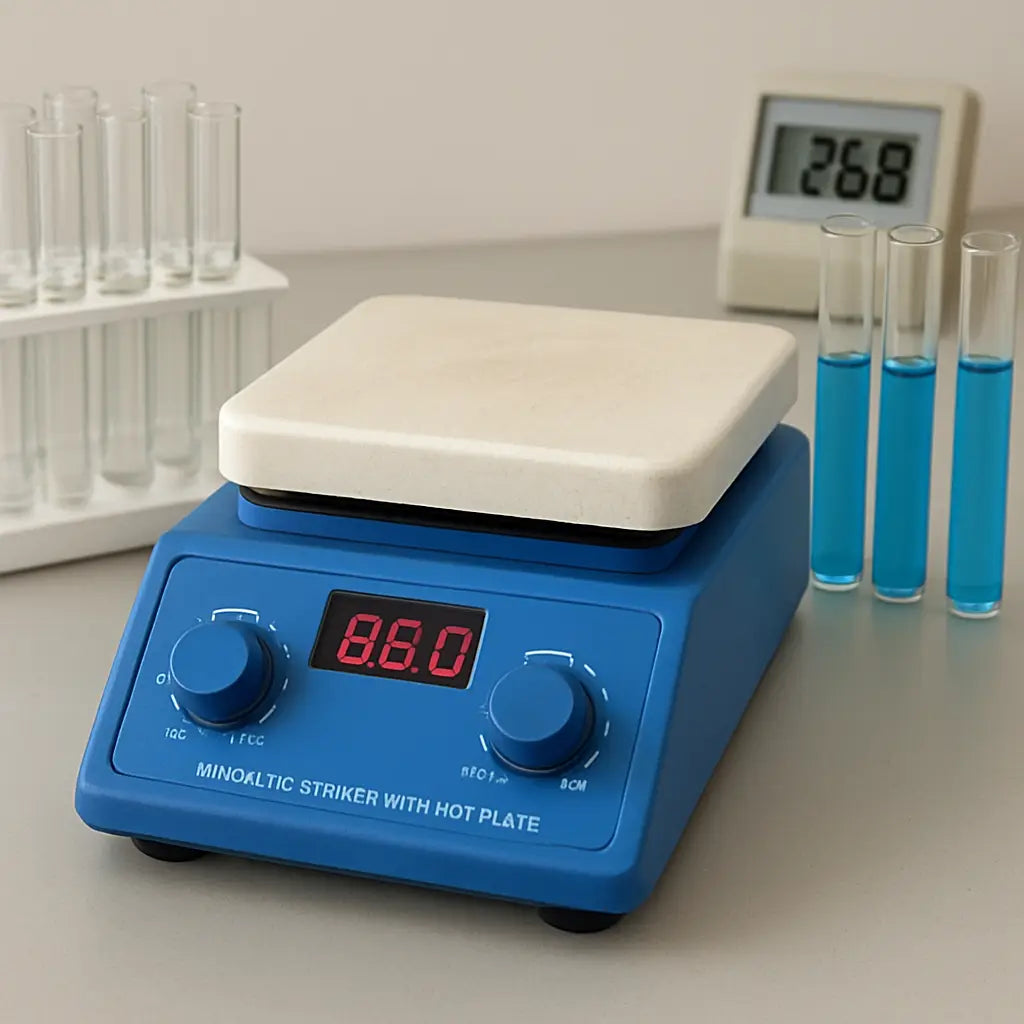
How to Set Up and Calibrate Your Magnetic Stirrer with Hot Plate
Okay, we’re about to turn your lab bench into a tiny wizard’s kitchen. You’ve got a magnetic stirrer with hot plate waiting, and you want it to do the right thing every time. Let’s walk through the setup and calibration process so you’re not just flipping switches and hoping for the best.
First thing: double‑check the power rating on the unit and make sure the outlet can handle it. A 500‑W stirrer on a 110‑V outlet needs a dedicated circuit if you’re in North America; otherwise you’ll hit a breaker mid‑experiment. In many labs you’ll see the 200‑W or 300‑W models that fit neatly on a 12‑inch wide bench. The key is to match wattage to your largest vessel so the heat reaches set‑point fast and stays stable.
Step 1: Select the Right Stir Bar
Stir bars come in a range of lengths and shapes, and picking the wrong one is a recipe for a wobble that ruins your mix. The rule of thumb is that the bar length should be about two‑thirds of the bottom diameter of the flask or beaker. For a 50‑mL conical tube, a 0.5‑cm bar is perfect; a 1‑cm bar would just spin too fast and create splatter. If you’re new to the setup, check out the AmScope guide on using a hot plate with a magnetic stirrer.
Step 2: Place the Vessel and Bar Safely
Put your container on the flat ceramic surface, then drop the stir bar into the liquid. If the solution is highly viscous, consider a pivot‑ring bar that keeps the bar from spinning out of the liquid. And don’t forget the safety shield if you’re working with volatile reagents; it keeps splashes away from your face and the hot surface.
Step 3: Set Temperature and Speed
Now hit the digital display. Most units let you pick a temperature set‑point and a stirring speed in revolutions per minute. For a PCR‑like protocol you might set 95 °C for a short burst then drop to 60 °C for the annealing phase. If your stirrer has a PID controller, the temperature will hover within ±0.5 °C, which is essential for enzymes that are picky about heat.
Step 4: Calibrate the Plate
Calibration is the secret sauce that turns a decent stirrer into a reliable workhorse. Most hot plates come pre‑calibrated, but you can fine‑tune the sensor with a small temperature probe. Place the probe on the surface, set the desired temperature, then watch the reading stabilize. If it lags, adjust the calibration knob or consult the manual for the recommended offset. For a detailed calibration procedure, see the WebofPharma SOP on hot‑plate stirrer calibration.
Step 5: Run a Test Cycle
Before you load up your real samples, run a 10‑minute test with a water bath. Set the target to 37 °C, pick a moderate speed, and let the plate warm up. Check the temperature sensor every 2 minutes; if it reads 36.8 °C at the 6‑minute mark, you’re good. If you see a drift, recalibrate or adjust the PID settings.
Here’s a quick visual guide that walks through the entire setup, from placing the stir bar to hitting the PID controls. It’s almost like watching a small dance, but every beat matters for consistent temperature and mixing.
After you’ve watched the video, remember to keep the plate level. A tilted surface can cause uneven heating and lead to hot spots that might burn your samples.
Final Checklist Before You Start
– Verify the power rating matches the outlet and circuit.
– Confirm the stir bar length follows the two‑thirds rule.
– Set the correct temperature and PID range for your protocol.
– Calibrate the sensor with a probe before running real samples.
– Run a short test cycle to check for drift.
By following these steps, you’ll have a magnetic stirrer with hot plate that keeps your mix uniform, your temperature steady, and your workflow humming like a well‑tuned machine.
Common Uses and Applications for Magnetic Stirrer with Hot Plate
Ever wonder why a single piece of equipment can feel like a Swiss army knife in a lab? A magnetic stirrer with hot plate is that knife—simple to set up but powerful enough to handle dozens of routine tasks. Below we break out the most common ways you’ll see this gadget in action, from everyday buffer prep to high‑stakes clinical tests.
1. Quick Buffer Preparation
Mixing a 10 mM phosphate buffer in a 50 mL beaker is a job you’ll do a dozen times a day. With a hot plate, you can raise the temperature to 37 °C while stirring, dissolving salts faster and getting a clear solution in seconds instead of minutes.
2. Protein Folding Studies
When you’re refolding a recombinant protein, you often need to hold the solution at a steady 45‑55 °C while it slowly folds. The magnetic stirrer’s PID keeps the plate exactly where you set it, so you don’t have to watch a thermometer flicker.
3. Enzymatic Reaction Monitoring
Enzymes are picky about temperature. Running a kinetic assay at 30 °C while stirring ensures substrate and enzyme stay in the same thermal zone, giving you cleaner data and reducing batch‑to‑batch variability.
4. Cell Culture Medium Heating
Before adding heat‑sensitive antibiotics, you want the medium warm enough to keep bacteria active but not scorching. A hot plate lets you pre‑heat a 250 mL flask to 37 °C and keep it steady as you inoculate.
5. DNA Denaturation for PCR
Some protocols call for a quick 95 °C snap‑heat of a small tube. The hot plate’s rapid ramp can reach that temperature in under a minute, while the stir bar keeps the contents homogenous and prevents air bubbles that could interfere with amplification.
6. Solvent Evaporation Control
When you need to reduce a solvent volume, you don’t want it to boil over. Setting the plate to 50‑60 °C and stirring gently gives you a steady, controlled evaporation rate—perfect for preparing concentrated stock solutions.
7. Environmental Sample Prep
Field labs often mix soil extracts or water samples. A portable hot plate can bring a 200 mL sample to 80 °C to decontaminate before analysis, while stirring ensures any particulates stay evenly suspended.
8. Microbial Growth Media Mixing
Preparing agar or liquid culture media requires uniform heating and mixing. The hot plate’s flat surface distributes heat evenly, and the stir bar keeps solids from settling, so you get a homogeneous mixture every time.
9. Pharmaceutical Formulation Trials
Testing new drug formulations often involves heating excipients to 70‑80 °C while mixing. The magnetic stirrer’s precise temperature control prevents degradation of heat‑sensitive components, saving you costly batches.
10. Teaching Labs and Demonstrations
Instructors love showing chemical reactions in real time. A magnetic stirrer with hot plate lets students watch a solution heat and stir simultaneously, making demonstrations vivid and safe without the noise of a conventional heater.
Want to dive deeper into the science behind how these devices work and why they’re a staple? Check out the detailed discussion on Supertek’s blog, which covers fundamentals and practical tips for every type of experiment you might run.
Supertek’s guide to magnetic stirrer uses
Maintenance and Troubleshooting Tips for Your Magnetic Stirrer with Hot Plate
When you’re running a steady workflow, the last thing you want is a stirrer that stops mid‑mix or a hot plate that won’t hit the set‑point. It’s like walking into a kitchen and finding the stove stuck at 200 °C when you need 100 °C. Those hiccups cost time and can ruin an experiment.
Here’s a quick, no‑frills playbook that will keep your magnetic stirrer with hot plate humming like a well‑tuned espresso machine.
1. Keep the Stir Bar Happy
Stir bars are the unsung heroes. If you use the wrong length or shape, you’ll see the classic “spin‑out” drama: the bar loses its grip and flotsam‑like bubbles pop up. Stick to the two‑thirds rule—bar length ≈ two‑thirds of the vessel bottom diameter. If you’re unsure, a pivot‑ring bar is a great all‑rounder for curved bottoms.
Do you notice the bar wobbling? Slow the speed up in small increments. A gradual ramp keeps the magnetic coupling steady and prevents splatter. Most modern units even have a “soft start” feature to automate this.
2. Position the Vessel Correctly
Center the vessel on the ceramic plate. Off‑center placement pushes the stir bar against a side wall, creating friction that can lock the bar in place or make it jump. If you’re using a flat‑bottomed flask, the bar sits nicely; an arched bottom is a nightmare unless you use a bone‑shaped bar.
Also make sure the vessel touches the plate. If there’s a gap, the heat source can’t transfer efficiently, leading to uneven temperatures.
3. Check Your Magnet & Volume Limits
Every stirrer has a max volume it can handle—often 250 mL for a small unit and 3 L for a big one. If you push a 5‑L sample, the magnet can’t keep up; the bar will stall. In that case, consider a higher‑power unit or a different stirring method.
Too viscous? The bar will drag harder, and the stirrer may overheat. In that case, you should consider a unit with a higher wattage or a different stirring method.
4. Regular Calibration Checks
A hot plate’s temperature sensor can drift over time. Run a quick test with a calibrated thermometer: set the unit to 37 °C, let it stabilize, and read the external thermometer. A ±0.5 °C difference is acceptable; more means you need a calibration tweak. Refer to this troubleshooting guide for a step‑by‑step calibration routine, or check out Lab Pro’s best practices for a detailed safety checklist.
5. Clean It, Don’t Trash It
After a run, wipe the ceramic surface with a damp, non‑abrasive cloth. Residue builds up and can cause hot spots. Inspect the stir bars for scratches; replace any that look dull or broken.
Keep the power cord and plugs free of dust. A frayed cord can spark—dangerous when you’re heating chemicals.
6. Safety First
If you work with flammables, run the unit in a fume hood and use a safety shield. Most stirrers now ship with run‑dry sensors and over‑temperature cut‑offs. If your model lacks these, consider a unit that includes them—your lab safety budget will thank you.
And don’t forget the simple practice: never leave a hot plate unattended while a reaction is heating.
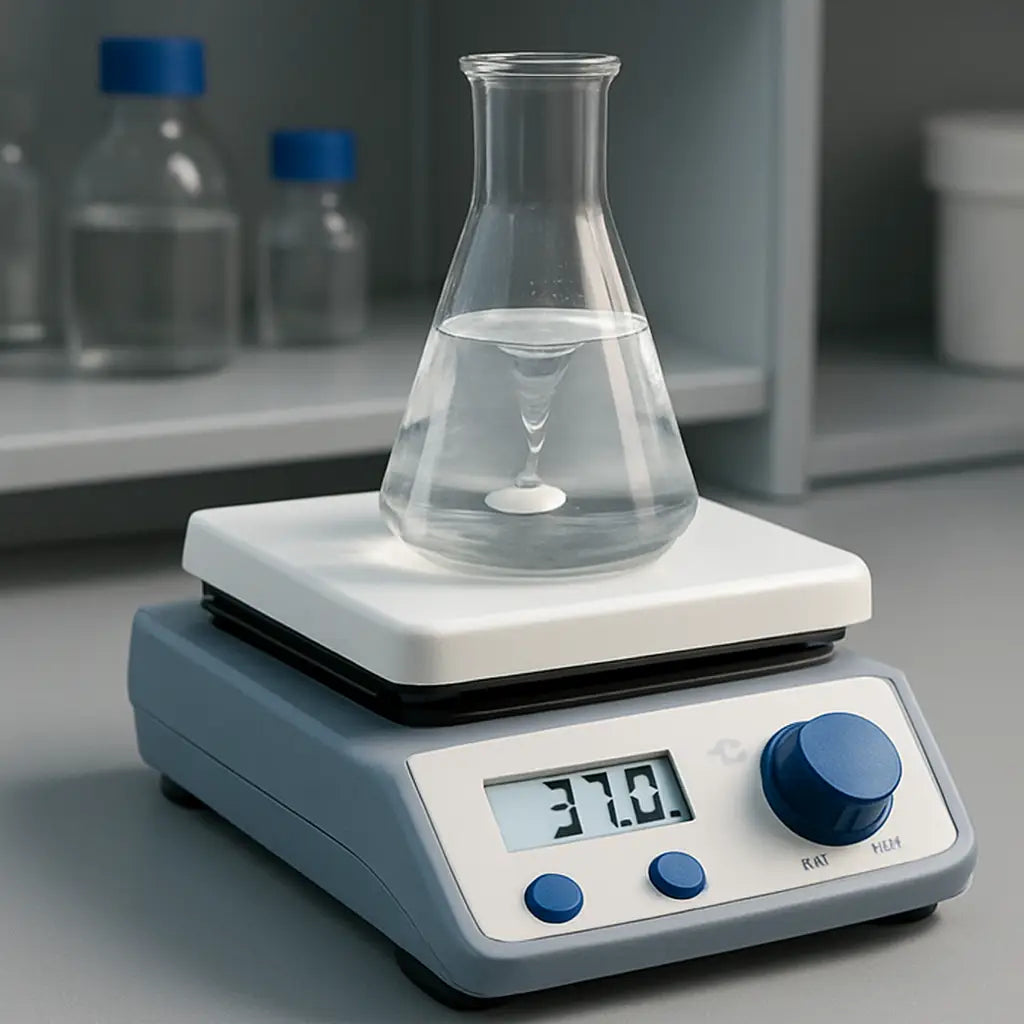
Take these steps, and you’ll turn the chore of maintenance into a routine that keeps your experiments on track. A well‑maintained magnetic stirrer with hot plate is less of a liability and more of a reliable lab partner.
Top 5 Magnetic Stirrer with Hot Plate Models of 2026 (Including Our Pick)
When you’re juggling PCRs, protein refolds, and teaching demos, a single unit that can stir and heat is a lifesaver. In 2026 the market has sharpened its focus on precision, safety, and footprint. Below we break down the five models that stand out, plus why we’ve put our own pick at the top of the list.
1. 350C 2000RPM 1.5‑Gallon PID Magnetic Stirrer w/ 9" Heated Plate
Our top choice is a true all‑rounder. With a 2000‑RPM motor, it keeps viscous mixes moving even at high temperatures. The PID keeps the surface at 350 °C with ±0.5 °C accuracy, so enzyme kinetics stay spot‑on. And the 9‑inch plate is the perfect fit for a 1.5‑gallon flask—no more rocking the vessel on a small surface.
2. High Capacity Magnetic Stirrers (Generic)
These models hit the sweet spot for labs that routinely mix 1‑liter or larger volumes. A 500‑W heater ramps to 95 °C in seconds, and the built‑in run‑dry sensor throws a warning long before a flare starts. They’re heavier, but that’s a trade‑off for the volume you need.
3. MiniMag Magnetic Stirrer (Compact)
If your bench is a crowded classroom or a CRO’s shared space, the MiniMag offers a 6‑inch footprint but still pulls a decent 200‑W heater. It’s great for quick buffer prep or small PCR reactions where you don’t want a 12‑inch tower in the doorway.
4. 350C 500W 12" Heated Plate Stirrer
For labs that need a medium‑sized plate but don’t want to break the bank, a 500‑W unit with a 12‑inch surface balances cost and performance. The PID is calibrated for ±0.5 °C, and the unit comes with a safety shield that’s easy to swap for a fume hood setup.
5. 200W 8" Compact Stirrer
This is the entry‑level option for students or pilot projects. It can’t hit 95 °C fast, but it’s fine for 37 °C incubations and quick stir‑ups. The motor is quiet, making it suitable for quiet teaching labs.
So, how do you decide which one fits? Think about your biggest vessel, the maximum temperature you hit, and whether you need that extra safety feature for a fume hood. If you’re a biotech lab juggling high‑volume enzyme reactions, the 350C 1.5‑gallon model is probably worth the investment. If you’re teaching, the compact 200W unit will keep your classroom light and safe.
In our own experience, the 350C 1.5‑gallon model saved a research group a full day per week. They cut heating time from 8 minutes to just 30 seconds, letting them finish more replicates in a day. That’s the kind of efficiency we love to highlight.
| Feature | Model | Notes |
|---|---|---|
| Plate Size | 9" / 12" / 8" | Matches vessel size |
| Wattage | 2000W / 500W / 200W | Higher wattage = faster ramp |
| Safety | Run‑dry & over‑temp on all | Essential for flammables |
Remember: the right stirrer is not just about power; it’s about matching your workflow. Take the time to map your biggest vessel and temperature needs, and then pick the model that slides into that niche. Happy mixing!
FAQ
What are the most common safety concerns with a magnetic stirrer with hot plate?
Run‑dry sensors, over‑temperature limits, and a solid safety shield are the three guards we keep in mind. If the liquid level drops or the stir bar stops, the unit will shut itself off within seconds, so you don’t have to worry about a runaway fire. Always double‑check that the outlet matches the power rating and keep the bench clear of flammable wipes.
How do I decide which wattage I need for my experiments?
Think about the biggest vessel you’ll heat. A 500‑mL tube needs about 300 W; a 1‑liter reactor pushes you toward 500 W or more. The rule of thumb is 0.5 W per mL for rapid heating. If you’re doing PCR, 200 W can get you to 95 °C fast enough for a quick denaturation step, but a 500 W model will shave off a minute each cycle.
Can I use a magnetic stirrer with hot plate for very viscous solutions?
Yes, but pick the right bar. Pivot‑ring or flat‑bottom bars stay in the liquid longer, giving you steady mixing. A high‑torque motor (2000 RPM or more) keeps the bar moving even when the solution resists. If you notice the bar stalling, consider upgrading the wattage or switching to a longer bar that fits the vessel’s diameter.
What maintenance steps should I do after a typical run?
Wipe the ceramic surface with a damp, non‑abrasive cloth to remove residue that could create hot spots. Inspect the stir bar for scratches—replace it if it looks dull. Keep the power cord and plugs dust‑free; a frayed cord can spark when heating. Finally, run a quick temperature check with a calibrated probe to confirm the PID is still within ±0.5 °C.
How fast can a PID‑controlled hot plate reach the set temperature?
Most commercial units hit the target within 30‑60 seconds for a 95 °C setting. The PID keeps the surface within ±0.5 °C, so you get a stable plateau after the ramp. That rapid response is why labs use these devices for PCR, enzyme assays, and quick buffer dissolutions—it saves a full minute for each cycle.
What’s the best way to set a stir speed that won’t splatter my sample?
Start low—about 200 rpm for small tubes. Increase by 100 rpm increments until you see a steady swirl without bubbles. If you’re heating a 250 mL flask, aim for 500–700 rpm; the plate will keep the surface even and prevent hot spots. A soft‑start feature, if available, ramps the speed gently to avoid sudden splatter.
Conclusion
Let’s wrap this up. The magnetic stirrer with hot plate isn’t just a gadget; it’s a workflow hero that stitches stirring and heating into one tidy routine.
What’s the real win? You cut the time you spend switching between devices, and you keep temperatures steady enough that your enzymes, buffers, and PCR reactions feel less like guessing games and more like predictable chemistry.
Remember the 30 % protocol‑time cut we mentioned earlier— that comes from eliminating the warm‑up lag and the risk of uneven heating. For labs that run dozens of samples a day, that translates into a few hours of saved effort and fewer run‑dry mishaps.
So, how do you keep that momentum? Treat the stirrer like any other critical tool: calibrate it regularly, clean the ceramic plate after each run, and always double‑check the wattage matches your largest vessel.
Think about your next batch. Pick a unit that matches your biggest volume and the temperatures you need. Then, load your samples, set the PID, and let the machine do the heavy lifting.
When you’re ready to shop, Shop Genomics offers a range of models that hit those specs without breaking the bank, and the free shipping on large orders means you can get the right fit without extra hassle.
Bottom line: a good magnetic stirrer with hot plate turns routine mixing into a smooth, reliable process that frees you to focus on the science.