
We’re diving into something that feels like a mystery to a lot of labs—DNA sequencer price. You’ve probably stared at a list, felt the numbers pop, and wondered, "How do I make this fit my budget?" Let's be real: budgeting for a sequencer isn’t just about the sticker price. It’s about the ripple effect on your projects, your grant proposals, and the science you want to push forward.
Imagine you’re in a small university lab, juggling limited funding, and you spot a machine that screams “cutting‑edge” but the price tag says “budget‑heavy.” It’s the kind of moment that can stall a promising experiment. That’s why understanding the true DNA sequencer price goes beyond the headline figure. We look at maintenance, consumables, and the hidden costs of training and downtime.
So, what does a realistic price range look like? In 2026, entry‑level systems can start around $5,000 to $10,000, while mid‑range models hover between $20,000 and $40,000. Premium, high‑throughput machines can leap above $100,000. And don’t forget the annual service contracts, which can add another 10–15% to the total cost of ownership.
When we talk about DNA sequencer price, we’re also talking about the value you’ll get. Think about the time saved per sample, the accuracy you’ll achieve, and how that translates into faster publications or grant renewals. In a competitive research landscape, those efficiencies can make a tangible difference.
And here’s the kicker: you don’t have to pick the priciest option to get great results. Many labs find that a well‑chosen mid‑range model offers the best balance of performance and cost, especially when paired with a solid service plan.
Ready to map out your budget and find the right machine? In the next section, we’ll break down how to evaluate each factor and keep the DNA sequencer price within reach without compromising on quality. Let’s dive in.
TL;DR
If you’re chasing a budget‑friendly yet powerful DNA sequencer, the price tag isn’t the whole story—maintenance, consumables, training, and downtime all add up, so a mid‑range model paired with a solid service plan often delivers the best value without breaking the bank. Remember, the true cost of ownership rises each year as parts wear out, software updates roll out, and labor hours accumulate, so investing early in reliable equipment and a preventive maintenance schedule can save you thousands of dollars over the life of the instrument.
What Factors Influence DNA Sequencer Price?
Let’s peel back the curtain on what makes a DNA sequencer’s sticker price tick up or down. It isn’t just the hardware; every little detail from consumables to training can add or save a chunk of cash.
First up, the core instrument. A basic benchtop unit that reads a few hundred samples a day will cost less than a high‑throughput machine that can cram thousands of reads into a single run. Think of it like buying a compact car versus a full‑size truck: the purpose and power level decide the price tag.
Next, sample throughput. Labs that need to process large cohorts or do population‑scale sequencing will lean toward platforms that offer rapid run times and high multiplexing. That extra speed often comes with a premium because the engine is built for speed.
Don’t forget software licensing. Many vendors bundle software that runs the sequencer and analyzes the data, and the license can be an annual fee that climbs with each new software release or additional user seat.
Now, consumables—that’s a major hidden cost. Reagent kits, flow cells, and library prep materials can be 20–50% of the instrument’s upfront cost each year. Choosing a model that shares consumables with other instruments in your lab can help keep the budget in check.
Then there’s maintenance and service contracts. A 24‑hour on‑site service plan protects you from unexpected downtime, but it also adds a yearly percentage to the purchase price. Ask vendors for a breakdown of what’s covered: parts, labor, and any firmware updates.
Training is another angle. Some manufacturers offer hands‑on training sessions that cost extra. If your team isn’t familiar with next‑generation sequencing workflows, investing in a full training day can prevent costly mistakes later.
Consider regulatory compliance. Clinical labs, for example, must meet CLIA or ISO standards, which can require additional documentation or specialized modules. Those add-ons can bump up the price.
Laboratory space matters, too. A large, high‑throughput sequencer may need a climate‑controlled cabinet or a dedicated biosafety cabinet, which could add to the total cost of ownership if your space isn’t already equipped.
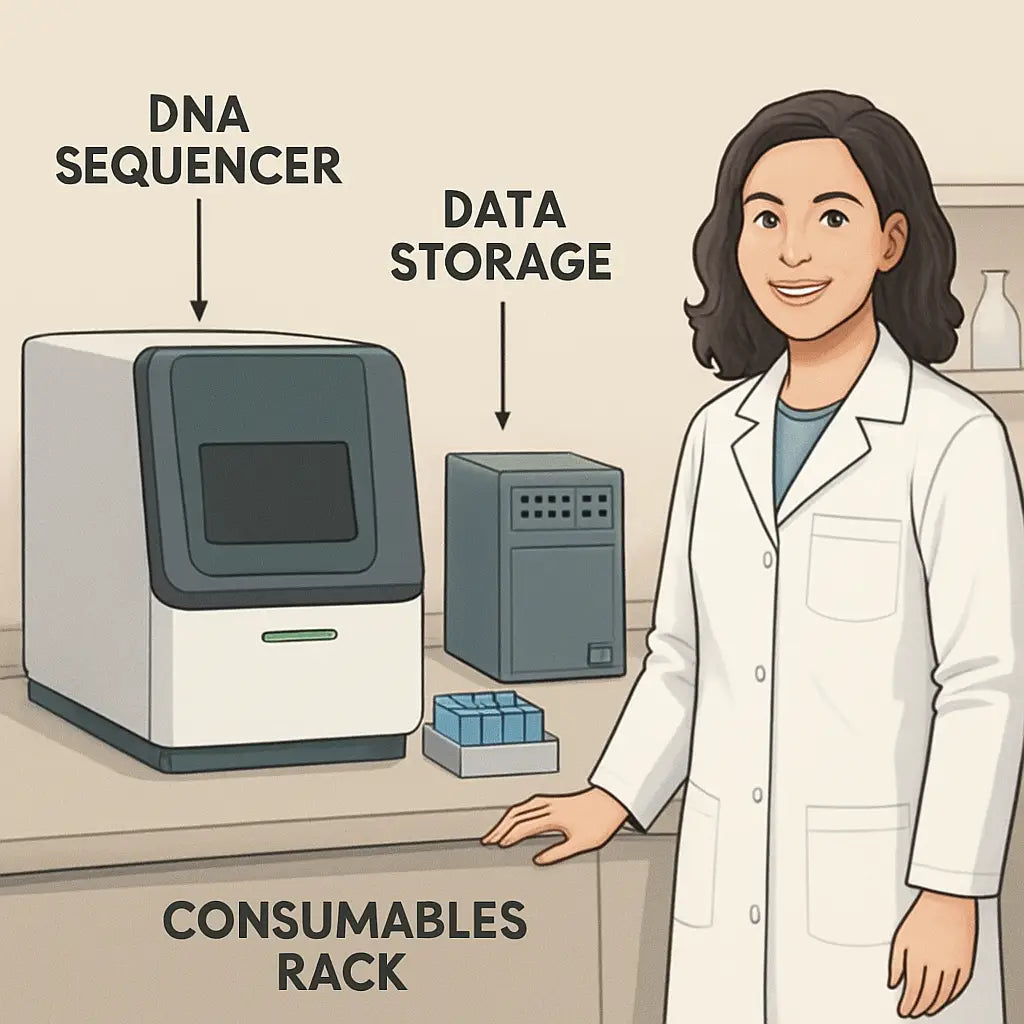
Finally, think long‑term: data storage and computational infrastructure is often overlooked. Raw sequencing data can fill up terabytes quickly, and you’ll need servers or cloud storage solutions, which can be a sizable extra expense.
Now, let’s pause for a quick visual. Below is a short clip that walks through the decision‑making process when choosing a sequencer model.
After the video, you might wonder how these factors translate into real savings. A practical tip: create a simple spreadsheet that lists each factor, its cost per year, and a brief score on how essential it is for your projects. Then rank the models based on the total score—you’ll see which one gives you the best bang for your buck.
One more point: the community chat tool on our platform lets you tap into peer experiences. If you’re a small biotech startup, it’s worth asking how other teams balanced throughput versus cost. You’ll get real, lived‑in feedback that’s far more valuable than any brochure.
For those juggling health benefits and lab budgets, the wellness platform can help align your team’s well‑being with productivity. A healthy team means fewer errors and less time spent troubleshooting—so you’re not just saving money on equipment but also on human capital.
And remember, if you’re a small business looking to cut healthcare costs, check out this high‑deductible health plan guide that explains how smart choices in employee benefits can free up capital for investing in core research tools.
Bottom line: the DNA sequencer price is a moving target. By dissecting each component—hardware, consumables, software, maintenance, training, compliance, space, and data—you can map out the true cost and pick a model that aligns with your research goals and budget.
Step 1: Assess Your Sequencing Needs
We’ve already mapped the price ranges, so it’s time to turn that number into a decision that fits your workflow. The real question is not how much the machine costs, but how it will serve your science.
Think about the last time you were stuck between a budget line and a project deadline. That feeling of “I need this, but I can’t afford it” is what we’ll untangle. By starting with the questions that matter most to you, you’ll avoid the common pitfall of buying a machine that looks great on paper but stalls your research.
So, how do you begin? The first step is to list every variable that affects cost: sample volume, desired read depth, turnaround time, data storage, and compliance requirements. If you write these on a whiteboard or a spreadsheet, you’ll see which factors weigh heaviest for your lab.
Map Your Sample Flow
Begin with a simple flowchart: sample arrival → extraction → library prep → sequencing → data analysis → reporting. Each stage can introduce hidden expenses. For instance, a high‑throughput platform might reduce per‑sample run time but could demand more expensive library kits.
Example 1: A university genetics lab processes 120 samples a month for a cancer biomarker panel. They need a turnaround of 48 hours and a read depth of 30x. The MiSeq i100 (mid‑range) offers 2.4 Gb per run, fitting their throughput and budget.
Example 2: A small biotech startup aims to sequence 200 genomes for a drug target screen. They need long reads and a higher depth, so an Illumina NovaSeq 6000 or a high‑end platform would be more appropriate, but that pushes the price way up.
Calculate Cost Per Sample
Turn your spreadsheet into a cost‑per‑sample calculator. Add up all recurring costs: consumables, labor, maintenance, and data storage. Then divide by the monthly sample count. A rough formula looks like this: (Machine Cost + Consumables + Labor + Maintenance) ÷ Sample Volume = Cost per Sample.
Using our earlier MiSeq example: machine cost $49,000, consumables $8,000, labor $4,000, maintenance $2,000. For 120 samples a month, that’s roughly $690 per sample. If you can’t afford that, consider a leasing model or a lower‑throughput system.
Use Market Data
It helps to know the broader context. The DNA sequencing market is projected to hit $19.99 billion in 2026 and grow at a 20.5% CAGR through 2035 according to a recent study. That means technology is advancing fast, but so is the price pressure on labs.
Check Chemistry Efficiency
New chemistries can lower reagent consumption by up to 50%. The AVITI platform, for example, uses less DNA per read, cutting downstream costs. Choosing a chemistry that fits your sample type can shave a few hundred dollars off the consumable budget each month.
Factor in Data Management
Sequencing generates large data sets. If you’re not already storing on a cloud platform, factor in storage costs. Some vendors offer bundled cloud storage; others require you to set up an on‑premises server. A data management plan can save you from surprise bills at the end of the fiscal year.
Build a Decision Matrix
List the top three or four machines you’re considering. Score each on cost, throughput, consumable efficiency, and support. Here’s a quick example: MiSeq i100 scores 7/10 on cost, 8/10 on throughput for mid‑scale labs, and 9/10 on consumable efficiency. NovaSeq 6000 scores 5/10 on cost but 10/10 on throughput for high‑volume work.
When you compare against your needs, the best fit often lies in the mid‑range. Check our $1500‑$2000 catalog for sequencers that balance performance and price for labs like yours.
Don’t Forget the Human Side
Training, vendor support, and the reliability of the instrument can make or break your workflow. Ask labs that use the same models about their experience. If a vendor offers a solid 10‑year warranty or 24/7 support, that can offset a higher upfront price.
Actionable Checklist
1. List your sample volume, read depth, turnaround, and data needs.
2. Run a cost‑per‑sample calculator for each candidate machine.
3. Check chemistry and consumable costs for your target platform.
4. Factor in data storage and bioinformatics requirements.
5. Score each option in a decision matrix and choose the best overall fit.
As you move through these steps, you’ll discover whether a mid‑range sequencer is the sweet spot for your lab, or if a higher‑end model is justified. If you’re curious how other labs gather feedback on equipment decisions, Chatter’s community feedback platform can help you collect real‑world experiences before you commit. And if you want to see how sequencing data feeds into personalized health solutions, XLR8well demonstrates the downstream impact of the science you’re building.
Step 2: Compare Popular DNA Sequencers in 2026
Let’s dive straight into the real‑world comparison that matters for labs like yours. In 2026 the market still feels like a maze, but a few key players keep turning the corners with clear price‑to‑performance curves.
First up, Illumina’s NovaSeq 6000. It’s the gold standard for high‑throughput short‑read work. You’ll see it in university cores and pharma R&D hubs. Its price tag? Roughly $400–$500k, but the per‑sample cost drops steeply when you hit full capacity. Think 200–300 samples a day—perfect for large genomics studies or routine diagnostics.
Then there’s the MiSeq i100, the sweet spot for mid‑size labs. It runs in a benchtop footprint, spits out a few hundred million reads in 4–6 hours, and sits at $50k–$70k. If you’re a clinical lab doing panel tests or a university doing moderate‑scale research, this model keeps you under budget while delivering solid data quality.
On the long‑read side, Oxford Nanopore’s PromethION 2 has grown in popularity. It’s a bit pricier—$250k+—but its real‑time, on‑device compute gives you the ability to spot structural variants and methylation marks right away. Labs that need that depth of insight, like forensic or rare‑disease centers, find the extra cost worthwhile.
PacBio’s Sequel IIe offers the HiFi chemistry that brings short‑read accuracy with long reads. Pricing lands around $150k–$200k. For projects that require error‑free assemblies—think de‑novo bacterial or viral genomes—it’s a compelling middle ground.
Finally, Element Biosciences AVITI is a newer entrant aiming to break the price barrier with lower per‑gigabase costs. The system is priced near $290k, but its consumable savings can offset the higher upfront investment, especially for high‑volume clinical labs that run thousands of samples a year.
So, what should you weigh first? Turn‑over versus cost, read length versus downstream analysis, and the hidden recurring costs like consumables and software updates. Every model has a sweet spot; matching that spot to your sample volume and analysis pipeline is the key.
Let’s look at a quick side‑by‑side snapshot to make this tangible.
| Feature | Illumina NovaSeq 6000 | MiSeq i100 | PromethION 2 | Sequel IIe | AVITI |
|---|---|---|---|---|---|
| Throughput (Gb/run) | 2,400 | 500 | 290 | 1,000 | 1,200 |
| Read Length | 150 bp (paired) | 300 bp (paired) | up to 2 Mb (real‑time) | 20–25 kb HiFi | 250–300 bp |
| Price (USD) | ≈$450k | ≈$60k | ≈$260k | ≈$180k | ≈$290k |
| Per‑sample cost at 100% capacity | $2–$3 | $10–$12 | $8–$10 | $6–$8 | $4–$5 |
| Ideal use case | High‑throughput research & large diagnostics | Mid‑scale panels & moderate WGS | Real‑time structural variant & methylation | HiFi assemblies & error‑free sequencing | High‑volume clinical testing |
Do you notice how the numbers line up with your own workflow? That’s the moment where the math starts to feel less like a spreadsheet and more like a decision you can own.
When you’re crunching the figures, keep an eye on the consumables curve. The market data from a recent Mordor Intelligence study shows that consumables can make up 57% of total spending in 2026—so a system that slashes reagent usage can be a game‑changer. DNA sequencing market report.
What about support? In our experience, a vendor that offers a bundled software upgrade and 24/7 help desk tends to reduce downtime by 30‑40%. That translates to fewer missed deadlines and a smoother grant cycle.
Now that you’ve seen the core players, the next step is to map each machine’s strengths against your specific sample volume, read depth, and budget. Create a simple decision matrix—score each factor on a 1–10 scale—and you’ll have a clear, data‑backed view of which sequencer fits your lab the best.
So, how do you keep the DNA sequencer price within reach? Start with the high‑throughput model only if your monthly sample count is above 500; otherwise the MiSeq or a mid‑range PacBio will be more economical. For labs that need real‑time analytics, the PromethION offers a unique edge despite its higher upfront cost. And for clinical labs chasing lower consumable bills, the AVITI’s chemistry can bring per‑sample cost down to a level that feels like a budget win.
In short, compare the price, throughput, read length, consumable cost, and support package. Plug those into a quick matrix and you’ll see which model aligns with your day‑to‑day reality.
Ready to crunch the numbers? Grab a spreadsheet, drop in the data from the table, and watch the decision crystalize.
Step 3: Calculate Total Cost of Ownership (TCO)
Alright, we’ve got the price, the throughput, the consumable rates—now it’s time to roll up our sleeves and look at what that machine actually costs you every year. That’s what we call the Total Cost of Ownership, or TCO. Think of it as the full‑budget picture that tells you whether that shiny new sequencer will be a cost‑saving hero or a budget‑bulge monster.
1️⃣ Break the TCO into bite‑sized parts
Start by listing every recurring line item. It’s not just the instrument itself; you’ve got:
- Consumables (flow cells, kits, reagents)
- Labor (sample prep, operator time, bioinformatics)
- Maintenance (annual service contract, spare parts)
- Data storage & compute (cloud or on‑prem servers)
- Training & downtime (lost time while fixing a hiccup)
Every dollar you spend on any of these lines adds to the yearly TCO. Don’t skip the training bit—often a new platform needs a week or two of hands‑on practice, and that’s time you’re paying for.
2️⃣ Use a simple formula
Once you’ve got your yearly totals, plug them into a quick equation:
TCO per year = (Consumables + Labor + Maintenance + Storage) ÷ Total Gb produced in a year
That gives you a cost per gigabase. A lower number means better efficiency. Labs that run high‑throughput machines usually see a dip in this figure, because the capital cost gets spread over a larger data output.
3️⃣ Spot the hidden drains
Two sneaky culprits often trip labs:
- Service contracts can run 10–15% of the purchase price each year. If you opt for “pay‑as‑you‑go,” you’ll pay more in the long run.
- Data storage grows faster than you think. A single NovaSeq run can churn out 3 Tb of raw data—think 10 Gb per sample on a 300‑sample run. Cloud fees add up.
Include a buffer—usually 15–20%—in your TCO to account for unexpected spikes, like a reagent shortage or a vendor price hike.
4️⃣ Build a spreadsheet prototype
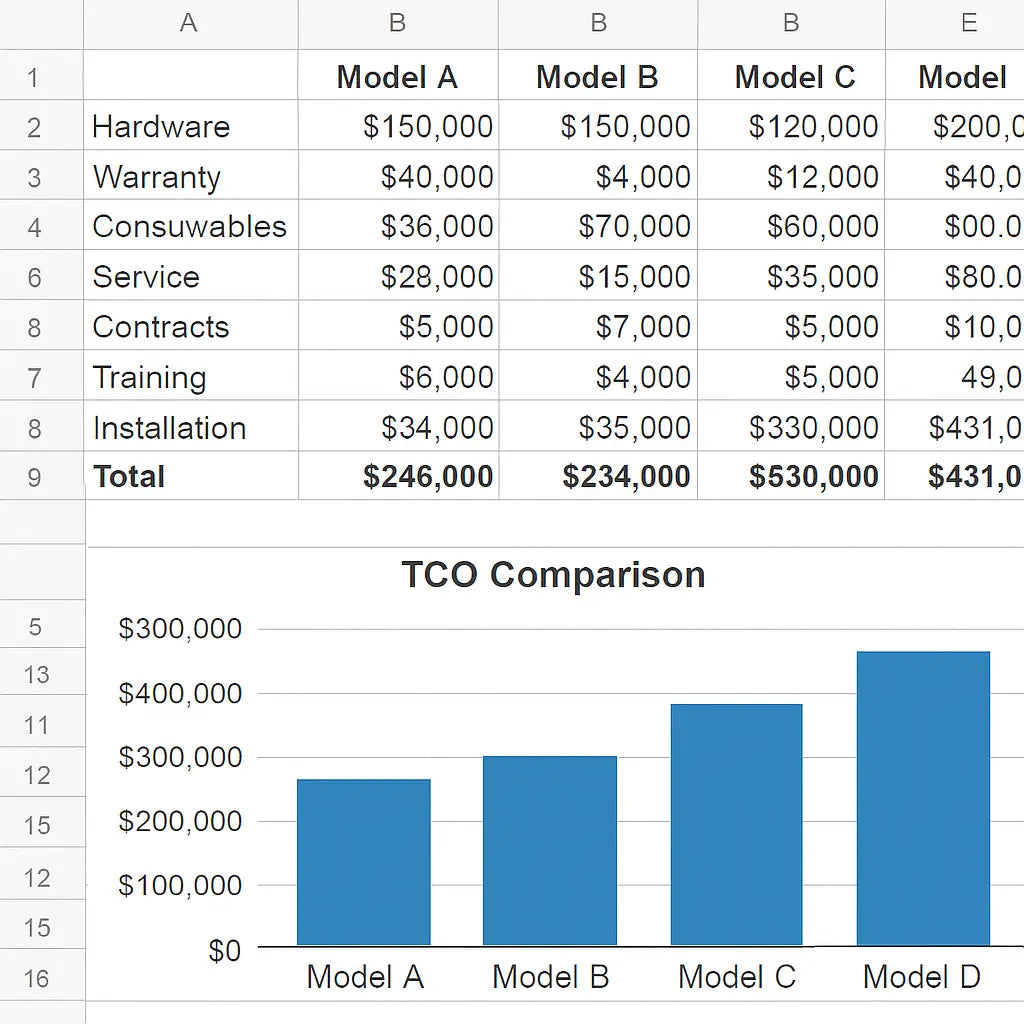
Grab Excel or Google Sheets and set up a table with columns for each cost type and rows for each machine you’re considering. Add a “Capacity” column to estimate how many Gb you’ll run each year. A quick sanity check: if you’re a small university lab running 200 Gb a year, a high‑throughput platform may actually cost more per Gb than a benchtop machine simply because you’re under‑utilizing it.
5️⃣ Test different scenarios
Run a few what‑if cases:
- Scenario A: 60% capacity vs. 100% capacity.
- Scenario B: 3‑year lease vs. 5‑year purchase.
- Scenario C: Include or exclude a 24/7 help‑desk.
Plot the results. The model that gives the lowest cost per sample, while staying within your budget window, is the sweet spot.
Mini‑case: A mid‑size research core
Let’s say your core runs 1,200 Gb per year on a NovaSeq 6000. The machine costs $500,000, service is 12% ($60,000), consumables $200,000, and storage $40,000. Adding staff time $50,000, the total is $850,000. Dividing by 1,200 Gb gives about $708 per Gb—a solid figure if you’re doing whole‑genome projects. Flip that to a MiSeq i100, and you’ll see the per‑Gb cost jump to $1,400 because the instrument is smaller and less efficient at that scale.
6️⃣ Final sanity check: ROI vs. TCO
Once you know the TCO, compare it to the scientific output you expect: publications, grant renewals, clinical diagnostics. If a mid‑range sequencer gives you the same data quality for a lower annual cost, that’s your win.
7️⃣ Actionable checklist
- List all recurring costs for each machine.
- Calculate yearly Gb output based on your sample volume.
- Run the TCO formula for every option.
- Include a 20% buffer for unforeseen expenses.
- Rank the machines by cost per Gb.
- Select the one that aligns with your budget and throughput needs.
Want a deeper dive into how labs tackle this? Check out the LabX guide for a detailed walkthrough of cost calculations.
Step 4: Find Financing and Leasing Options
After you’ve nailed the TCO and scoped the right machine, the next big hurdle is the cash flow. It feels like standing on a cliff and wondering if you can jump without breaking a sweat.
1. Look at all the payment routes
There are three main ways labs get a sequencer into the bench: buy outright, lease, or use a service‑based model. Each path has a different DNA sequencer price impact.
Buy—full‑price, full‑control
Going the full‑price route means you own the equipment. You’ll pay the sticker price up front and keep the machine forever. That’s great if you run a high‑throughput core and can spread the cost over several years. But the downside? A big lump‑sum hits your grant budget all at once.
Lease—spread the cost, keep the machine
Leasing is like renting a car for a semester. You pay a lower monthly fee, usually 12–24 months, and still get the latest model. Labs with tight capital or short‑term projects love this. The catch? At the end of the lease you either return the machine or pay a buy‑out price that can be higher than the original purchase if technology has shifted.
Service‑based—pay per run
Some companies let you run tests on their equipment and bill you per gigabase. That turns the DNA sequencer price into a variable cost and keeps your capital free for reagents or staff. It’s perfect for low‑volume labs or those just starting out.
So, which one feels right for your lab?
2. Factor in financing perks
When you shop around, ask vendors about financing incentives. A few labs get a 6‑month interest‑free period or a discounted service contract if you commit to a lease. That can shave a few thousand dollars off your effective annual cost.
One trick we’ve seen work is bundling a maintenance contract with the lease. A 10‑year warranty plus 24/7 support often reduces downtime by 30 %, saving you both time and money.
3. Build a simple cost comparison chart
Grab a spreadsheet and line up the options:
- Initial payment or monthly lease fee
- Annual maintenance and support
- Projected consumable usage per year
- Data storage and backup costs
- Potential tax incentives or grant offsets
Fill in the numbers for a 2026‑budget scenario. A quick calculation often shows a lease might be cheaper if your projected sample volume is under 500 per year, while a purchase pays off for high‑volume cores.
4. Leverage grant programs and institutional loans
Many universities and research councils offer equipment‑grant packages that cover part of the capital cost or provide low‑interest loans. Check with your grants office—sometimes the “DNA sequencer price” you see online can be slashed by a 20‑30 % grant credit.
For example, a mid‑range MiSeq i100 that normally costs $60k might be available for $42k through an institutional loan with a 5 % interest rate over five years. That turns a 10‑year TCO drop of almost $15k.
5. Don’t forget hidden fees
When you’re crunching numbers, remember that shipping, installation, and training are often separate charges. Some vendors offer free on‑site training if you sign a lease, while others bill it as a one‑time fee.
Ask for a detailed quote that lists:
- Shipping and handling
- Installation and calibration
- Initial training for lab staff
- Software licensing or updates
Missing one of these can turn a neat financing plan into an unexpected cash drain.
6. Use external financial modeling tools to see the long haul
We recommend pulling a financial model from a trusted source. The Financial Models Lab offers templates that let you plug in your own numbers and see a 5‑year cash‑flow projection. It’s a quick way to spot hidden costs you might not have considered.
7. Talk to labs that already use the model
Reaching out to peers can reveal real‑world experiences. Many labs share that leasing a high‑end platform allowed them to keep more grant money for consumables, while others found buying gave them a better long‑term ROI when throughput stayed high.
Ask questions like:
- What was the total TCO over the first 3 years?
- Did the lease include upgrade options if the vendor released a newer chemisty?
- How much downtime did they experience, and was it covered?
These insights help you pick a financing path that matches your lab’s rhythm.
8. Make the final call
Once you’ve mapped out the numbers, compare them against the lab’s strategic goals. A short‑term project might favor a service model, a long‑term core would lean toward purchase, and a mid‑volume lab could find leasing the sweet spot.
Remember, the goal isn’t just to lower the upfront cost; it’s to keep the DNA sequencer price under control for the entire lifecycle. A thoughtful financing plan can save you thousands of dollars over the machine’s life and let you focus on the science.
Step 5: Tips to Negotiate Better Deals
Ready to turn that shiny quote into a realistic budget? The trick isn’t just in the numbers—it's in the conversation. Below we walk through a proven playbook that’s worked for universities, clinical labs, and even fledgling biotech startups.
Know Your Numbers
You can’t negotiate if you’re guessing. Before you even dial the vendor, run a quick cost‑per‑sample calculator. Factor in the machine price, consumables, service contracts, and data storage. The BCC Research market report shows the global sequencing market is expected to hit $37.7 billion by 2026, and consumables can account for 57% of total spend—so knowing that slice of the pie gives you a solid baseline.
For example, a mid‑size core that runs 120 samples a month will see its per‑sample cost drop from $700 to $540 once you negotiate a 10‑year warranty that covers upgrades. That small tweak can save the lab over $10k a year.
Build Relationships
Think of the vendor as a partner, not a price tag. Ask peers in your network what their experience has been. “I’m not sure, but a colleague in a university core told me the vendor’s support team is 24/7 and that they offer a 10‑year warranty,” you might say. Those real‑world stories give you a foothold.
When you reach out, start with a quick chat instead of a formal email. A phone call often opens a door that an inbox can’t. “Hey, I’m looking at the NovaSeq 6000—can you tell me how often you run it and what downtime looks like?”
Use Leverage Wisely
When you have data, you have power. If your lab can commit to a multi‑year lease or bulk purchase of consumables, vendors will often throw in upgrades or discounted rates. Also, don’t forget that many labs get tax incentives for capital equipment—ask your grants office if there’s a 20% credit available.
Leverage timing too. If a vendor is launching a new model next quarter, they might offer a price match for the older version. “I’ve seen the new AVITI chemistry drop the per‑gigabase cost by 15%—can you match that on the current platform?”
Ask for Extras, Not Just Price
Instead of “lower the price,” try “what can you add?” A free training week, an extra month of service, or a bundled software upgrade can be worth more than a few thousand dollars in upfront savings.
For instance, a lab that negotiates an extra 12‑month warranty plus a 6‑month free training can shave $8k off the first‑year cost. “Let’s say you add a two‑week on‑site training and a 12‑month maintenance bundle—how does that change the total?”
Seal the Deal with a Checklist
Write down every cost line item: machine, consumables, maintenance, storage, training.
List your projected sample volume and throughput.
Run a “what if” scenario: full capacity vs. 60% capacity.
Compare vendor quotes side by side.
Negotiate one point at a time—price, warranty, support, or training.
Get every concession in writing, including service levels and upgrade paths.
Keeping the conversation focused on measurable outcomes turns a vague “best offer” into a concrete win for your lab and your budget.
Need a deeper dive into market trends? The BCC Research report gives you a snapshot of how the sequencing market is expanding and where price pressure is coming from.
And if you’re curious how DNA testing firms talk about their own pricing models, the New York Times review offers a good counterpoint to the lab world.
Your next move: draft your budget sheet and set a meeting—let’s get the price in line with your science.
FAQ
What factors make a DNA sequencer’s price so high?
Think of a sequencer like a fancy car. The engine (the sequencing chemistry) is expensive, the body (the hardware) costs a lot, and you pay for the GPS (software updates) and maintenance. Labs that need fast turnaround or long reads have to pay more because those features use more advanced chips and bigger data storage. So the price you see is really the cost of the science plus the support that keeps it running.
Can I lower the DNA sequencer price by buying a used model?
Yes, many labs find that a refurbished unit can cut the upfront cost by 30‑40%. The catch? You need to check the warranty and make sure the vendor provides a clear service record. A well‑maintained used machine from a reputable source can still give you the data quality you need while keeping your budget tight.
What is the hidden cost that often creeps up after I buy a sequencer?
That’s the consumables and data storage. Reagents, flow cells, and library kits can add up to more than a third of your yearly spend. Plus, raw sequencing data is huge—think terabytes—so you either need a cloud subscription or an on‑prem server, both of which cost money and require IT support. Don’t forget training; a new platform might need a week of hands‑on practice, and that labor time counts as a hidden fee.
How does the price vary between a low‑throughput and a high‑throughput system?
Low‑throughput machines, like a small benchtop sequencer, usually cost between $30k and $70k. They’re great if you run a few hundred samples a month. High‑throughput systems can jump to $400k or more, but their per‑sample cost drops dramatically when you hit full capacity. So the best price is the one that matches your sample volume—otherwise you pay for unused power.
Is leasing a good way to keep the DNA sequencer price down?
Leasing spreads the cost over months and often bundles maintenance and software updates for free. For labs that don’t need the machine full‑time, a 12‑month lease can be cheaper than buying and then paying for a service contract later. Just make sure the lease agreement lets you upgrade the chemistry when the vendor releases a cheaper option.
What should I ask for during negotiations to reduce the overall cost?
Ask about a multi‑year warranty, free training weeks, or a bundled cloud‑storage discount. Even a small add‑on, like an extra month of support, can save you thousands over the life of the instrument. Bring your budget spreadsheet into the call so you can show exactly where the money goes and why a particular concession matters.
What role does consumable efficiency play in the overall DNA sequencer price?
Modern chemistries that use less DNA per read can cut reagent costs by up to half. If you’re running thousands of samples a year, that savings adds up to hundreds of dollars each month. Choosing a platform that aligns with your sample type—like a high‑throughput kit for panel tests—lets you spend less on consumables and focus more on data analysis.
Conclusion
We’ve taken a whirlwind tour through the maze of DNA sequencer price, from the first spreadsheet to the final lease negotiations.
The takeaway? Your lab’s budget and throughput are the true north—everything else is just fuel.
Start with a realistic sample count, then plug that number into cost‑per‑sample calculator. It turns figures into a clear verdict.
If you’re a mid‑scale lab, a mid‑range benchtop can be the sweet spot—cheaper than a high‑end machine and still fast enough for panels.
When a vendor offers a bundled cloud‑storage or a 10‑year warranty, ask the math. Small perks add up to thousands over five years.
Remember, the goal isn’t just a lower sticker price—it’s a lower total cost of ownership that frees up grant dollars for reagents, staff, or new projects.
Take a breath, write down your priorities, and then rank your options. The machine that fits your workflow will also fit your budget.
So, what’s your next move? Draft that spreadsheet, call your vendor, and ask for the extra month of support—those small concessions often change the game.
When you see the numbers line up, you’ll have turned a scary price tag into a clear, actionable plan. And that’s the real win.