
Getting clean DNA shouldn't cost a fortune.
Many labs spend too much on kits that promise purity. An affordable magnetic bead purification kit gives the same clean result without draining the grant.
The beads have a tiny magnet inside. Add them to a lysed sample, DNA sticks, pull the beads with a magnet, wash, and elute. The process takes minutes and works on a bench‑top microcentrifuge.
A small academic lab that processes 30 leaf samples a week can buy a kit at $12 per 96‑well plate. They use the beads, spin, and finish in under an hour. DNA quality meets PCR needs. The same method works for clinical viral RNA or a biotech start‑up testing a few edits.
Quick checklist to keep the workflow smooth:
- Make sure the kit is labeled for plant or animal material.
- Use fresh magnetic beads or check the bead shelf life.
- Follow the spin speed the kit recommends (usually 10,000‑14,000 ×g).
- Wash twice with the provided buffer to remove inhibitors.
- Elute in nuclease‑free water and measure purity.
Action step: grab a datasheet, compare per‑sample cost, order a small trial pack, run one leaf, label the tube, spin, and check yield.
For more tips, see How to Choose an Affordable DNA Extraction Kit ….
That’s a simple way to keep DNA clean and costs low.
Step 1: Define Your Purification Needs
Before you buy an affordable magnetic bead purification kit, you need to know exactly what you’re trying to clean.
First, ask yourself what sample type you’ll work with. Plant leaves need a different buffer than animal blood. If you’re handling a mix of tissues, pick a kit that lists “plant or animal” on the label.
Second, think about how many samples you’ll run each week. A small academic lab might only need a 96‑well plate, while a CRO could be pulling dozens of plates a day. Matching the kit’s plate format to your throughput saves money.
Check the inhibitor profile
Some kits struggle with polysaccharides or phenolics. Look for a kit that mentions extra wash steps or stronger lysis buffers. This avoids the “no‑PCR” surprise later on.
Budget the whole workflow
Don’t just count the kit price. Add the cost of tubes, magnetic stands, and labeling. A quick way to keep labels tidy is to order custom stickers from JiffyPrintOnline. It saves you time and prevents mix‑ups.
For labs that need to stretch every grant dollar, RebelGrowth offers blog posts on modern, budget‑friendly growth strategies. Those tips can help you decide if a trial pack is worth the spend.
If you rely on digital data logs, make sure your lab’s IT can handle the volume. A managed service like SRS Networks’ managed IT services keeps backups safe and speeds up data retrieval.
Make sure the kit works with the magnetic rack you already own. Most affordable kits fit a standard 1.5 ml tube and a 96‑well magnet plate. If you run at colder temps, pick a kit whose beads stay magnetic down to 4 °C. Keep the beads sealed until use; exposure to humidity can lower binding efficiency.
Once you’ve answered these questions, write them down in a simple checklist. That checklist becomes your buying guide.
With this plan in hand, you’ll avoid costly trial‑and‑error and move straight to clean DNA.
Action step: draft a one‑page table that lists sample type, expected run count, inhibitor concerns, and total per‑sample cost. Use that table to compare kits side by side.
Step 2: Compare Kit Features and Prices
Now that you know what you need, it’s time to stack the kits side by side. A quick glance can save you weeks of trial and error.
Key specs to check
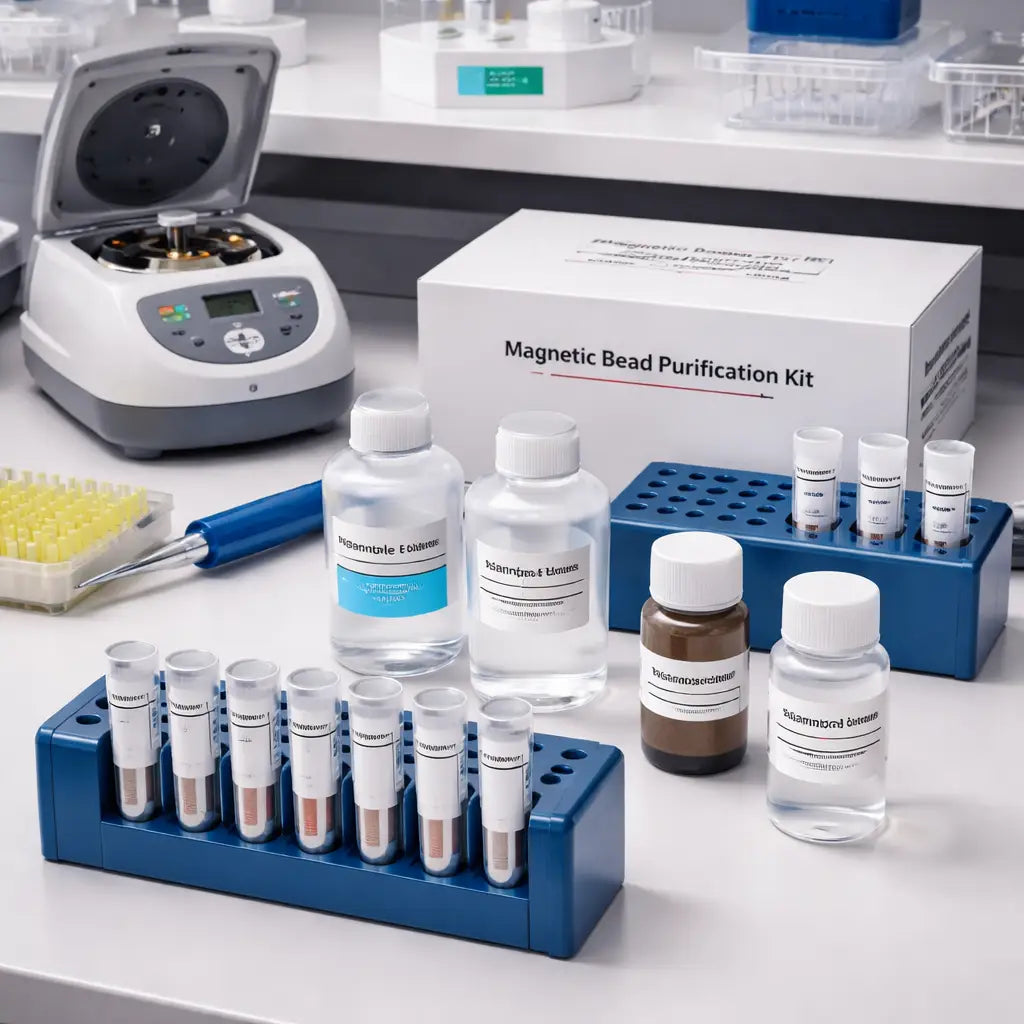
Look for bead size, binding capacity, and recommended spin speed. Most affordable magnetic bead purification kits work with 96‑well plates and need 10,000‑14,000 ×g. If the kit lists a higher g‑force, you may need a stronger microcentrifuge.
Ask yourself: does the kit include wash buffers, elution tubes, and a magnetic stand? A kit that bundles these items usually ends up cheaper per sample.
Price math
Take the sticker price and divide by the number of extractions. A $150 kit that promises 96 pulls works out to about $1.60 per sample. Add the cost of consumables and beads, plates, and tips, and you get the true per‑sample price.
Bulk orders can shave another 10‑15 % off the list price. Many labs order a 5‑pack of 96‑well plates to lock in the discount.
Practical example
Imagine an academic lab that runs 30 plant extracts a week. Kit A costs $120 for 96 wells and includes beads and buffers. Kit B costs $180 but adds a reusable magnetic rack. If the rack saves $0.20 per sample in labor, Kit B’s total cost per sample drops to $1.90, still higher than Kit A’s $1.30. In this case, Kit A wins.
For a CRO handling 500 samples a month, the reusable rack may be worth the extra upfront cost because it cuts down on pipetting time.
Tip from the field
Check the magnetic bead vs spin column comparison for a clear rundown of why beads often give higher recovery on low‑yield samples. That insight helps you decide if you need the extra recovery power.
Finally, make a three‑column checklist: Feature, Kit A, Kit B. Fill it in while you read each datasheet. When the checklist shows a clear winner, you can move on to the next step with confidence.
Step 3: Hands‑On Setup and Protocol Video
Now you’ve picked an affordable magnetic bead purification kit, it’s time to get the bench ready. A clean workspace and the right tools make the whole run feel smooth.
Gather your kit and basics
Pull out the kit box, a 96‑well plate, fresh pipette tips, and the magnetic stand. Add a micro‑centrifuge tube rack, a low‑retention tip box, and a timer. If you shop at Shop Genomics you’ll find most of these items in one cart, which saves time.
Tip: label each plate well before you start. A quick scribble with a waterproof marker stops mix‑ups later.
Set up the magnetic stand
Place the stand on a sturdy bench edge. Make sure the magnet sits level – a wobble can pull beads unevenly. Turn the stand on and let it settle for a minute.
Quick check: the beads should gather at the side of a test tube within 10 seconds. If they linger, adjust the magnet height.
Run a test sample
Take a small leaf piece (about 50 mg), add the lysis buffer, and vortex for 30 seconds. Add the magnetic beads, mix gently, and let them bind for 2 minutes.
Now slide the tube onto the magnet. Watch the liquid clear out, then pour off the supernatant into a fresh tube.
Wash twice with the kit’s buffer, keeping each wash on the magnet for 30 seconds. After the final wash, let the beads air‑dry for 1 minute – no over‑drying.
Elution and quality check
Add the elution buffer, wait 1 minute, then remove the tube from the magnet. Transfer the clear eluate to a clean tube.
Measure DNA with a NanoDrop or similar. Aim for an A260/280 around 1.8. If it’s lower, run an extra wash.
What to do next
Write down the yield, note any hiccups, and adjust timings for your next batch. A simple spreadsheet helps you spot trends.
When you feel confident, scale up to a full 96‑well plate. The same steps apply – just repeat the magnetic pull for each column.
Step 4: Evaluate Performance and Choose the Best Fit
Now you have a run of data. The next move is to see if the kit really works for you. Look at three things: how much DNA you got, how clean it is, and how much it cost per sample.
Check the numbers
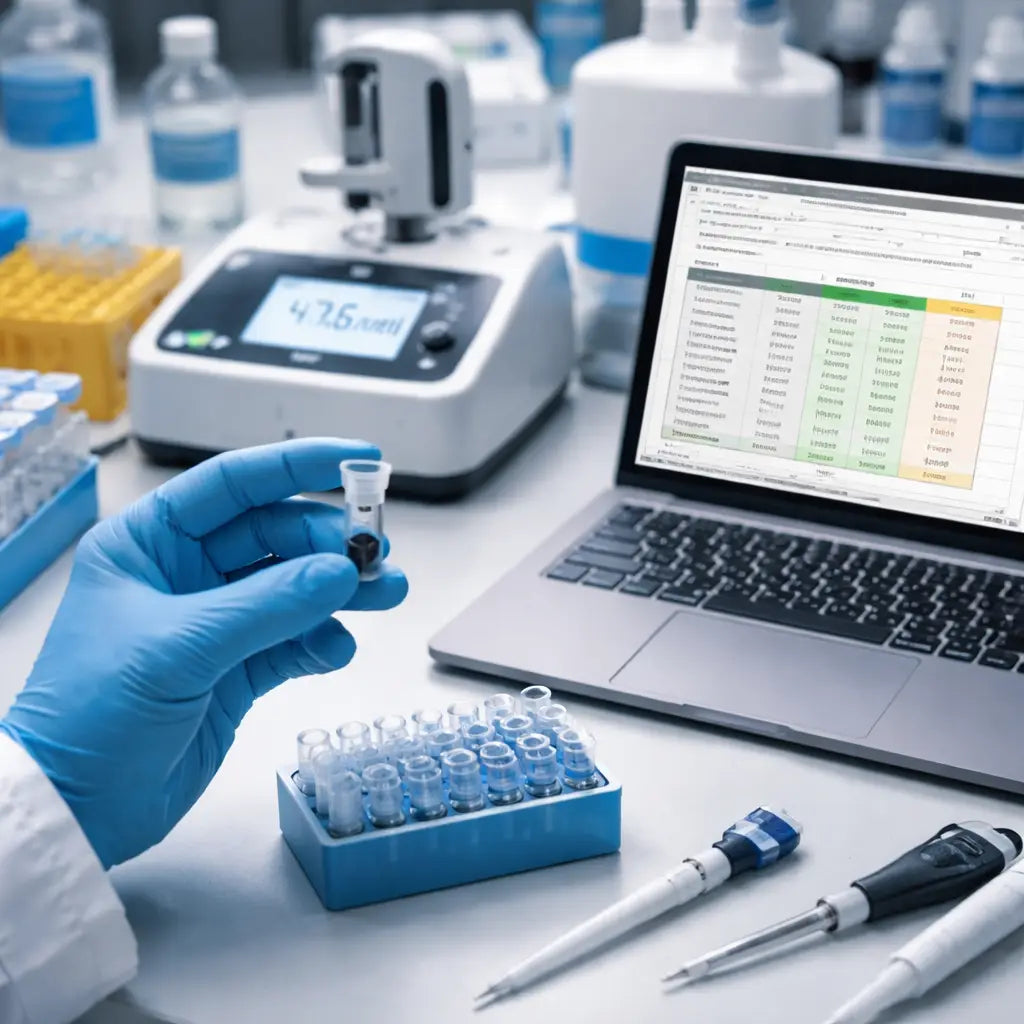
Measure the concentration with a NanoDrop or similar. Aim for an A260/280 around 1.8. If it’s lower, you may need an extra wash.
Write down the yield for each sample. A simple spreadsheet helps you spot a pattern – are some wells low? Are you getting the same amount each time?
Cost and speed
Divide the kit price by the number of extractions you actually did. Add the cost of tips, plates, and any extra beads.
Time the whole workflow. Count minutes for lysis, binding, washes, and elution. If you’re a CRO or a teaching lab, speed matters a lot.
For a quick market view, see the magnetic bead market trends. It notes a steady growth rate that keeps prices competitive.
And if you wonder whether beads or columns fit your needs, the plasmid purification kit guide explains the trade‑offs in plain language.
When you line up the data, ask yourself: does this kit give me the yield, purity, and cost I need? If the answer is yes, you’ve found your fit.
Quick comparison table
| Criterion | Affordable kit | Higher‑price kit |
|---|---|---|
| Yield (µg per 50 mg leaf) | ~20‑30 | ~35‑45 |
| Purity (A260/280) | 1.7‑1.9 | 1.9‑2.0 |
| Cost per sample | $1.30 | $2.50 |
Conclusion
Choosing the right affordable magnetic bead purification kit can save you time, money, and headaches.
Remember to match the bead chemistry to your sample, watch your cost per extraction, and check purity with a quick spectrophotometer read.
When the numbers line up, you’ve got a kit that fits your lab’s workflow, if you work in a university, a CRO, or a small biotech startup.
So, what’s the next step? Grab the datasheet, run a single test, and log the yield. If the yield hits your target and the price stays low, you’re good to go.
Many labs find that a simple spreadsheet helps spot trends and keeps budgets in check. Keep that habit and you’ll avoid costly re‑trials.
With the right kit in hand, you can focus on the science, not the spend.
Enjoy faster results and keep your grant happy.
That’s the power of an affordable magnetic bead purification kit.
FAQ
What makes a kit “affordable” without cutting quality?
An affordable magnetic bead purification kit keeps price low by bundling beads, buffers, and a magnetic rack in one box, so you don’t have to buy extra parts. It still gives clean DNA because the beads are coated to bind nucleic acids efficiently, and the buffers are formulated to remove inhibitors. Many labs find that a per‑sample cost under $2 lets them run dozens of extractions without hurting the grant budget.
Can I use the same kit for plant, animal, and microbial samples?
Yes, most affordable magnetic bead purification kits are sold as “universal” or have separate lysis buffers for each sample type. For plant tissue you’ll add a buffer that breaks down cell walls; for blood or cultured cells a milder buffer works fine; for microbes you might need a brief enzymatic step before the beads bind. The key is to follow the kit’s instructions for the right buffer, then the bead capture step stays the same.
How do I check that the DNA is pure enough for PCR?
The simplest way is to run a quick spectrophotometer read, like a NanoDrop, and look at the A260/280 ratio. A value between 1.8 and 2.0 tells you the DNA is mostly free of proteins. You can also glance at the A260/230 ratio; above 1.5 means few organic contaminants. If either number is low, add one more wash step with the kit’s buffer and measure again.
What’s the best way to store the magnetic beads between runs?
Store the beads in their original tube at 4 °C and keep the cap tight. Most kits recommend adding a small amount of the storage buffer that came with the kit to keep the beads from drying out. If you notice clumping, give the tube a gentle shake before each use. Avoid freezing the beads; the magnetic coating can crack and reduce binding efficiency.
Can I scale up to a 96‑well plate without buying a new magnetic rack?
Many affordable kits include a magnetic stand that fits a single 1.5 ml tube, but the same stand often works with a 96‑well plate if you add a plate adapter. Shop Genomics carries inexpensive adapters that sit on the rack and pull all wells at once. Just be sure the magnet’s strength matches the kit’s recommendation, otherwise the beads may not collect fully.
How often should I replace the magnetic rack or beads?
The rack itself can last years if you keep it clean and avoid dropping heavy tubes on it. The beads, however, have a shelf‑life listed on the package—usually 12‑18 months when stored cold. If you see reduced binding or the beads start to clump, it’s time to order a fresh batch. A quick visual check each month keeps you from surprise failures.