

Most American laboratories now use some form of automation, yet misunderstandings still surround what these systems actually do. The push for higher accuracy and data consistency makes automation crucial for research, especially as demand for rapid scientific results grows. With over 60 percent of American scientists reporting increased productivity from automated systems, understanding how these technologies work and what myths exist can help researchers and organizations make smarter decisions for the future of science.
Table of Contents
- Lab Automation Defined And Common Misconceptions
- Types Of Lab Automation Technologies Explained
- Core Processes And Key Features In Automation
- Real-World Applications Across Scientific Fields
- Financial Impact And Return On Investment
- Pitfalls To Avoid When Adopting Automation
Key Takeaways
| Point | Details |
|---|---|
| Lab Automation Enhances Research | By automating repetitive tasks, lab automation allows researchers to focus on higher-level analytical work and innovation. |
| Accessible for All Labs | Automation is beneficial for laboratories of all sizes, not just large institutions, with solutions tailored to specific needs and budgets. |
| Promotes Efficiency and Accuracy | Advanced technologies improve experimental throughput, reduce human errors, and streamline complex workflows in various scientific disciplines. |
| Strategic Planning Required | Successful implementation of lab automation necessitates careful integration, staff training, and awareness of potential technical challenges. |
Lab Automation Defined and Common Misconceptions
Lab automation represents a sophisticated technological approach that transforms scientific research by integrating advanced technologies like artificial intelligence and robotics to streamline complex laboratory processes. Unlike traditional manual workflows, this innovative strategy focuses on automating repetitive tasks, reducing human error, and dramatically improving overall research efficiency.
At its core, lab automation encompasses a wide range of technological solutions designed to replace or augment human intervention in scientific research environments. These solutions can include robotic sample handling systems, automated liquid handling platforms, integrated data management software, and intelligent workflow optimization tools. The primary goal is not to replace human researchers but to free researchers from mundane tasks so they can concentrate on higher-level analytical and creative work.
Contrary to widespread belief, lab automation is not exclusively reserved for large research institutions or pharmaceutical companies. Small and medium-sized laboratories can significantly benefit from targeted automation solutions that address specific workflow bottlenecks. Common misconceptions about lab automation include:
- Myth: Automation is prohibitively expensive
- Reality: Modular and scalable solutions exist for various budget ranges
- Myth: Automated systems are too complex to implement
- Reality: Modern automation tools are increasingly user-friendly and integrate seamlessly with existing laboratory infrastructure
- Myth: Automation will eliminate human jobs
- Reality: Automation actually enables researchers to focus on more intellectually demanding and innovative research tasks
Researchers across various disciplines are discovering that strategic lab automation can produce remarkable improvements in productivity, data consistency, and overall scientific output. By reducing manual errors, standardizing protocols, and accelerating experimental timelines, automated systems represent a critical evolution in modern scientific research methodologies.
Types of Lab Automation Technologies Explained
Lab automation technologies represent a complex ecosystem of cutting-edge tools designed to transform scientific research across multiple disciplines. From intricate robotic systems to sophisticated data analysis platforms, these technologies enable researchers to dramatically enhance precision, efficiency, and experimental throughput in ways previously unimaginable.
The landscape of lab automation encompasses several critical technological domains. Robotic systems play a pivotal role, handling complex sample manipulation tasks with unparalleled accuracy. Automated liquid handling platforms can precisely transfer microscopic volumes, reducing human error and increasing reproducibility. Microfluidic technologies enable intricate fluid control, allowing researchers to conduct experiments with nanoliter-scale precision that manual techniques could never achieve.
Modern lab automation technologies can be categorized into several key technological domains:
-
Robotic Manipulation Systems
- Sample handling robots
- Automated pipetting platforms
- Precision movement systems
-
Analytical Technologies
- High-throughput imaging systems
- Spectroscopic analysis tools
- Mass spectrometry interfaces
-
Computational Technologies
- Machine learning data analysis platforms
- Predictive modeling software
- Integrated workflow management systems
Artificial intelligence and machine learning are rapidly transforming lab automation from simple mechanical task replacement to intelligent, adaptive research ecosystems. These advanced computational technologies can now predict experimental outcomes, optimize protocols in real-time, and identify complex patterns invisible to human researchers. By integrating these intelligent systems, laboratories can significantly accelerate scientific discovery while maintaining unprecedented levels of data integrity and experimental reproducibility.
Core Processes and Key Features in Automation
Laboratory automation integrates sophisticated technological systems to streamline complex scientific workflows, transforming how researchers approach experimental design and execution. By systematically breaking down intricate research processes into automated sequences, these technologies create unprecedented opportunities for precision, efficiency, and data integrity.
The core processes in lab automation revolve around intelligent instrument integration, network connectivity, and advanced computational management. Standardized laboratory workflows enable seamless communication between robotic systems, ensuring consistent sample handling, precise testing protocols, and real-time data capture. These systems can autonomously manage critical tasks such as sample loading, PCR testing, incubation cycles, and complex multi-step experimental procedures with remarkable accuracy and speed.
Key features of modern lab automation technologies include:
-
Process Optimization
- Automatic scheduling and task prioritization
- Intelligent workload distribution
- Predictive error detection mechanisms
-
Technological Capabilities
- High-precision robotic manipulation
- Real-time monitoring and tracking
- Comprehensive data logging systems
-
Performance Metrics
- Reduced processing time
- Minimized human error
- Enhanced experimental reproducibility
Beyond mechanical task execution, advanced lab automation systems now incorporate artificial intelligence and machine learning algorithms that can dynamically adapt experimental protocols. These intelligent systems analyze historical data, identify potential bottlenecks, and recommend optimization strategies, effectively transforming laboratories from passive research environments into proactive, self-improving scientific ecosystems. By integrating sophisticated scheduling software with robotic infrastructure, researchers can dramatically accelerate sample processing times, reduce operational backlogs, and allocate human expertise toward more creative and intellectually demanding research challenges.
Real-World Applications Across Scientific Fields
Laboratory automation has emerged as a transformative force across multiple scientific disciplines, revolutionizing research methodologies and enabling unprecedented levels of precision and efficiency. From genomics to pharmaceutical research, these advanced technological systems are reshaping how scientists approach complex experimental challenges, delivering remarkable improvements in data quality, reproducibility, and research speed.

In biomedical research, automation technologies have become critical for processing intricate genetic and molecular analyses. High throughput screening techniques allow researchers to simultaneously test thousands of biological samples, dramatically accelerating drug discovery and genetic research processes. Modular automation platforms provide unprecedented flexibility, enabling laboratories to customize systems that precisely match their unique research requirements and scientific objectives.
Diverse scientific fields benefit from lab automation across multiple domains:
-
Genomics and Molecular Biology
- DNA sequencing
- Genetic screening
- Protein analysis
-
Pharmaceutical Research
- Drug compound screening
- Toxicity testing
- Pharmacological research
-
Environmental Science
- Water quality analysis
- Soil contamination testing
- Climate research sample processing
-
Clinical Diagnostics
- Patient sample management
- Rapid disease screening
- Precision medical testing
By unifying laboratory devices and reducing human error, automation technologies create more consistent and reliable research ecosystems. Advanced systems can now integrate complex computational algorithms with physical robotic platforms, enabling scientists to process massive datasets, identify intricate patterns, and make groundbreaking discoveries with unprecedented speed and accuracy. The result is a new era of scientific research where technological innovation directly accelerates human knowledge and understanding.
Financial Impact and Return on Investment
Laboratory automation represents a strategic financial investment that transcends traditional cost-benefit analyses, offering transformative economic advantages for scientific organizations. By reimagining research infrastructure through technological innovation, laboratories can unlock significant financial potential, dramatically reducing operational expenses while simultaneously increasing research productivity and output quality.
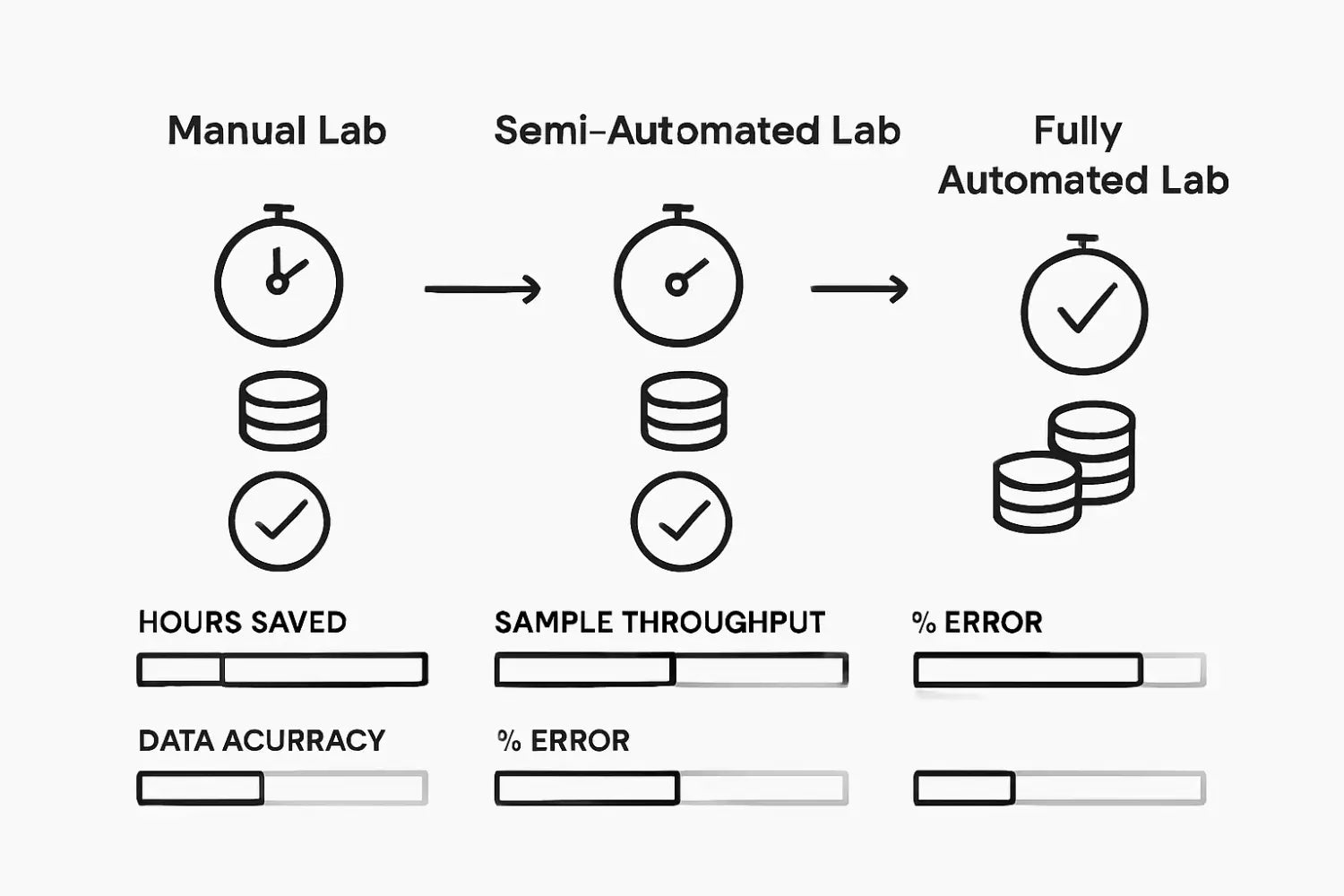
The economic benefits of lab automation extend far beyond simple equipment acquisition costs. Essential field lab equipment represents an initial investment that pays remarkable long-term dividends through enhanced operational efficiency. Automated systems dramatically reduce labor costs, minimize human error, and enable researchers to allocate their expertise toward high-value analytical tasks that drive scientific innovation and organizational growth.
Key financial considerations in lab automation include:
-
Direct Cost Savings
- Reduced personnel expenses
- Lower error-related reprocessing costs
- Decreased reagent and material waste
-
Productivity Metrics
- Accelerated research timelines
- Increased experimental throughput
- Enhanced data collection efficiency
-
Operational Improvements
- Standardized workflow processes
- Consistent quality control
- Scalable research infrastructure
Beyond immediate financial returns, laboratory automation creates a competitive ecosystem where scientific organizations can dramatically improve their research capabilities. By investing in intelligent technological systems, research institutions transform fixed operational costs into dynamic platforms for innovation. The cumulative effect is a powerful economic model that not only reduces expenses but also generates substantial intellectual value, positioning organizations at the forefront of scientific discovery and technological advancement.
Pitfalls to Avoid When Adopting Automation
Laboratory automation represents a complex technological transformation that requires strategic planning and nuanced implementation. Many research organizations approach automation with enthusiasm, yet fail to recognize the intricate challenges that can undermine their technological investments, leading to inefficient systems and diminished research capabilities.
The most critical initial challenge involves comprehensive system integration and staff preparation. Standardizing laboratory workflows becomes paramount to prevent error propagation and ensure seamless technological adoption. Researchers must develop a holistic approach that considers not just technological capabilities, but also human factors, training requirements, and potential systemic disruptions that accompany significant technological transitions.
Key pitfalls to anticipate during automation implementation include:
-
Technical Challenges
- Inadequate initial system assessment
- Poor compatibility between existing equipment
- Insufficient data management infrastructure
-
Operational Risks
- Insufficient staff training
- Lack of clear implementation protocols
- Resistance to technological change
-
Strategic Miscalculations
- Overestimating immediate productivity gains
- Underestimating total implementation costs
- Neglecting long-term maintenance requirements
Successful laboratory automation demands a balanced approach that integrates technological innovation with human expertise. Organizations must view automation not as a replacement for scientific talent, but as a sophisticated tool that amplifies human capabilities. By anticipating potential challenges, investing in comprehensive training, and maintaining flexibility during implementation, research institutions can transform potential pitfalls into opportunities for unprecedented scientific advancement and operational excellence.
Unlock Research Potential with Smart Lab Automation Solutions
The article highlights common challenges like high costs, complex implementation, and fear of losing jobs when adopting lab automation. If you are striving to overcome these pain points and want to streamline workflows, enhance data integrity, and accelerate discoveries, Shop Genomics is your trusted partner. We understand the critical need for scalable and user-friendly automation tools that empower researchers to focus on innovation rather than mundane tasks.

Explore our affordable and cutting-edge research equipment that fits any laboratory size or budget. Start transforming your lab with smart automation technologies today at Shop Genomics. Learn how to optimize your workflow by visiting our Laboratory Workflow Optimization Guide and discover practical automation examples tailored for every lab at Practical Examples of Lab Automation. Take the next step now to enhance precision, reduce errors, and unlock new levels of research efficiency.
Frequently Asked Questions
What is lab automation?
Lab automation refers to the integration of advanced technologies, such as artificial intelligence and robotics, to streamline complex laboratory processes and improve research efficiency by automating repetitive tasks.
How does lab automation improve research efficiency?
Lab automation enhances research efficiency by reducing human error, standardizing protocols, and accelerating the experimental timeline, allowing researchers to focus on more complex analytical and creative tasks.
Can small laboratories benefit from lab automation?
Yes, small and medium-sized laboratories can significantly benefit from targeted automation solutions that address specific workflow bottlenecks, contrary to the belief that automation is only for large research institutions.
What are some common misconceptions about lab automation?
Common misconceptions include the belief that automation is prohibitively expensive, too complex to implement, and will eliminate human jobs. In reality, there are modular solutions, user-friendly tools, and automation functions that enhance researchers’ capabilities rather than replace them.