

Automation is rapidly redefining what is possible inside modern genomics labs, driving an evolution that touches every American research institution. With automated systems now performing tasks once limited to human hands, laboratories report an 85 percent drop in pre-analytical errors and productivity gains that once seemed out of reach. This technological surge matters for researchers seeking speed and reliability in complex genetic work, and offers a clear view into how innovation is shaping the future of scientific discovery.
Table of Contents
- Defining Automation In Modern Genomics Labs
- Core Technologies Powering Genomics Automation
- How Automation Transforms Lab Workflows
- Cost, Efficiency, And Quality Implications
- Integration Challenges And Best Practices
- Real-World Examples Across Research Sectors
Key Takeaways
| Point | Details |
|---|---|
| Automation Enhances Research Efficiency | Modern genomics labs utilize automation technologies to improve accuracy, speed, and reproducibility in scientific workflows. |
| Core Technologies Drive Innovation | Advanced systems like FPGAs and SoCs are pivotal in optimizing genomic data processing and analysis. |
| Cost Reduction and Quality Improvement | Automation significantly minimizes human error while increasing throughput, leading to better resource management and reliability. |
| Integration Requires Strategic Planning | Effective automation implementation depends on addressing technical, organizational, and cultural challenges through comprehensive training and system compatibility assessments. |
Defining Automation in Modern Genomics Labs
Automation in genomics laboratories represents a sophisticated technological integration that transforms traditional research processes through advanced mechanical and computational systems. By leveraging robotic platforms, artificial intelligence, and precision engineering, modern genomics labs can dramatically enhance experimental accuracy, efficiency, and reproducibility.
At its core, laboratory automation encompasses a wide range of technologies designed to minimize human intervention and standardize complex scientific workflows. Practical examples of lab automation demonstrate how machines and intelligent systems can handle multiple tasks simultaneously, from sample preparation to data analysis, with unprecedented speed and precision. These systems typically include:
- Robotic sample handlers
- Automated liquid handling platforms
- High-throughput screening equipment
- Integrated data management systems
- Machine learning algorithms for predictive analysis
The fundamental goal of automation in genomics research is not to replace human scientists, but to augment their capabilities by eliminating repetitive manual tasks and reducing potential human error. Sophisticated automated systems can perform intricate procedures with remarkable consistency, processing thousands of samples with microscopic precision that would be challenging or impossible through manual techniques. By reducing variability and increasing reproducibility, these technologies enable researchers to focus on higher-level scientific interpretation and innovative problem solving.
Modern genomics laboratories recognize that standardizing laboratory workflows through automation represents a critical strategy for advancing scientific discovery. The integration of intelligent systems allows research teams to generate more reliable data, accelerate experimental timelines, and push the boundaries of genomic understanding with unprecedented efficiency.
Core Technologies Powering Genomics Automation
The landscape of genomics automation is characterized by sophisticated technological platforms that integrate computational power, precision mechanics, and advanced algorithmic capabilities. Field-Programmable Gate Arrays (FPGAs) and specialized System-on-Chip (SoC) architectures represent cutting-edge technological foundations enabling unprecedented genomic research capabilities.
Advanced genomic automation technologies encompass several critical domains that transform research methodologies. High throughput screening platforms enable researchers to process massive genetic datasets with remarkable efficiency. These technologies typically include:
- Parallel processing computing systems
- Advanced robotic micromanipulation platforms
- Machine learning genome sequencing algorithms
- Real-time genetic data analysis frameworks
- Integrated bioinformatics processing units
Recent technological breakthroughs highlight the potential of specialized hardware architectures. Research demonstrates how FPGA-based accelerators can dramatically improve genome sequence matching algorithms, achieving significant speed and energy efficiency gains. Similarly, innovative CMOS system-on-chip designs now combine multi-core processors with dedicated deep learning accelerators, enabling real-time, on-device genetic analysis with unprecedented computational performance.
The convergence of hardware innovation and sophisticated software algorithms represents the future of genomics research. By choosing appropriate genomic equipment, laboratories can leverage these transformative technologies to push the boundaries of genetic understanding, accelerate research timelines, and unlock new possibilities in precision medicine and scientific discovery.
How Automation Transforms Lab Workflows
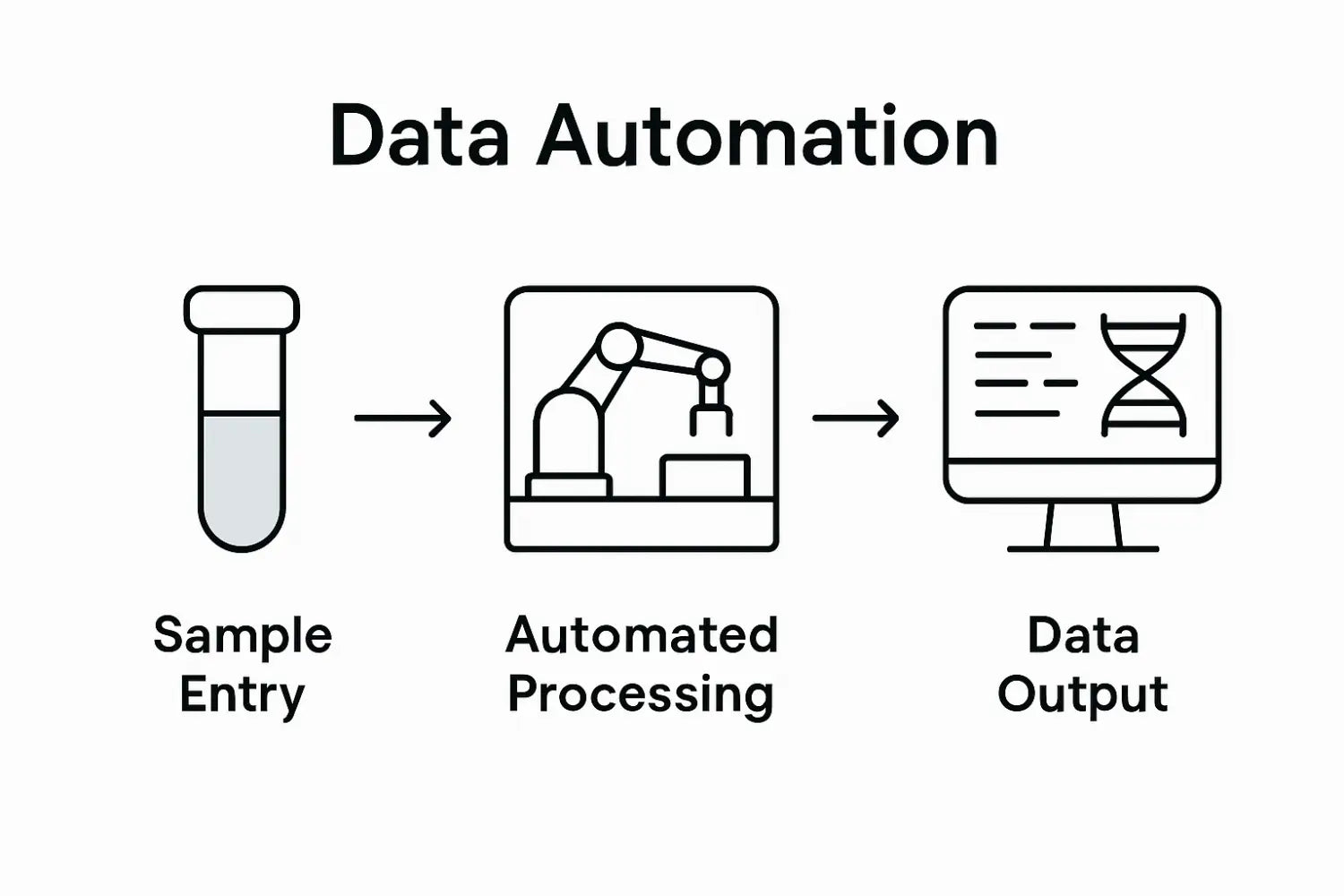
Automation represents a revolutionary approach to transforming laboratory workflows, fundamentally reshaping how scientific research and diagnostic processes are conducted. Total Lab Automation (TLA) systems have emerged as game-changing technologies that dramatically improve efficiency, accuracy, and throughput across multiple scientific disciplines.
The core transformation of lab workflows through automation occurs across several critical dimensions. Laboratory workflow optimization enables researchers to streamline complex processes and minimize human error. Key workflow transformations include:
- Standardizing sample processing protocols
- Reducing manual handling and potential contamination
- Enabling 24/7 continuous sample processing
- Implementing intelligent sample prioritization
- Creating comprehensive digital tracking systems
Modern Total Lab Automation systems demonstrate remarkable capabilities, with advanced platforms capable of handling up to 15,000 sample tubes per hour while simultaneously learning and adapting sample processing priorities. These intelligent systems integrate sophisticated sorting, analyzing, and storing mechanisms into seamless, interconnected workflows that significantly outperform traditional manual approaches.

The ultimate impact of workflow automation extends far beyond simple efficiency gains. By eliminating repetitive manual tasks and introducing consistent, precision-driven processes, laboratories can redirect human expertise toward complex analytical thinking, experimental design, and innovative research strategies. Researchers now have unprecedented opportunities to focus on high-value scientific interpretation while automated systems manage the intricate, time-consuming aspects of sample management and processing.
Cost, Efficiency, and Quality Implications
The integration of automation technologies in genomics laboratories represents a transformative approach to scientific research, delivering profound improvements in operational efficiency, cost management, and quality control. By systematically replacing manual processes with intelligent technological solutions, laboratories can achieve remarkable gains that fundamentally reshape research economics and scientific productivity.
Research demonstrates the extraordinary potential of automation technologies. How to set up lab equipment strategically can unlock significant performance improvements. Key cost and efficiency implications include:
- Dramatic reduction in human error rates
- Substantial increase in testing throughput
- Significant energy consumption optimization
- Improved resource allocation
- Enhanced data consistency and reproducibility
Quantitative evidence highlights the transformative impact of laboratory automation. Research indicates that automated systems can reduce pre-analytical errors from 1.2% to an astonishing 0.08%, representing an 85% decrease in potential mistakes. Innovative hardware solutions like GeneTEK’s accelerators demonstrate performance breakthroughs, achieving up to 19.4% faster execution speeds and an impressive 62x reduction in energy consumption compared to traditional computing platforms.
The long-term implications of automation extend beyond immediate operational metrics. By minimizing repetitive tasks and standardizing complex procedures, laboratories can redirect human capital toward more strategic, creative scientific endeavors. This shift not only optimizes financial resources but also accelerates the pace of scientific discovery, creating a more dynamic and innovative research ecosystem.
Integration Challenges and Best Practices
Successful implementation of automation technologies in genomics laboratories requires a strategic approach that addresses complex technical, organizational, and cultural challenges. Laboratory automation is not simply about acquiring advanced equipment, but developing a comprehensive ecosystem that integrates technological solutions with existing research infrastructures and human expertise.
Researchers must carefully navigate multiple integration dimensions. Essential tools for small labs provide critical insights into managing technological transitions. Key challenges and best practices include:
- Comprehensive staff training and change management
- Systematic compatibility assessment of new technologies
- Modular and scalable system architectures
- Robust data integration and interoperability strategies
- Continuous performance monitoring and optimization
Cutting-edge research proposes innovative approaches to addressing automation complexity. Emerging architectures like the modular science factory concept demonstrate remarkable flexibility, utilizing reconfigurable modules and distributed computing to support diverse scientific applications. Advanced approaches such as self-maintainability (SeM) frameworks enable automated systems to autonomously adapt to operational disturbances, reducing human intervention and increasing system reliability.
Ultimately, successful automation integration requires a holistic perspective that balances technological capabilities with organizational readiness. Laboratories must develop adaptive strategies that align technological investments with specific research objectives, continuously evaluate system performance, and create a culture of technological innovation and continuous learning.
Real-World Examples Across Research Sectors
Automation technologies have revolutionized research capabilities across diverse scientific domains, transforming how genomic investigations are conducted in multiple critical sectors. From infectious disease research to precision medicine, automated genomic platforms are enabling unprecedented levels of scientific exploration and discovery.
Research institutions are increasingly leveraging advanced technological capabilities. Genomic laboratory best practices highlight the transformative potential of automation across different research environments. Notable automation applications span multiple sectors:
- Infectious Disease Research
- High-throughput pathogen genome sequencing
- Rapid mutation tracking and analysis
- Real-time epidemiological monitoring
- Medical Research
- Single-cell genomic profiling
- Personalized medicine development
- Complex genetic disorder investigations
- Agricultural Genomics
- Crop genetic improvement
- Disease resistance mapping
- Yield optimization studies
Leading research institutions demonstrate the practical implementation of these technologies. The Broad Institute’s Genomic and Cell Intelligence Division applies high-throughput genomic technologies to study complex pathogens, generating comprehensive 'omic data that provides deep insights into infectious diseases. Similarly, the Genomics Core at Albert Einstein College of Medicine utilizes cutting-edge nucleic acid technologies, including single-cell assays, massively parallel sequencing, microarrays, and real-time PCR to advance scientific understanding.
These real-world examples underscore how automation is not just a technological upgrade but a fundamental transformation of scientific research methodologies. By enabling faster, more precise, and more comprehensive genomic investigations, automated systems are breaking down traditional research limitations and opening new frontiers of scientific discovery across multiple disciplines.
Empower Your Genomics Lab with Cutting-Edge Automation Solutions
Automation in genomics labs brings incredible transformation but also challenges like integrating complex hardware and ensuring workflow standardization. If you are striving to reduce human error, increase throughput, and harness precision technologies like FPGA and SoC platforms, you need reliable equipment designed for scientific excellence. Understanding how automation boosts efficiency and quality is crucial, but having access to the right tools makes the difference between stalled progress and groundbreaking discoveries.

Take control of your lab’s future by exploring advanced genomic equipment that accelerates research and enhances reproducibility. Shop Genomics is dedicated to making state-of-the-art research technology accessible and affordable, empowering you to overcome automation integration challenges and streamline workflows today. Discover how to choose the right genomic equipment and standardize laboratory workflows with expert guidance at Shop Genomics. Start transforming your genomics lab now and seize the opportunities that automation creates.
Frequently Asked Questions
What is the role of automation in genomics labs?
Automation in genomics labs serves to enhance experimental accuracy, efficiency, and reproducibility by minimizing human intervention and standardizing complex workflows through mechanisms like robotic platforms and artificial intelligence.
How does laboratory automation improve sample processing?
Laboratory automation improves sample processing by standardizing protocols, reducing manual handling, enabling continuous processing, and incorporating intelligent systems for prioritization, leading to faster and more reliable results.
What are the key technologies used in genomics automation?
Key technologies used in genomics automation include robotic sample handlers, automated liquid handling platforms, high-throughput screening equipment, machine learning algorithms, and integrated data management systems.
What are the cost implications of using automation in genomics laboratories?
Automation can significantly reduce human error rates, increase testing throughput, optimize energy consumption, and enhance data consistency, leading to improved resource allocation and reduced operational costs.