
Selecting the right lab equipment shapes the future of any american research project. The smallest oversight can derail even the most promising study, while the right tools drive success and efficiency. Studies reveal that labs with well-defined selection strategies experience 45 percent fewer workflow disruptions. Navigating this complex process means understanding your workflow, scrutinizing technical specs, checking certifications, choosing reliable suppliers, and thoroughly validating each purchase for long-term results.
Table of Contents
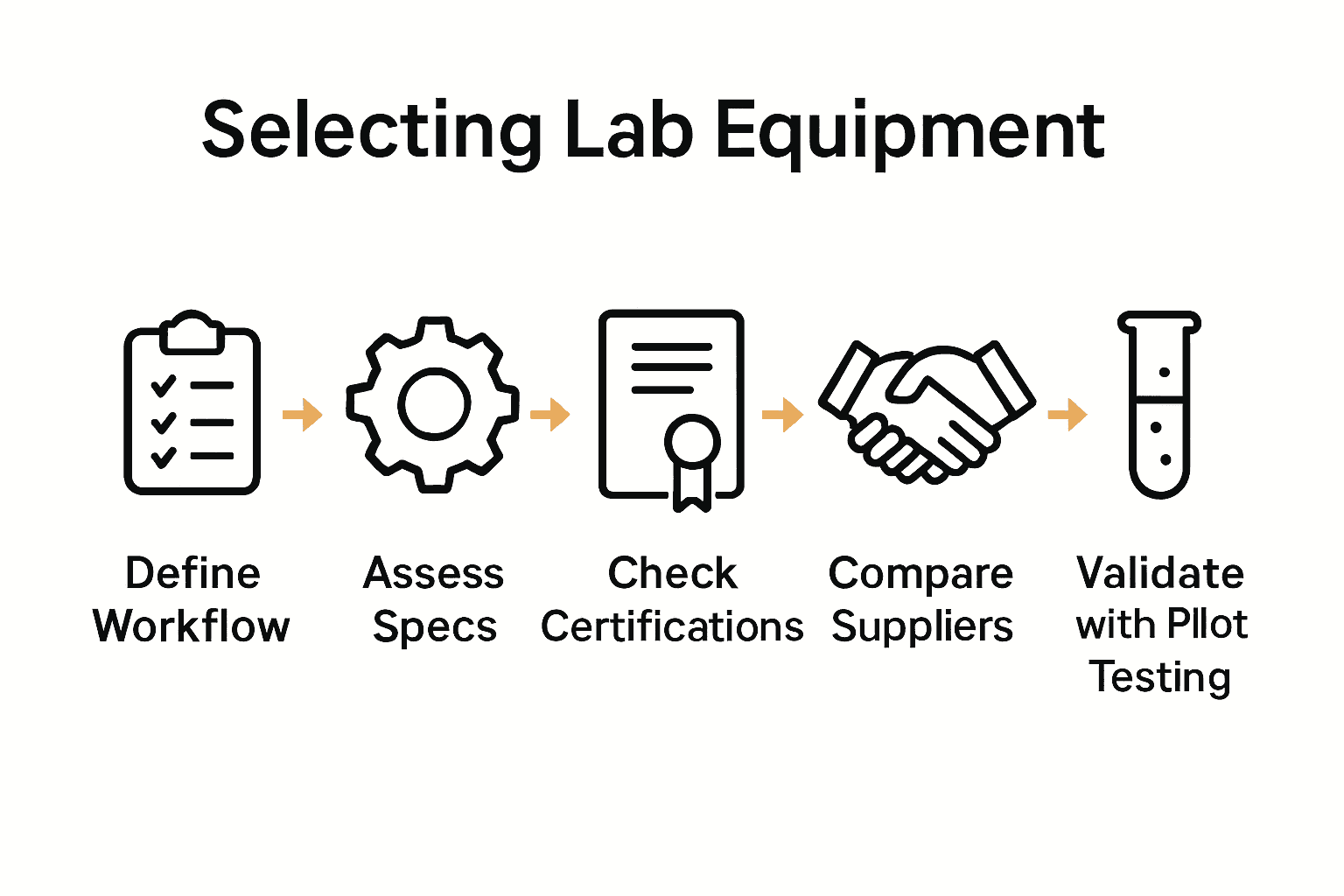
- Step 1: Define Your Lab’s Research And Workflow Needs
- Step 2: Assess Technical Specifications And Compatibility
- Step 3: Evaluate Equipment Quality And Certifications
- Step 4: Compare Suppliers And Available Support
- Step 5: Validate Equipment Selection With Pilot Testing
Quick Summary
| Insight | Explanation |
|---|---|
| 1. Identify research needs first | Clearly define your lab’s goals and workflows to select appropriate equipment for accurate results. |
| 2. Assess technical specifications thoroughly | Create a checklist of essential parameters and verify compliance with necessary standards to ensure compatibility. |
| 3. Evaluate equipment quality rigorously | Focus on certifications and supplier reputation to guarantee reliable equipment performance and minimize risks. |
| 4. Compare suppliers systematically | Build an evaluation matrix to assess potential suppliers on their support capabilities and technical expertise. |
| 5. Validate choices with pilot testing | Implement a structured testing phase to confirm equipment performance against your research protocols before finalizing selections. |
Step 1: Define your lab’s research and workflow needs
Defining your laboratory’s research and workflow needs is the critical foundation for selecting precise lab equipment that delivers accurate results. This initial step determines the entire trajectory of your scientific endeavors and equipment investments, so it requires thoughtful strategic planning.
Start by conducting a comprehensive assessment of your specific research goals and operational requirements. Map out the primary experiments and processes your team will conduct, considering factors like sample volume, required precision, automation needs, and specialized techniques. Break down each research protocol into detailed steps and identify the specific equipment capabilities needed to execute those protocols successfully. For instance, if you are performing genomic sequencing, you will need different equipment specifications compared to a microbiology lab focused on bacterial cultures.
Consult with your entire research team to understand their unique workflow challenges and equipment preferences. Laboratory Workflow Optimization: Boost Efficiency Step-by-Step can provide additional insights into streamlining your process. Create a prioritized list of equipment requirements, distinguishing between essential must-have tools and nice-to-have supplementary devices. Consider factors like equipment compatibility, future scalability, maintenance requirements, and potential technological advancements in your research domain.
A practical pro tip: Document your workflow needs meticulously. Detailed documentation will not only help in equipment selection but also serve as a valuable reference for future grant applications, equipment justifications, and lab management strategies.
Step 2: Assess technical specifications and compatibility
Assessing technical specifications and compatibility is a crucial step in selecting lab equipment that will consistently deliver accurate and reliable scientific results. This process requires meticulous attention to detail and a comprehensive understanding of your laboratory’s specific performance requirements.
Begin by creating a detailed checklist of critical technical parameters that align with your research protocols. 7 Essentials for Small Labs: Tools and Tips for Success offers additional guidance on evaluating equipment needs. Verify key compliance standards like ISO/IEC 17025 for testing equipment and specific regulatory requirements such as FDA 21 CFR Part 11 for medical laboratories. Analyze manufacturer specifications against your lab’s infrastructure constraints including voltage stability (within 7%), vibration tolerance (less than 15 1m), electrical requirements, and physical spatial limitations.
Carefully evaluate equipment compatibility by examining interface protocols, data management systems, and potential integration with existing laboratory instruments. Pay special attention to software compatibility, communication protocols, and potential upgrade pathways. Assess the long term adaptability of the equipment by considering modularity, expansion capabilities, and potential future technological advancements in your specific research domain. Request detailed technical documentation, performance certificates, and independent validation reports from manufacturers to substantiate their claims and ensure alignment with your scientific standards.
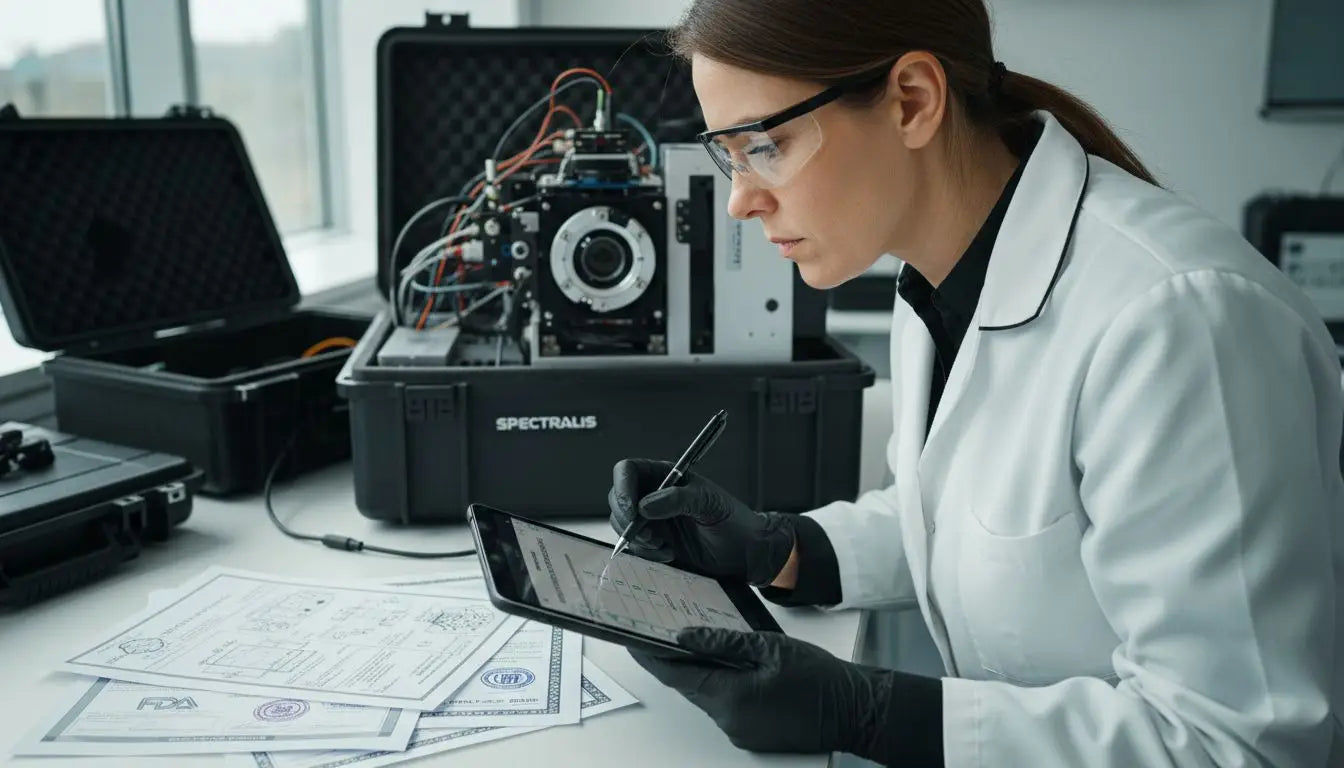
A critical pro tip: Always perform a comprehensive risk assessment before finalizing equipment purchases. Request equipment demonstration, seek peer recommendations, and conduct thorough due diligence to mitigate potential operational challenges and ensure seamless laboratory workflow integration.
Step 3: Evaluate equipment quality and certifications
Evaluating equipment quality and certifications is a critical step in ensuring the reliability and performance of your laboratory instruments. This comprehensive assessment helps protect your research investments and guarantees the integrity of your scientific outcomes.
Lab Consumables Explained: Types, Uses, and Procurement provides additional context for understanding quality standards. Focus on obtaining detailed material certifications such as 316L stainless steel for corrosive research environments. Prioritize suppliers with ISO 9001 certification research shows these manufacturers demonstrate 68% fewer post installation defects. Conduct thorough reviews of third party inspection reports and validate on site installation protocols. Request comprehensive documentation that demonstrates compliance with industry specific standards like Good Clinical Laboratory Practice (GCLP) and regulatory guidelines relevant to your specific research domain.
Examine equipment provenance meticulously by investigating manufacturer reputation manufacturer track record research publications independent laboratory testing results and professional peer reviews. Request comprehensive performance certificates validation documentation and detailed technical specifications that clearly demonstrate the equipment meets your precise scientific requirements. Pay special attention to calibration standards maintenance protocols warranty terms and potential future upgrade pathways.
A critical pro tip: Develop a systematic evaluation framework that objectively scores potential equipment based on technical specifications quality certifications cost effectiveness and long term research compatibility. This approach will help you make data driven decisions that minimize risk and maximize scientific potential.
Step 4: Compare suppliers and available support
Comparing suppliers and their available support is a strategic process that goes beyond simple price comparison. This step is crucial for establishing long term partnerships that will sustain your laboratory’s research capabilities and technological advancement.
Laboratory Workflow Optimization: Boost Efficiency Step-by-Step highlights the importance of strategic partnerships in scientific research. Evaluate potential suppliers comprehensively by assessing their technical support infrastructure technical expertise training programs warranty conditions and post purchase service capabilities. Prioritize vendors who demonstrate a robust support ecosystem including onsite equipment installation comprehensive training comprehensive maintenance protocols responsive technical support and flexible service agreements.
Build a comprehensive evaluation matrix that scores potential suppliers across multiple dimensions including technical competency reliability customer support track record technological innovation and alignment with your specific research requirements. Request detailed documentation about their quality management systems look for suppliers with ISO 9001 certification which statistically correlate with 68% fewer post installation equipment defects. Conduct in depth interviews with their technical support teams examine their research collaboration history and assess their capacity to provide customized solutions that match your laboratories unique scientific protocols.
A critical pro tip: Develop strategic relationships with suppliers who view themselves as scientific partners rather than mere transactional vendors. Seek out organizations that demonstrate genuine commitment to understanding your research objectives and are willing to provide flexible technical support tailored to your specific scientific needs.
Step 5: Validate equipment selection with pilot testing
Validating equipment selection through pilot testing is a critical final step that bridges theoretical specifications with actual research performance. This systematic verification process ensures your selected laboratory instruments will consistently deliver the precision and reliability your scientific protocols demand.
7 Essentials for Small Labs: Tools and Tips for Success emphasizes the importance of rigorous equipment validation. Design a comprehensive pilot testing strategy that replicates your most complex research workflows and challenges the equipment across multiple performance parameters. Create a detailed testing protocol that systematically evaluates instrument accuracy reproducibility sensitivity and compatibility with existing laboratory systems. Simulate realistic research scenarios that push the equipment to its operational limits testing response times data collection capabilities and potential failure points.
Utilize advanced workflow generation frameworks similar to emerging scientific methodologies that automate synthetic workflow testing. Document every aspect of the pilot testing meticulously recording quantitative performance metrics statistical variations and comparative analyses against manufacturer specifications. Engage your entire research team in the validation process gathering multifaceted perspectives on equipment functionality user interface ergonomics and potential integration challenges. Pay special attention to reproducibility metrics data management capabilities and the equipment ability to generate consistent results across multiple experimental iterations.
A critical pro tip: Develop a standardized pilot testing scorecard that objectively quantifies equipment performance across multiple dimensions. This systematic approach transforms subjective equipment evaluation into a data driven selection process that minimizes research risks and maximizes scientific potential.
Achieve Accurate Lab Results with Equipment Tailored to Your Research Needs
Selecting the right lab equipment can feel overwhelming when you consider technical specs compatibility certifications and supplier support. This guide helps you tackle common challenges like workflow integration and equipment validation so you can focus on what matters most your scientific discoveries. Avoid costly mistakes and delayed progress by making data driven choices backed by expert insight covering everything from pilot testing to supplier evaluation.

Ready to elevate your research with precision instruments built for reliability and scalability Discover how Shop Genomics empowers you to streamline your lab setup with advanced, affordable solutions crafted to match your unique workflow needs. Explore resources and personalized support that help you confidently select laboratory equipment ensuring long term success. Don’t wait—transform your lab’s performance starting today by visiting Shop Genomics and access the tools that can accelerate your journey toward groundbreaking results.
Frequently Asked Questions
How can I define my lab’s research and workflow needs?
Defining your lab’s research and workflow needs requires a comprehensive assessment of your specific research goals and operational requirements. Start by mapping out primary experiments, considering factors like sample volume and required precision to create a prioritized list of essential and supplementary equipment.
What technical specifications should I assess for lab equipment?
Assess key technical specifications that align with your research protocols, such as compliance with relevant standards and the physical constraints of your lab. Create a checklist to evaluate compatibility with existing instruments and ensure that the equipment meets your scientific requirements before making a purchase.
How do I evaluate the quality and certifications of lab equipment?
To evaluate equipment quality, focus on obtaining detailed material certifications and prioritize suppliers with relevant quality standards like ISO 9001. Investigate the manufacturer’s reputation and request comprehensive performance certificates to ensure the equipment meets your specific needs.
What criteria should I use to compare suppliers for lab equipment?
When comparing suppliers, assess their technical support infrastructure, warranty conditions, and post-purchase services. Develop a scoring matrix that includes aspects like reliability, customer support, and alignment with your specific research requirements to make informed decisions.
How do I validate my equipment selection through pilot testing?
Validate your equipment selection by designing a pilot testing strategy that replicates your most complex research workflows.
 Create a detailed testing protocol to evaluate instrument accuracy and compatibility, and document performance metrics to ensure that the equipment meets your research standards.
What should I document during the equipment selection process?
Document every aspect of your workflow needs and pilot testing results meticulously. This documentation will serve as a reference for future equipment justifications and grant applications, helping you make informed decisions throughout the selection process.