

More than 90 percent of american scientific breakthroughs in genetics now depend on bioinformatics tools. This field brings together biology and computer science to turn massive volumes of raw data into real answers for medicine, agriculture, and environmental studies. Understanding bioinformatics gives you a clear view into the engines driving modern research, showing how advanced computation is reshaping how american scientists and industries tackle complex biological challenges.
Table of Contents
- Defining Bioinformatics And Its Core Concepts
- Types Of Bioinformatics And Key Distinctions
- How Bioinformatics Drives Genomic Research
- Clinical, Environmental, And Industrial Applications
- Challenges, Limitations, And Best Practices
- Costs, Skills, And Common Pitfalls To Avoid
Key Takeaways
| Point | Details |
|---|---|
| Interdisciplinary Nature | Bioinformatics integrates biology, computer science, and information technology to analyze complex biological data. |
| Core Techniques | Key methodologies include genomic sequencing analysis, computational modeling, data mining, and structural bioinformatics. |
| Applications in Genomics | Bioinformatics is essential for genetic variation analysis, predictive modeling, and personalized medicine. |
| Challenges and Best Practices | Issues like data quality and algorithmic limitations necessitate interdisciplinary collaboration and continuous learning in bioinformatics. |
Defining Bioinformatics and Its Core Concepts
Bioinformatics represents a groundbreaking interdisciplinary field that bridges biology, computer science, and information technology to revolutionize how researchers analyze and interpret complex biological data. At its core, bioinformatics transforms raw scientific information into actionable insights by applying advanced computational techniques to understand molecular and genetic processes.
The fundamental mission of bioinformatics centers on processing, analyzing, and interpreting massive biological datasets that would be impossible to comprehend through traditional research methods. Researchers leverage sophisticated computational algorithms and statistical models to extract meaningful patterns from genomic sequences, protein structures, genetic variations, and molecular interactions. These techniques enable scientists to unravel intricate biological mechanisms and generate predictive models that accelerate research across multiple disciplines.
Key components of bioinformatics encompass several critical research domains:
- Genomic Sequencing Analysis: Decoding and comparing genetic information across different organisms
- Computational Modeling: Creating mathematical representations of biological systems and processes
- Data Mining: Extracting significant patterns and relationships from complex biological datasets
- Structural Bioinformatics: Analyzing protein structures and molecular interactions
- Systems Biology: Understanding complex biological networks and interactions
By integrating advanced computational tools with biological research, bioinformatics has become an indispensable approach for modern scientific investigation.
 Researchers now rely on these sophisticated techniques to generate unprecedented insights into genetic mechanisms, disease progression, evolutionary patterns, and potential therapeutic interventions.
Types of Bioinformatics and Key Distinctions
Bioinformatics encompasses several specialized domains, each focusing on unique aspects of biological data analysis and interpretation. These distinct branches allow researchers to explore complex biological systems through targeted computational approaches, providing comprehensive insights into molecular mechanisms and genetic interactions.
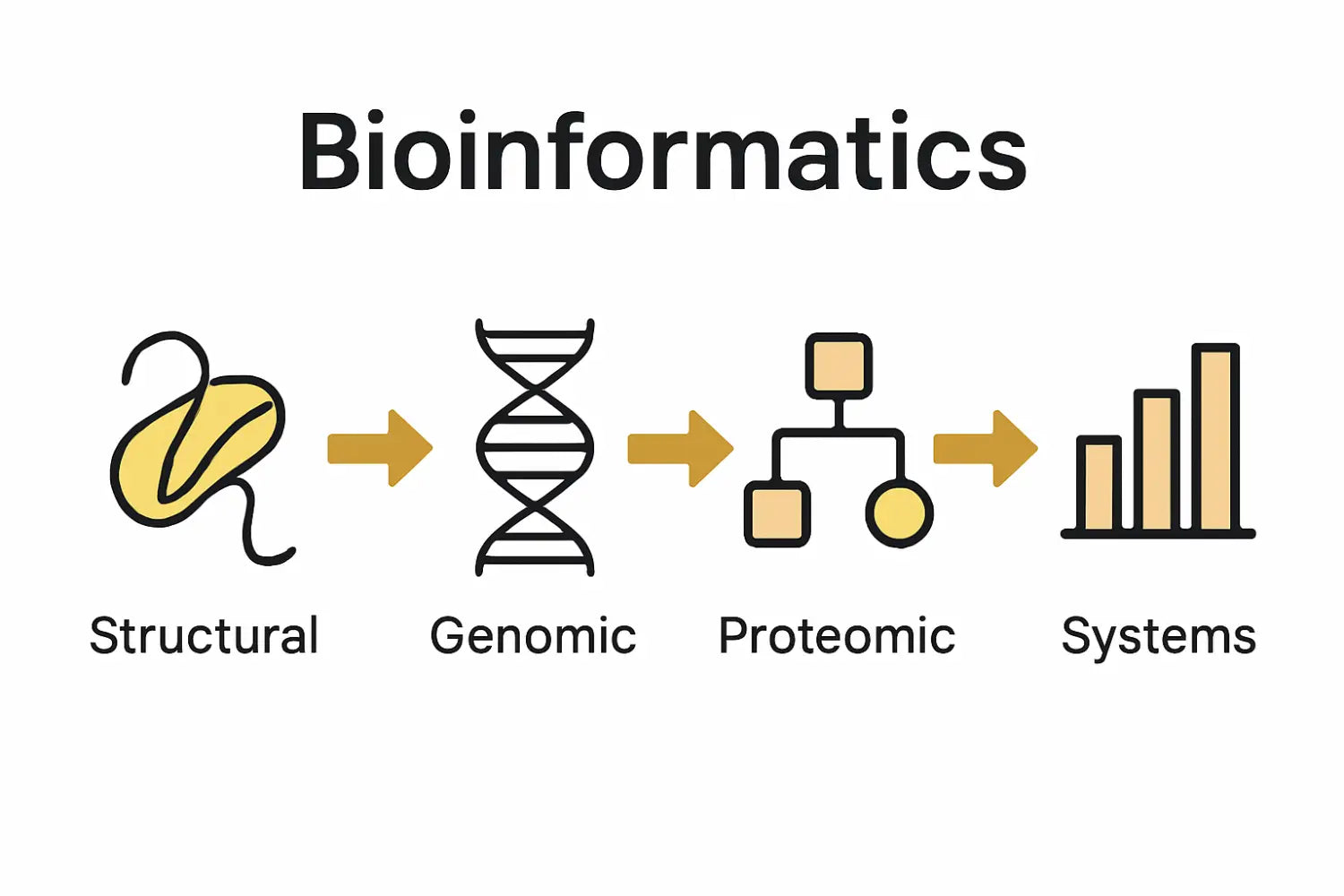
Four primary types of bioinformatics represent critical research methodologies:
- Structural Bioinformatics: Analyzes three-dimensional molecular structures, exploring protein folding, interactions, and conformational changes
- Genomic Bioinformatics: Focuses on comprehensive genetic sequence analysis, mapping, and comparative studies across different organisms
- Proteomics Bioinformatics: Investigates protein expression, interactions, and functional characteristics using advanced computational techniques
- Systems Biology Bioinformatics: Examines complex biological networks and interactions, modeling interconnected molecular systems
Each bioinformatics branch employs specialized computational tools and algorithms designed to address specific research challenges. Structural bioinformatics, for instance, uses molecular modeling software to predict protein structures, while genomic bioinformatics leverages advanced sequencing analysis algorithms to decode genetic variations. These specialized approaches enable researchers to transform raw biological data into meaningful scientific understanding.
The distinguishing factor among these bioinformatics types lies in their unique computational strategies and research objectives. Researchers select specific approaches based on their investigative goals, whether mapping genetic variations, understanding protein dynamics, or modeling complex biological networks. By integrating advanced computational techniques with biological knowledge, these specialized branches of bioinformatics continue to push the boundaries of scientific discovery and provide unprecedented insights into complex living systems.
How Bioinformatics Drives Genomic Research
Bioinformatics has become the cornerstone of modern genomic research, transforming how scientists analyze, interpret, and understand complex genetic information. By integrating advanced computational techniques with biological data, researchers can now unravel intricate molecular mechanisms that were previously impossible to explore. Comprehensive genomic data interpretation guides demonstrate the critical role of computational approaches in decoding genetic sequences and identifying meaningful patterns.
The revolutionary impact of bioinformatics in genomic research emerges through several key technological advancements. Machine learning algorithms and sophisticated computational models enable researchers to process massive genomic datasets with unprecedented speed and accuracy. These tools can simultaneously analyze DNA, RNA, and protein sequences, identifying subtle genetic variations, predicting molecular interactions, and generating insights that drive scientific discovery across multiple disciplines.
Critical applications of bioinformatics in genomic research include:
- Genetic Variation Analysis: Detecting and interpreting complex genetic mutations
- Predictive Modeling: Developing computational models to forecast genetic disease risks
- Evolutionary Research: Tracking genetic changes across different species and populations
- Personalized Medicine: Creating targeted therapeutic strategies based on individual genetic profiles
- Functional Genomics: Understanding gene expression and regulatory mechanisms
The synergy between computational power and biological research has dramatically accelerated scientific understanding. Researchers now leverage advanced bioinformatics techniques to explore genetic complexity with remarkable precision, generating insights that were unimaginable just a decade ago. By converting raw genetic data into actionable scientific knowledge, bioinformatics continues to push the boundaries of genomic research and unlock new possibilities for medical innovation.
Clinical, Environmental, and Industrial Applications
Bioinformatics has emerged as a transformative technology with far-reaching applications across multiple sectors, revolutionizing how researchers and professionals analyze complex biological data. By applying advanced computational techniques, bioinformatics provides innovative solutions to challenges in clinical diagnostics, environmental monitoring, and industrial biotechnology. Case studies from small research teams demonstrate the remarkable versatility of these computational approaches.
In clinical settings, bioinformatics plays a pivotal role in advancing personalized medicine and diagnostic capabilities. Researchers can now analyze genetic variations, predict disease risks, and develop targeted treatment strategies with unprecedented precision. Computational models enable healthcare professionals to interpret complex genetic profiles, identify potential hereditary conditions, and design personalized therapeutic interventions that significantly improve patient outcomes.
Key applications of bioinformatics across different domains include:
- Clinical Diagnostics: Identifying genetic markers for disease prediction and personalized treatment
- Drug Discovery: Accelerating pharmaceutical research through molecular modeling and interaction analysis
- Environmental Monitoring: Tracking biodiversity, analyzing ecosystem changes, and studying genetic adaptations
- Agricultural Innovation: Developing crop resistance, improving plant genetics, and enhancing food production
- Industrial Biotechnology: Optimizing enzyme production, designing sustainable biological processes
Beyond individual sectors, bioinformatics serves as a critical bridge between computational science and real-world problem solving. Environmental researchers use these tools to track genetic variations in endangered species, industrial biotechnologists develop more efficient biological processes, and agricultural scientists create more resilient crop varieties. The interdisciplinary nature of bioinformatics continues to unlock new possibilities, demonstrating its potential to address complex challenges across diverse scientific and industrial landscapes.
Challenges, Limitations, and Best Practices
Bioinformatics confronts numerous complex challenges that demand innovative solutions and strategic approaches. The exponential growth of biological data creates unprecedented computational and analytical hurdles, requiring researchers to develop sophisticated methodologies for effective data management and interpretation. High throughput screening techniques represent one critical strategy for addressing these intricate technical challenges.
Key challenges in bioinformatics span multiple critical domains, including computational complexity, data quality, and algorithmic limitations. Researchers must navigate massive datasets with limited computational resources, manage significant noise and variability in biological information, and develop robust algorithms capable of handling complex molecular interactions. These challenges require multidisciplinary collaboration, advanced machine learning techniques, and continuous technological innovation.
Critical best practices for overcoming bioinformatics challenges include:
- Data Standardization: Implementing consistent data collection and annotation protocols
- Computational Efficiency: Developing scalable algorithms and optimizing computational resources
- Interdisciplinary Collaboration: Integrating expertise from biology, computer science, and statistics
- Rigorous Validation: Implementing multiple verification methods for computational predictions
- Continuous Learning: Staying updated with emerging computational and biological technologies
Navigating the complex landscape of bioinformatics requires a strategic approach that balances technological innovation with scientific rigor. Researchers must remain adaptable, embracing new computational techniques while maintaining strict methodological standards. By addressing challenges through collaborative, innovative approaches, the field continues to push the boundaries of scientific understanding and technological capability.
Costs, Skills, and Common Pitfalls to Avoid
Bioinformatics demands a sophisticated blend of technical skills, financial investment, and strategic planning that can overwhelm even experienced researchers. The field requires significant computational resources, specialized training, and ongoing technological investments that can quickly escalate project expenses. Comprehensive genomic data interpretation guides highlight the critical importance of understanding these multifaceted challenges before launching complex bioinformatics projects.
Skill development represents a crucial investment for professionals entering the bioinformatics domain. Essential competencies include advanced programming knowledge (particularly in Python and R), statistical analysis, machine learning techniques, and a robust understanding of molecular biology principles. Researchers must cultivate a unique interdisciplinary skill set that bridges computational science, genetics, and data analysis, requiring continuous learning and adaptation to rapidly evolving technological landscapes.
Critical skills and potential pitfalls to consider include:
- Programming Proficiency: Mastering languages like Python, R, and specialized bioinformatics tools
- Statistical Analysis: Developing advanced mathematical and statistical modeling capabilities
- Data Interpretation: Avoiding over-interpretation and understanding algorithmic limitations
- Computational Resources: Managing computational costs and infrastructure requirements
- Interdisciplinary Knowledge: Integrating biological context with computational techniques
Navigating the complex terrain of bioinformatics requires a strategic approach that balances technical expertise with scientific rigor. Researchers must remain vigilant about potential pitfalls such as data bias, algorithmic limitations, and computational constraints. By developing a comprehensive skill set, maintaining critical skepticism, and investing strategically in technological capabilities, professionals can effectively leverage bioinformatics to drive groundbreaking scientific discoveries.
Empower Your Bioinformatics Research with Accessible Cutting-Edge Tools
Bioinformatics is transforming how researchers decode complex genetic information but faces challenges like managing massive datasets, requiring advanced computational resources, and developing specialized skills. If you feel overwhelmed by the technical demands or frustrated by limited access to affordable, high-quality research equipment, you are not alone. The article highlights struggles with computational complexity and the need for powerful, scalable tools to accelerate discoveries in genomic research and clinical applications.
At Shop Genomics, we understand these pain points and are committed to democratizing advanced technology. By offering affordable, state-of-the-art research equipment and support, we empower you to overcome data management hurdles and enhance bioinformatics capabilities without breaking your budget. Discover how our solutions can help you streamline your workflows, maintain scientific rigor, and push the boundaries of genomic science with confidence.
Upgrade your research today with reliable tools designed for modern bioinformatics challenges.

Explore our offerings now at Shop Genomics and gain the competitive edge you need. Learn more about how to optimize your data interpretation with our Comprehensive Genomic Data Interpretation Guide. Take the next step—transform complexity into clarity and accelerate your path to discovery.
Frequently Asked Questions
What is bioinformatics?
Bioinformatics is an interdisciplinary field that combines biology, computer science, and information technology to analyze and interpret complex biological data, transforming it into actionable insights through computational techniques.
How does bioinformatics contribute to genomic research?
Bioinformatics plays a crucial role in genomic research by providing tools to process massive datasets, analyze genetic variations, and develop predictive models for understanding molecular mechanisms and disease risks.
What are the main types of bioinformatics?
The main types of bioinformatics include structural bioinformatics, genomic bioinformatics, proteomics bioinformatics, and systems biology bioinformatics, each focusing on different aspects of biological data analysis.
What skills are essential for a career in bioinformatics?
Essential skills for a career in bioinformatics include programming proficiency (especially in Python and R), statistical analysis, machine learning knowledge, and a solid understanding of molecular biology principles.